

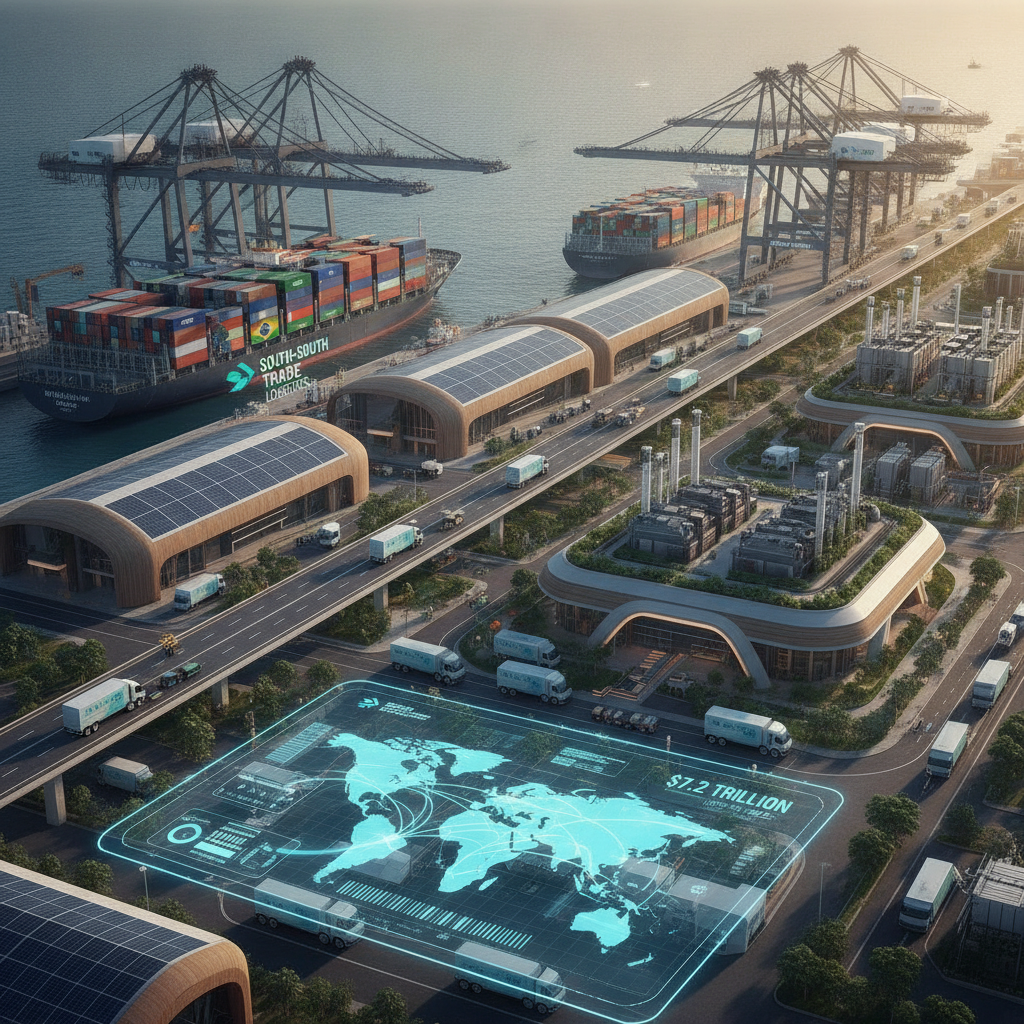
The global shipping landscape is rapidly transforming, and South-South Trade Logistics is at the epicenter of this shift. In 2025, trade between developing nations surged to a record $7.2 trillion, outpacing the global average with a remarkable 9% expansion. As geopolitical tensions persist, emerging markets are fundamentally restructuring their supply networks to prioritize regional resilience over traditional routes.
This unprecedented growth is not just about raw materials; it is increasingly driven by advanced manufacturing and digital integration. In fact, high- and medium-technology manufactured products now account for roughly 50% of this commerce. To support this volume, supply chain professionals are heavily investing in South-South Trade Logistics infrastructure.
- Connector Economies: Strategic hubs in East Asia and Africa are emerging as vital anchors for regional maritime networks.
- Technological Integration: Developing nations are adopting digitized customs and low-carbon transport to streamline cross-border movements.
- Fragmented Networks: Companies are decentralizing operations to mitigate risks associated with traditional North-South chokepoints.
Looking ahead, South-South Trade Logistics will dictate the pace of global trade recovery. Developing economies already drive the majority of global trade growth, accounting for over a quarter of global merchandise trade. Moving forward, industry leaders must adapt to these localized corridors to maintain competitive agility.
References
- UNCTADstat Data Insights (July 2026) – unctadstat.unctad.org
- Global Trade Update (April 2026) – unctad.org
- UN Trade and Development Chapter IV.3 (2025) – unctad.org
- Global Trade Update (March 2026) – unctad.org