
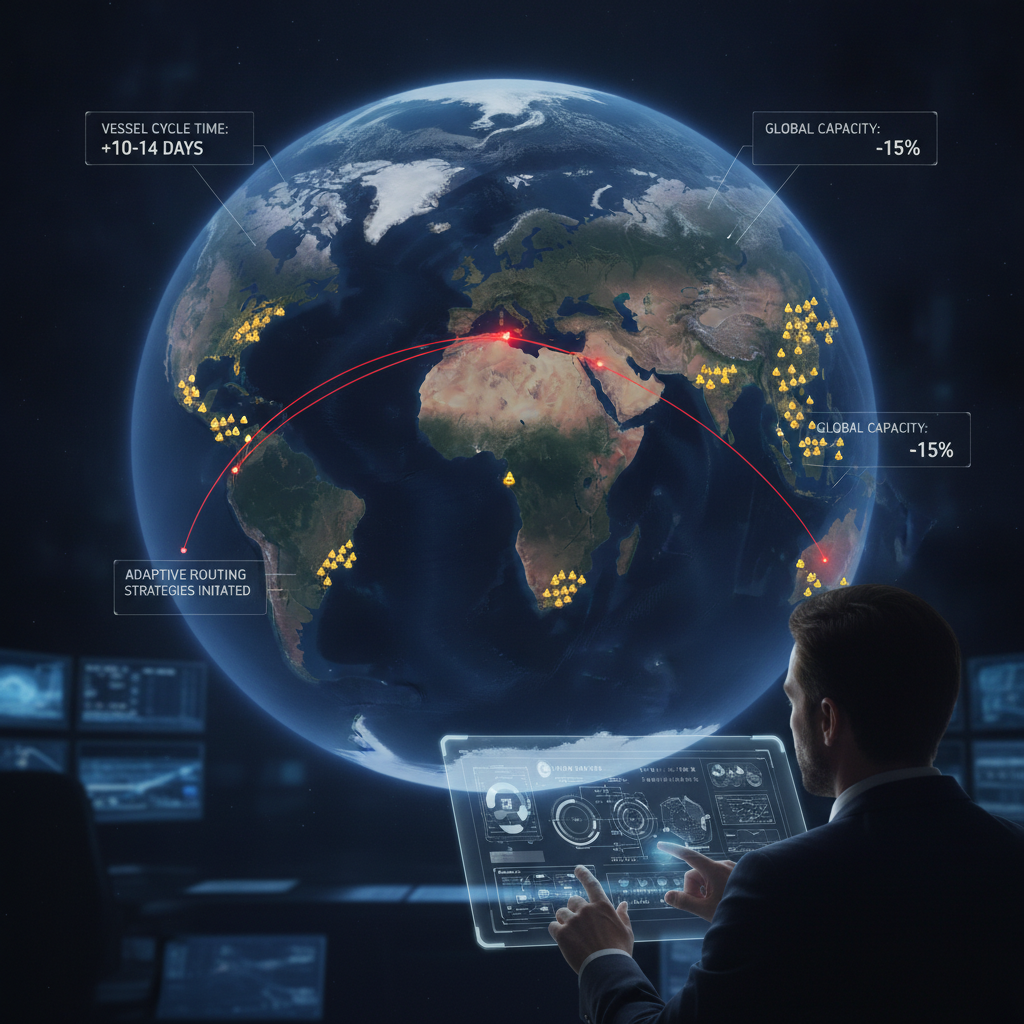
In 2026, the global maritime industry continues to grapple with severe supply chain volatility, primarily driven by extended vessel cycle times. The protracted Red Sea shipping crisis has forced major carriers to institutionalize rerouting around the Cape of Good Hope, bypassing the Suez Canal. Consequently, Suez Canal vessel traffic remains depressed by roughly 60% compared to pre-crisis levels. This structural shift inherently lengthens voyages, meaning vessels complete fewer round trips annually, effectively draining available global container capacity. Furthermore, secondary factors like port congestion at critical terminals compound these delays, forcing vessels to sit at anchor for up to ten days during peak periods.
For logistics experts, extended vessel cycle times generate severe downstream operational bottlenecks. The most significant impacts include:
- Sustained Transit Delays: Average transit times for the critical Asia-North Europe trade lane have ballooned, adding 10 to 14 extra transit days.
- Spiking Operational Costs: Longer cycles elevate the risk of container detention and demurrage fees while driving up freight rates.
- Inventory Capital Occupation: Shippers are forced to increase safety stock, with large importers expanding target inventory coverage from 20 to 45 days to prevent stockouts.
Navigating extended vessel cycle times requires shippers to pivot from static scheduling to agile, predictive models. Logistics managers must adjust reorder points earlier and lock in long-term service contracts to avoid spot market premiums. Mastering these extended shipping cycles is now a fundamental requirement for maintaining supply chain resilience in 2026.
References
Global Coal Trade Reports (2026) | Suaid Global (2026) | JCtrans (2026) | BRF Shipping (2026) | SeaVantage (2026) | FreightAmigo (2026) | UN Cargo & Logistics (2026)