

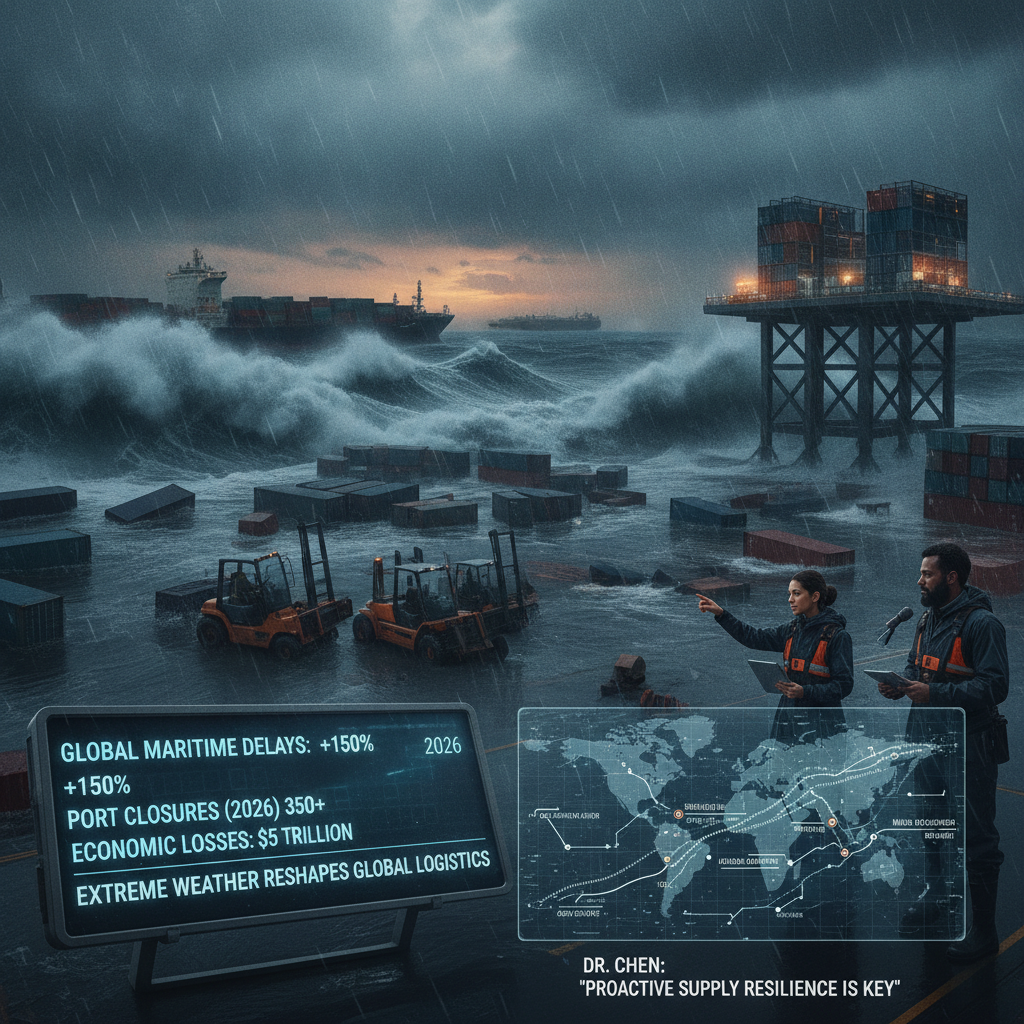
As climate volatility accelerates, Extreme Weather Maritime Disruptions have become a critical focus for global logistics experts. Recent industry data highlights that environmental hazards are no longer isolated incidents but systemic risks demanding proactive supply chain resilience.
The frequency of climate-related logistical shocks has surged at an alarming rate. According to 2026 supply chain insights, extreme weather events jumped by 119% globally in recent tracking periods, with flood-related alerts soaring by 214%. Furthermore, businesses that fail to build resilience against these climate risks could lose up to 7% of their annual earnings by 2035.
The immediate effects of these disruptions are altering established shipping lanes and port operations. Logistics professionals are currently battling several compounding challenges:
- Capacity Reductions: Historic droughts, such as those affecting the Panama Canal, force vessels to drastically reduce cargo loads, thereby increasing shipping costs.
- Infrastructure Vulnerability: Rising sea levels and increased frequency of tropical storms are altering port topographies and leading to unexpected closures.
- Schedule Instability: Unpredictable weather routing complications compound existing delays from geopolitical events and new shipping alliance formations.
To navigate this volatile landscape, industry leaders emphasize shifting from static planning to dynamic, scenario-based modeling. Forward-thinking freight forwarders are investing in advanced meteorological tracking and weather-resistant industrial packaging to control moisture during transit. Ultimately, managing Extreme Weather Maritime Disruptions requires robust diversification of port networks and real-time data integration to ensure supply chain stability.
References
Transvoy Logistics, Sea Freight Challenges and Solutions 2026. ResearchGate, The Impact Of Climate Change On Global Shipping Pathways In 2025. FedEx, Building Long-Term Supply Chain Resilience To Climate Risk. McKinsey, Supply Chain Risk Management Strategies 2026. ISCN Academy, Supply Chains in a World That Refuses to Stabilise. Elite Asia, Supply Chain Disruption and How to Manage It 2026 Insight.