
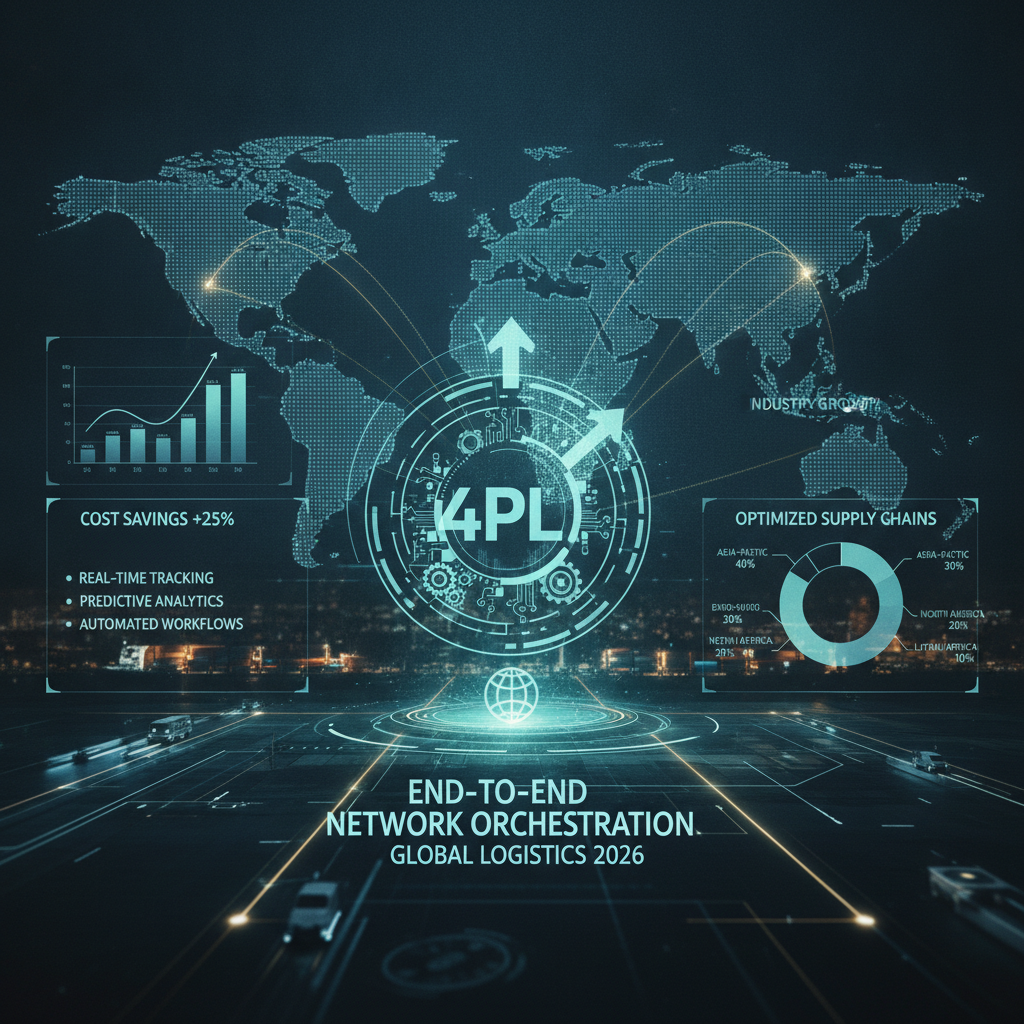
For modern supply chains, fragmented logistics strategies are no longer viable. In 2026, logistics and shipping experts are increasingly adopting End-to-End Network Orchestration to unify complex multi-node environments. Fourth-Party Logistics (4PL) platforms act as dynamic control towers, moving beyond simple freight movement to fully integrate strategy, inventory, and carrier management.
Recent industry analysis projects massive growth in this sector, with service providers anticipating a $4 billion revenue opportunity by 2034 driven by integrated digital services and optimized network orchestration.
Unlike traditional 3PL execution models, a modern 4PL platform serves as a holistic governance layer over multiple logistics providers. Centralizing visibility helps resolve disconnected systems, ultimately driving down costs and optimizing resource pooling. A June 2026 report by Redwood Logistics highlighted that an open 4PL model focused on End-to-End Network Orchestration enabled an industry-leading retailer to achieve millions in savings through synchronized demand signals and harmonized carrier capacity.
To establish true resilience, supply chain leaders rely on several critical capabilities:
- Real-time visibility and centralized event management across multi-tier geographies.
- Dynamic capacity sourcing to proactively combat global supply chain disruptions.
- Collaborative planning that unifies carriers, enterprise software, and internal teams into one workflow.
As enterprises prioritize multi-node coordination, establishing End-to-End Network Orchestration has shifted from a strategic luxury to a critical operational necessity for modern shippers.
References
- Analysys Mason (2025-2026): Predictions for logistics integration and digital service revenues.
- Redwood Logistics (2026): A Guide on Retail Distribution and Modern 4PL Orchestration.