

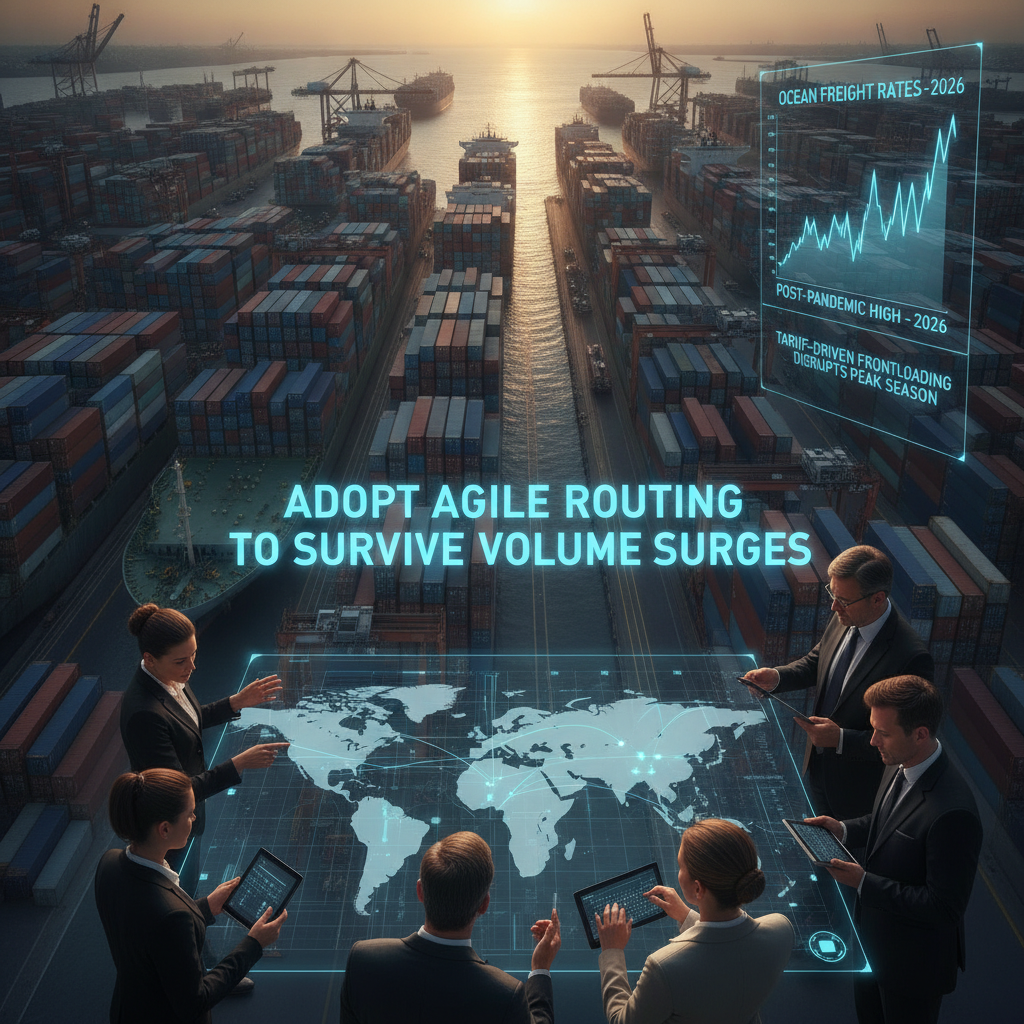
The global logistics sector is witnessing an unprecedented disruption to traditional seasonal shipping patterns, largely fueled by tariff-driven frontloading. As importers race to get ahead of shifting trade policies and impending duty hikes, cargo volumes have repeatedly surged into condensed timeframes. This aggressive stockpiling strategy has profound implications for ocean freight rates, capacity planning, and port infrastructure. In July 2026, the industry experienced another massive wave of early peak season activity as shippers prepared for potentially higher tariffs anticipated in August.
The most immediate casualty of tariff-driven frontloading has been rate stability. The Drewry World Container Index spiked sharply, climbing from approximately $3,400 per FEU in early June to over $4,600 per FEU by July 2026. This surge represents the highest post-pandemic level, severely straining logistics procurement budgets. Consequently, transpacific lanes absorbed the heaviest blows, forcing carriers to implement peak season surcharges much earlier than historical norms dictate.
Tariff-driven frontloading has critically exposed the risks of maintaining rigid transportation networks. Shippers dependent on single-port strategies faced extreme operational bottlenecks during these concentrated cargo influxes. To build resilience, logistics experts recommend three strategic adjustments:
- Diversifying entry gateways away from congested West Coast ports.
- Adopting dynamic routing tools to manage unexpected capacity crunches.
- Moving away from rigid, single-lane carrier contracts.
Looking ahead, logistics professionals must prioritize agility to mitigate the continuous cycle of volume surges and subsequent import hangovers.
References
Sources utilized: Heavy Duty Trucking (July 2026), NRF Global Port Tracker (July 2026), Scan Global Logistics Market Update (July 2026), and CZ App Freight Rally Report (July 2026).