

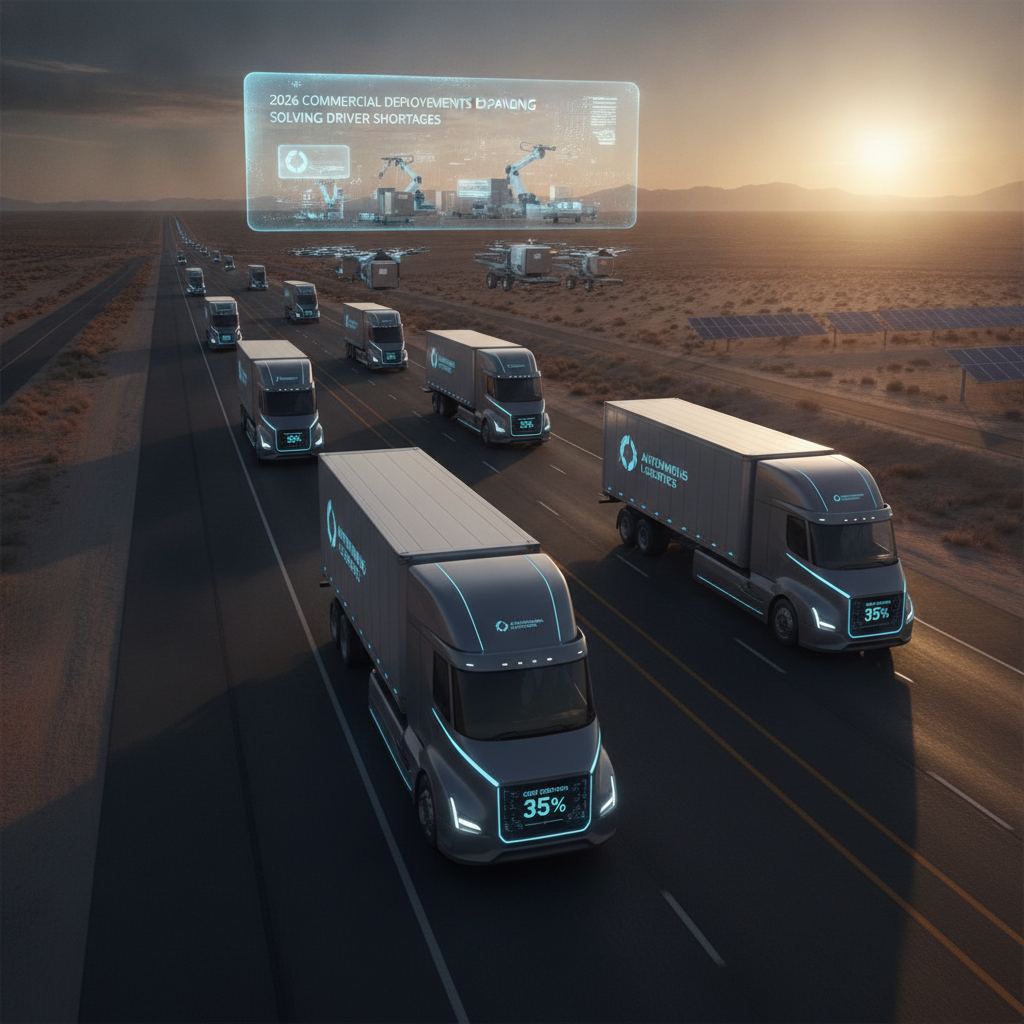
The global logistics sector is undergoing a profound transformation as Autonomous Freight Trucking moves from theoretical concepts to commercial deployment. Faced with a persistent driver shortage, estimated between 60,000 to 80,000 drivers in 2025 alone, industry leaders are rapidly pivoting toward automated solutions to stabilize supply chains and improve asset utilization.
The economic rationale for Autonomous Freight Trucking is becoming impossible to ignore. Recent 2026 research from the University of Illinois Urbana-Champaign indicates that widespread implementation of driverless truck technology could reduce overall transportation costs by up to 35 percent. Key financial advantages include:
- Halving per-mile operating costs through optimized fuel efficiency and reduced labor expenses.
- Doubling asset utilization by enabling round-the-clock continuous operations, accelerating capital payback for fleet operators.
- Addressing the projected fivefold increase in global freight demand by 2050 without being constrained by human labor limits.
We are witnessing a decisive shift from technical demonstrations to real-world freight movement. Leading industry players are already executing driverless routes across the Sun Belt, while major OEMs like Volvo plan significant hub-to-hub expansions in Texas by 2027. The autonomous freight truck market, valued at approximately 575.7 million dollars in 2026, is projected to grow at a compound annual growth rate of 21.2 percent to reach 3.24 billion dollars by 2035. For logistics and shipping experts, integrating these software-defined vehicles is an immediate strategic imperative.
References
Autonomous Freight Trucks Market Size is USD 575.7 Million in 2026, April 2026.
Forbes, Volvo Trucks To Lead In Bringing Autonomous Trucks To US Market, July 2026.
Axios, The link between autonomous trucks and your grocery bill, May 2026.
EurekAlert, Paper: Self-driving trucks will redraw US economic map, July 2026.