
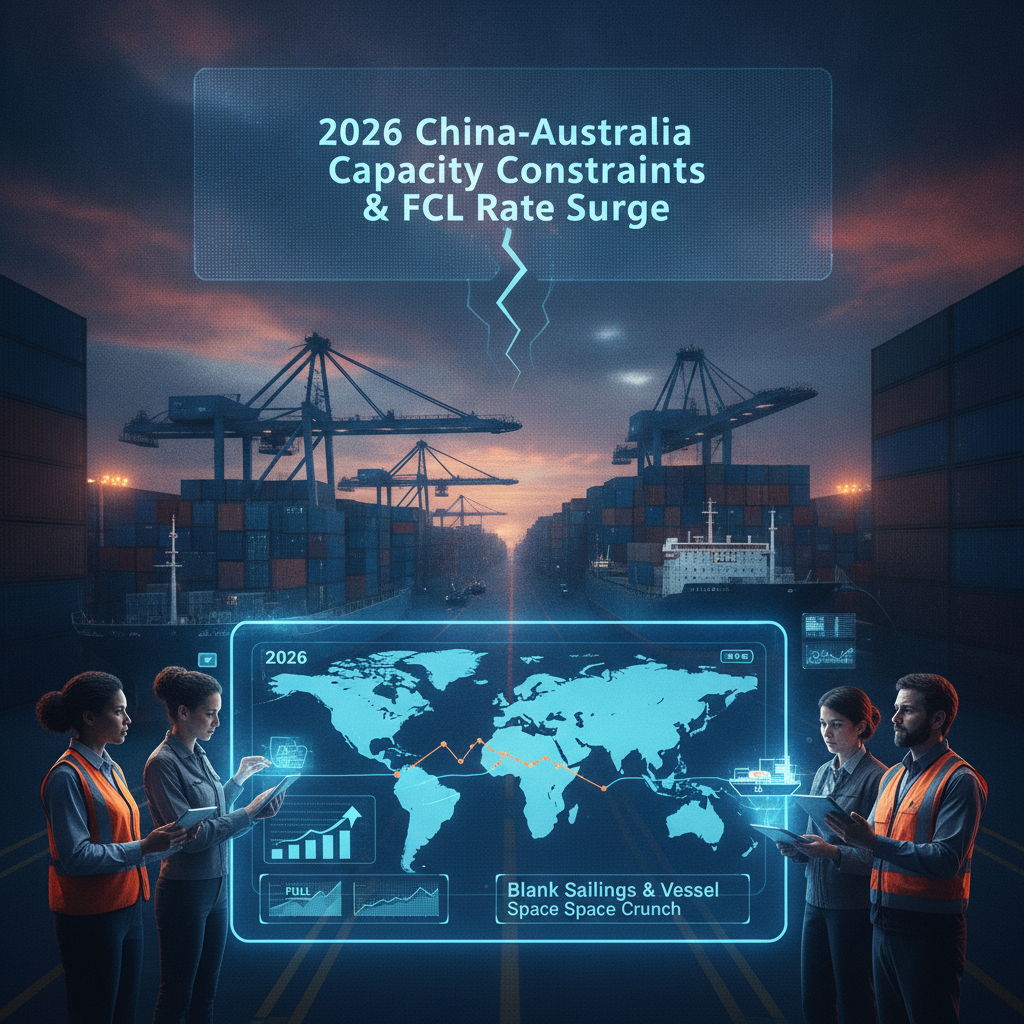
In mid-2026, logistics professionals are grappling with severe China-Australia Capacity Constraints, creating an intense bottleneck for global supply chains. Recent market data indicates that full container load (FCL) rates from China to Australia’s East Coast surged by up to 49% month-over-month in July 2026, driving 40GP container costs to between $4,365 and $5,335. This price escalation is largely fueled by strict carrier capacity discipline and robust peak season demand.
The current capacity crunch is not an isolated event but a convergence of strategic carrier decisions and geopolitical pressures. Notable factors include:
- Strategic Blank Sailings: Major carriers are actively managing deployed capacity, resulting in tighter vessel space and equipment shortages.
- Altered Service Rotations: Several alliances have shifted from weekly to fortnightly rotations, significantly reducing the frequency of available sailings and exacerbating backlog clearances.
- Shortened Quote Validity: In response to the volatile spot market, freight forwarders are offering extremely short validity windows for rate bookings.
As the Q3 peak season intensifies, these China-Australia Capacity Constraints will force logistics experts to rethink their supply chain strategies. While air freight rates experienced a slight easing in July, airspace restrictions continue to add pressure. Importers must prioritize advance forecasting, booking up to three weeks ahead to secure crucial vessel space. The anticipated return of the A3X service may provide marginal relief, but proactive landed-cost planning remains essential for maintaining profitability in 2026.
References
Southern Cross Cargo: China Freight Market Update – July 2026
A No-Nonsense Guide for Australian Importers 2026
FCL Shipping Rates from China to Australia – June 2026
YQN Logistics: China Shipping Space Shortage 2026
Seabridge Global Logistics Market Update – July 2026
Shipping from China to Australia – [Updated July 2026]