

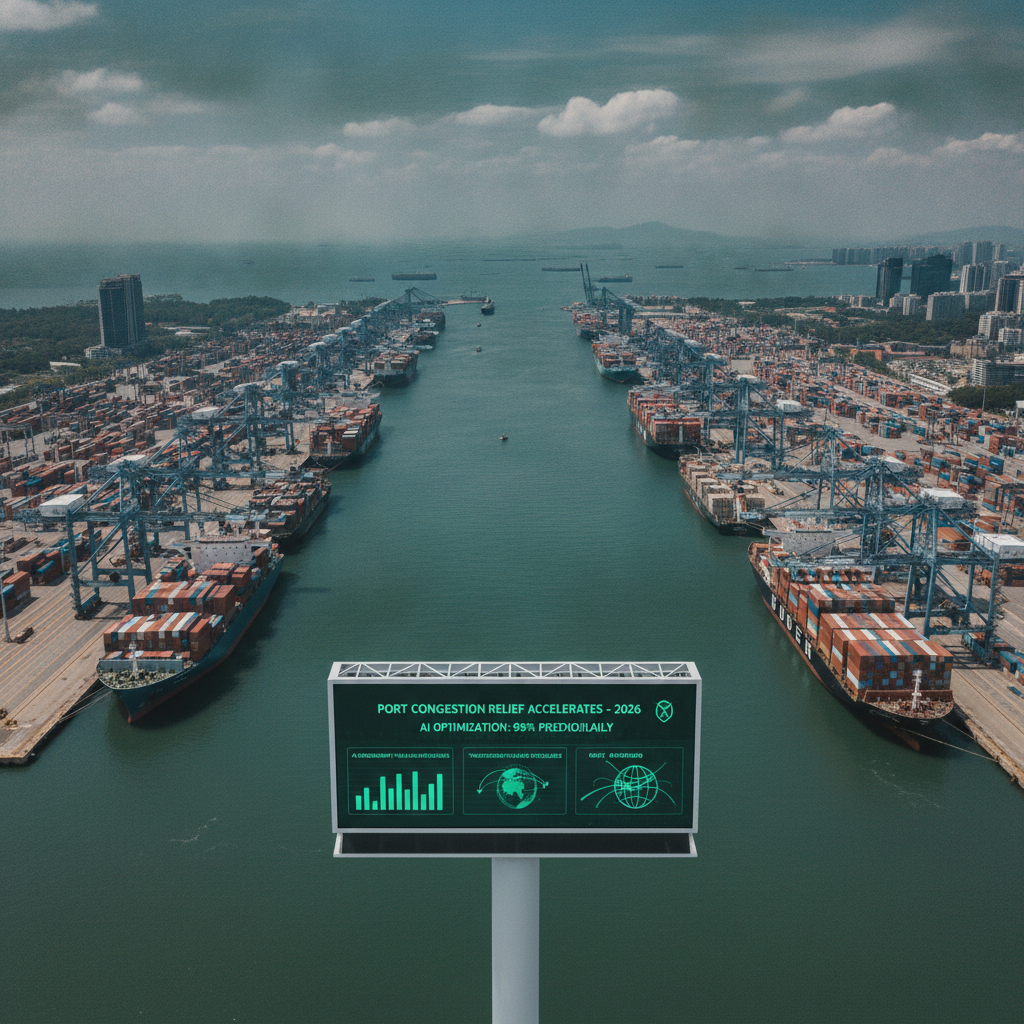
After a volatile period of supply chain disruptions, industry experts are closely monitoring the recent signs of Southeast Asia Port Congestion Relief as we move through 2026. In 2025, the region faced unprecedented pressure, largely driven by Red Sea vessel diversions and surging global transshipment volumes. Singapore, the world’s premier transshipment hub, handled a record-breaking 44.66 million TEUs in 2025, representing an 8.6% year-over-year increase. This unexpected surge initially crippled operational efficiency, pushing average vessel wait times to a staggering 7 days for a backlog of over 450,000 TEUs at its peak. However, strategic shifts and digital interventions are actively fostering Southeast Asia port congestion relief.
To combat bottlenecked supply chains, terminal operators have pivoted from isolated cargo handlers to integrated data hubs. In 2026, relief efforts are heavily supported by digital initiatives like Singapore’s digitalPORT@SG platform, which consolidates port-clearance protocols and leverages predictive AI for berth optimization. Key factors contributing to this stabilization include:
- Capacity Expansion at Alternative Gateways: Malaysia’s Port of Tanjung Pelepas (PTP) absorbed significant overflow, recording a 14.5% throughput surge to over 14 million TEUs in 2025, alleviating pressure on neighboring hubs.
- Advanced AI Modeling: Machine learning algorithms trained on AIS signals and weather data are giving terminals earlier warnings of arriving ships, synchronizing crane availability, and reducing idle times.
- Normalizing Freight Rates: By July 2026, the Shanghai-Southeast Asia freight index recorded consecutive drops as early peak season volumes cooled and port backlogs began to clear.
While regional hub productivity previously suffered a persistence gap where call sizes outpaced efficiency gains, current technological and infrastructural pivots are proving highly effective. Logistics operators are urged to maintain diversified routing strategies, yet the sustained momentum of Southeast Asia port congestion relief signals a more resilient, technology-driven maritime network for the remainder of 2026.
References: FreightAmigo – Severe Congestion at Singapore Container Port 2025; GoComet – Challenges of Singapore Port; The Straits Times – 2025 Record Year for Singapore Port; Splash247 – Terminal operators emerge as new data hubs; Hub Snapshot – Q4 2025 Port Congestion Analysis; The Loadstar – Early peak season drawing to a close; Shipco Transport Media – Global Shipping Disruptions 2026.