

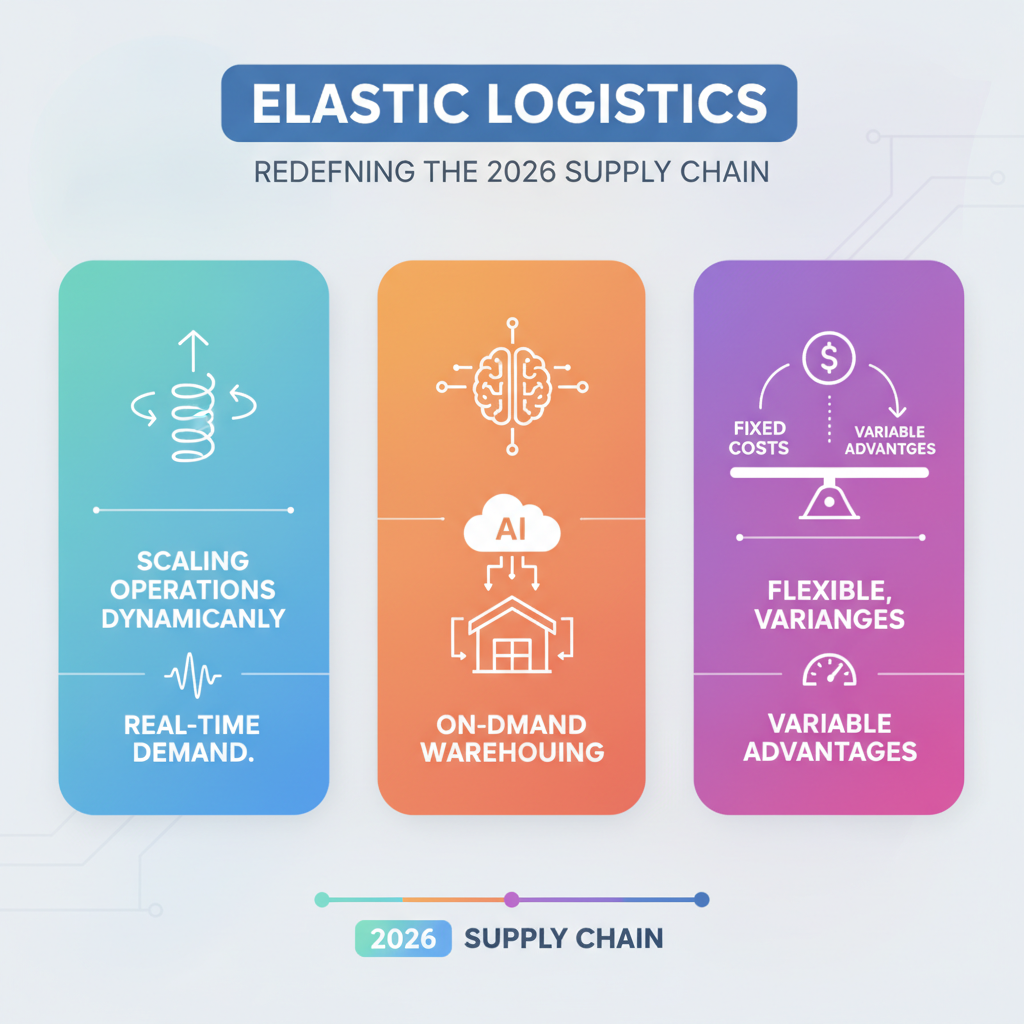
In 2026, the global supply chain is navigating unprecedented volatility, making Elastic Logistics a critical business strategy. This dynamic model allows companies to scale operations up or down in real-time, eliminating the burden of rigid contracts and fixed capacities.
Rather than relying on permanent proprietary infrastructure, industry leaders are leveraging Warehousing-as-a-Service and AI-driven decision-making tools. Recent market analysis reveals compelling data driving this shift:
- The global logistics market is projected to reach $16.8 trillion by 2032, with the elastic segment expected to maintain a robust 9.4% CAGR.
- U.S. delivery costs grew 12% between 2024 and 2025, forcing companies to adopt pay-as-you-go variable cost models.
- The Warehousing-as-a-Service sector is forecast to grow at nearly 20% annually through 2030, highlighting the demand for flexible physical infrastructure.
As consumer expectations for same-day delivery intensify, rigid logistics models are no longer viable. Advanced AI co-pilots now enable teams to respond instantly to seasonal peaks and sudden disruptions by adjusting inventory levels and rerouting shipments dynamically. By embracing elastic logistics, experts can build intelligent resilience that turns supply chain complexity into a strategic advantage.
References
MBE Franchise – What is Elastic Logistics and how it is redefining business scaling in 2026.
SCCG – Supply Chain and Logistics Trends to Watch in 2026.
DHL ID – 5 Logistics Trends Reshaping Asia in 2026.