

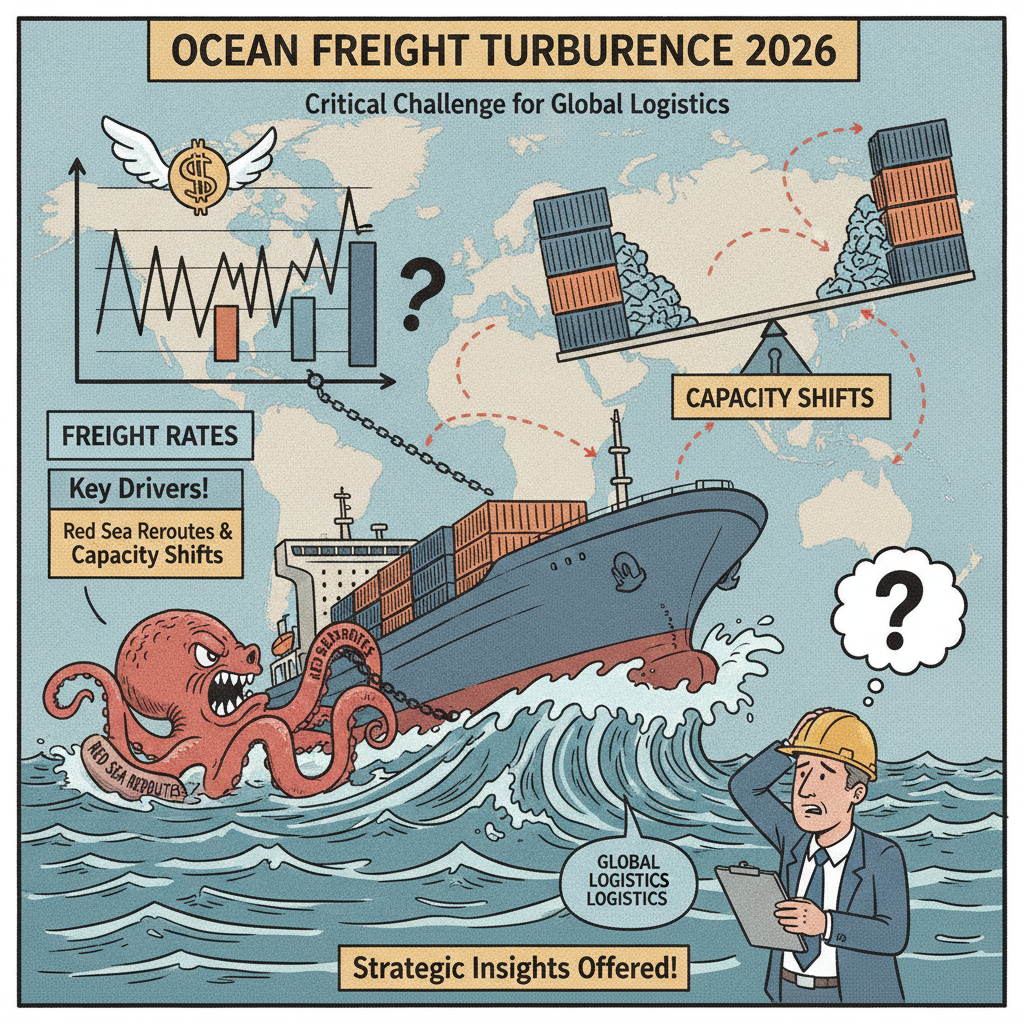
For global logistics professionals, extreme ocean freight rate volatility has officially become the structural new normal. According to industry analyses, 2025 and 2026 mark the fifth consecutive year of significant pricing instability across major maritime trade lanes. Despite post-pandemic supply chain normalizations, baseline container rates remain over 140% higher than their 2019 averages. Recent UNCTAD data confirms that global container freight rates experienced persistent monthly fluctuations ranging from 12% to 18% throughout the 2024-2025 cycle.
Several intersecting macroeconomic and operational factors are driving this sustained turbulence:
- Geopolitical Rerouting: Ongoing Red Sea disruptions have forced widespread diversions around the Cape of Good Hope, adding 10 to 20 days to Asia-Europe transit times and driving up emergency surcharges.
- Capacity Mismatches: The massive influx of ultra-large container vessels (ULCVs) ordered during the pandemic boom has created overcapacity, which carriers are aggressively countering through strategically timed blank sailings.
- Nearshoring Shifts: Restructuring global supply chains, particularly the massive volume surge in Asia-to-Latin America routes, has altered traditional volume patterns and strained emerging corridors.
To mitigate the impact of ocean freight rate volatility, forwarders must pivot away from outdated manual quoting processes. Embracing digital logistics platforms that provide real-time integrations with ocean carriers is essential for capturing dynamic spot rates and avoiding squeezed profit margins. Furthermore, diversifying trade lanes and implementing structured hedging strategies for both spot and contractual freight will dictate which logistics providers thrive in the unpredictable 2026 landscape.
References
- JCtrans – Managing Pricing Volatility
- Cargofive – Shifts in Global Trade
- Fibre2Fashion – High Container Rate Volatility
- WallTech – Global Logistics News
- The Return of Blank Sailings in 2025