

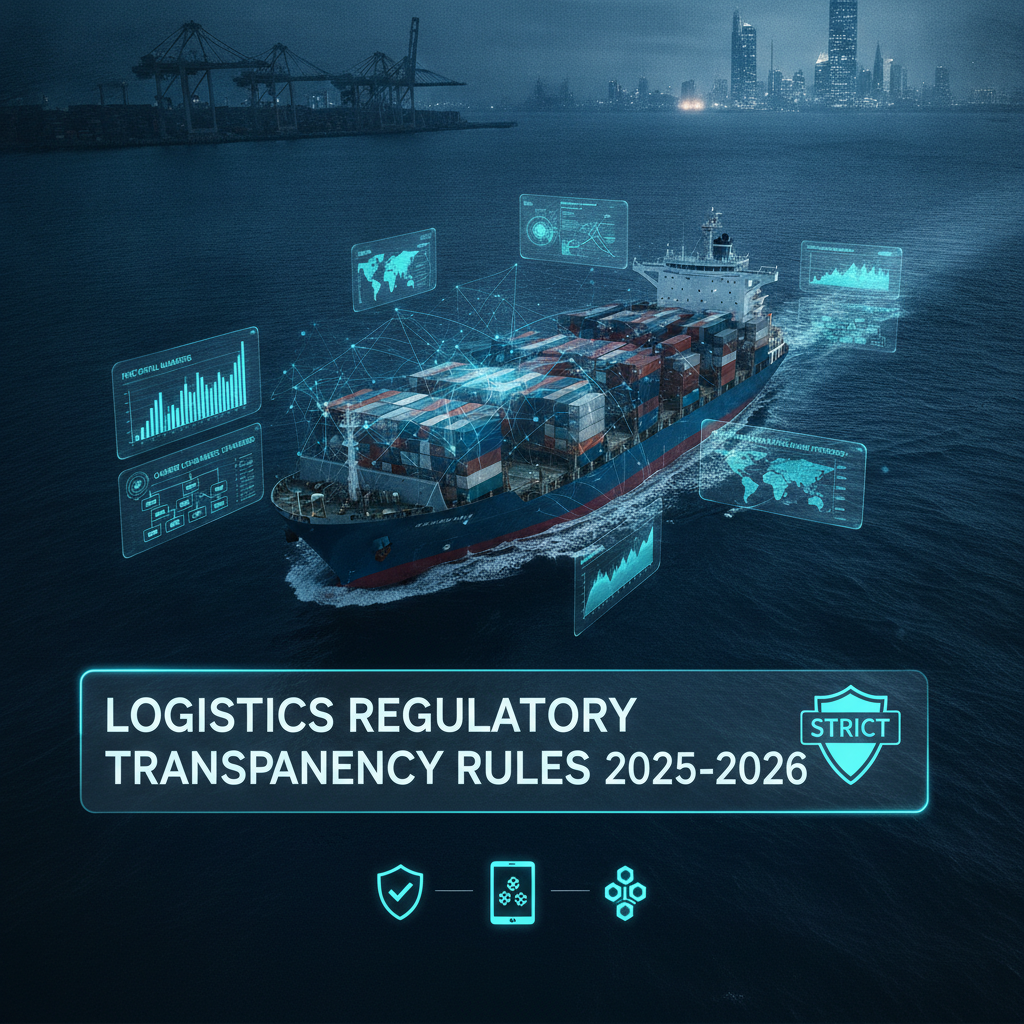
The global shipping industry is undergoing a massive paradigm shift as regulatory bodies tighten oversight on ocean carriers and supply chains. As e-commerce freight volumes surge, the Federal Maritime Commission (FMC) and international authorities are enforcing strict Logistics Regulatory Transparency Rules to ensure fair competition and data harmonization.
A major catalyst for this shift stems from the ocean shipping reforms, which mandated complete visibility into carrier automated tariffs and eliminated access fees for the shipping public. Recent data indicates that the FMC’s push for digital compliance in 2025—including mandatory application programming interface (API) tools and stricter demurrage timelines—has significantly altered how vessel-operating common carriers (VOCCs) manage their daily operations. Under the new frameworks, carriers face a shortened 30-day window for issuing demurrage and detention invoices, drastically reducing the hidden costs historically absorbed by shippers.
The latest enforcement trends emphasize accountability across all supply chain nodes. Key regulatory updates shaping the 2026 maritime landscape include:
- Digital Tariff Mandates: All common carriers must file tariffs electronically using standardized API portals to maintain pricing visibility.
- Detention and Demurrage Billing: Invoices must contain specific, identifiable information and can only be levied against contracted parties or ultimate consignees, effectively ending ambiguous third-party billing practices.
- Vessel Flagging Oversight: Regulators are actively investigating foreign vessel flagging laws to prevent a “race to the bottom” that endangers supply chain security and transparency.
Industry experts agree that while these transparency protocols impose short-term compliance hurdles, they ultimately foster a more resilient ecosystem. According to the Maritime Transportation Data Initiative (MTDI), standardizing data transmission protocols is critical for aligning industry practices with government oversight. “By forcing ocean carriers to adopt clear, harmonized billing and data standards, regulators are closing the loopholes that previously caused catastrophic port congestions,” notes a recent industry policy analysis.
As we move deeper into 2026, logistics providers must integrate real-time digital auditing tools to avoid escalating penalty frameworks that now penalize compliance failures up to 10 percent. Embracing these transparency mandates is no longer just a legal necessity—it is a competitive baseline for modern supply chain management.
References
FIATA. (2024). US FMC brings transparency and fairness in the supply chain with Final Rule on Demurrage and Detention. (fiata.org)
FreightAmigo. (2025). The Federal Maritime Commission (FMC): Regulating Ocean Transportation for Fair Competition. (freightamigo.com)
National Shipper Advisory Committee. (2024). Data Subcommittee Recommendation for the FMC. (fmc.gov)
Husch Blackwell. (2024). New Federal Maritime Commission Rules Introduce Significant Changes for Carriers and Shippers. (huschblackwell.com)
Distribution-Publications, Inc. (2025). Signals Headlines – June 6, 2025. (dpiusa.com)