

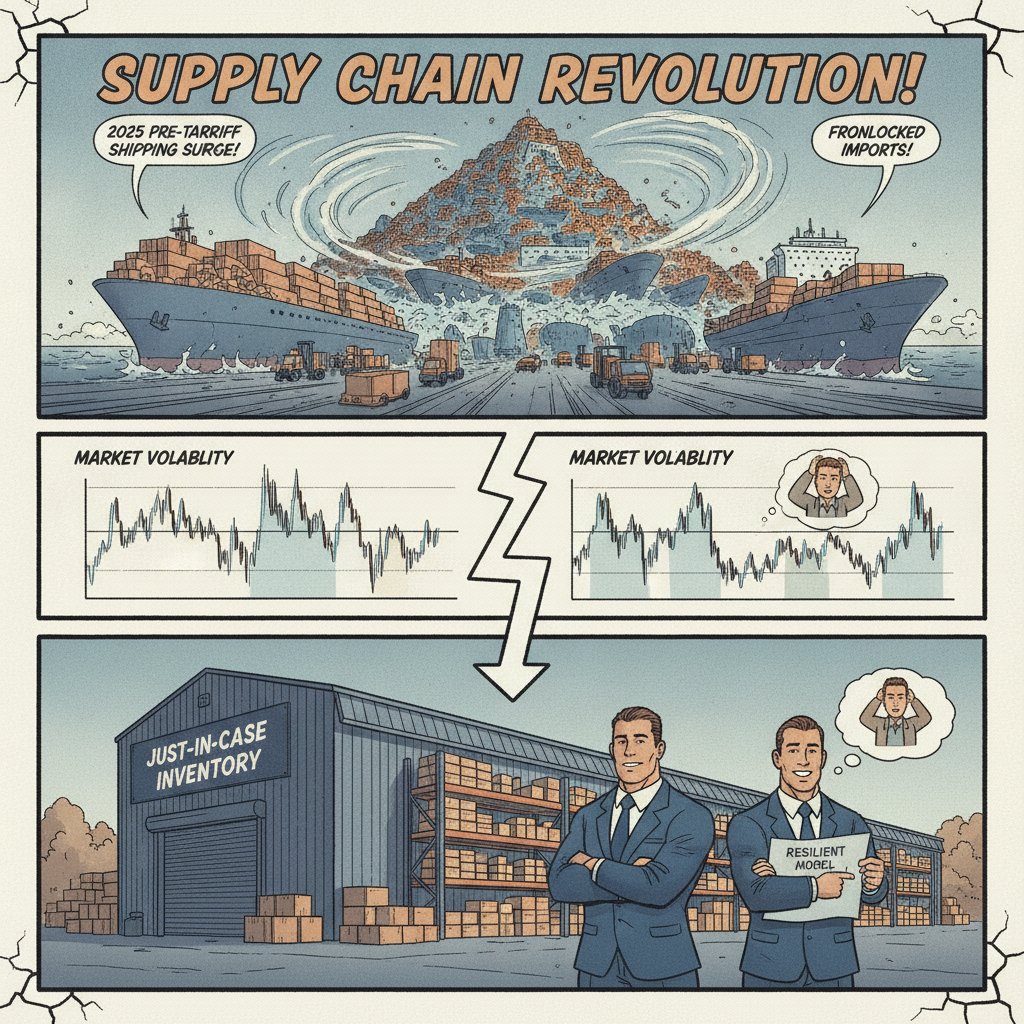
The global logistics industry is currently navigating a complex tariff hangover following the dramatic Pre-Tariff Shipping Surge of 2025. As importers rushed to frontload inventory ahead of anticipated duty increases on goods from China, Mexico, and Europe, supply chain networks experienced an unprecedented shift. This reactive stockpiling fundamentally disrupted traditional seasonal shipping cycles, replacing predictability with intense market volatility.
Industry data from late 2025 and early 2026 highlights the immense scale of this pull-forward demand. The transpacific trade lane absorbed the heaviest impact, pushing July 2025 import volumes at West Coast ports like Los Angeles to all-time highs. Key statistics illustrating this trend include:
- U.S. container imports reached 25.4 million TEUs in 2025, balancing early surges with massive fourth-quarter declines.
- Domestic truck-to-load ratios spiked dramatically to 9.9 in December 2025 as networks absorbed the imported overflow.
- Global schedule reliability dropped to roughly 34 percent during the peak of the panic, recovering only after demand cooled.
The consequences of the Pre-Tariff Shipping Surge have forced logistics professionals to rethink capacity planning. Many organizations are abandoning just-in-time inventory approaches in favor of regionalized, just-in-case models to mitigate future policy shocks and accommodate unexpected restocking cycles. As freight rates stabilize and transportation activity normalizes into late 2026, experts suggest that maintaining flexible warehousing and agile freight analytics will be critical for protecting profit margins against ongoing trade volatility.
References
The Tariff Hangover: How a Year of Trade Volatility Is Reshaping Transportation (March 2026). 2025 Peak Shipping Survival Guide for SMB Importers, FreightAmigo (April 2026). The Impact of 2025 Tariffs on Logistics and Inventory Teams, Tradlinx (August 2025). Trucking Rates Per Mile 2026: How Tariffs Reshaped Pay, Truck Dispatch Experts (March 2026).