

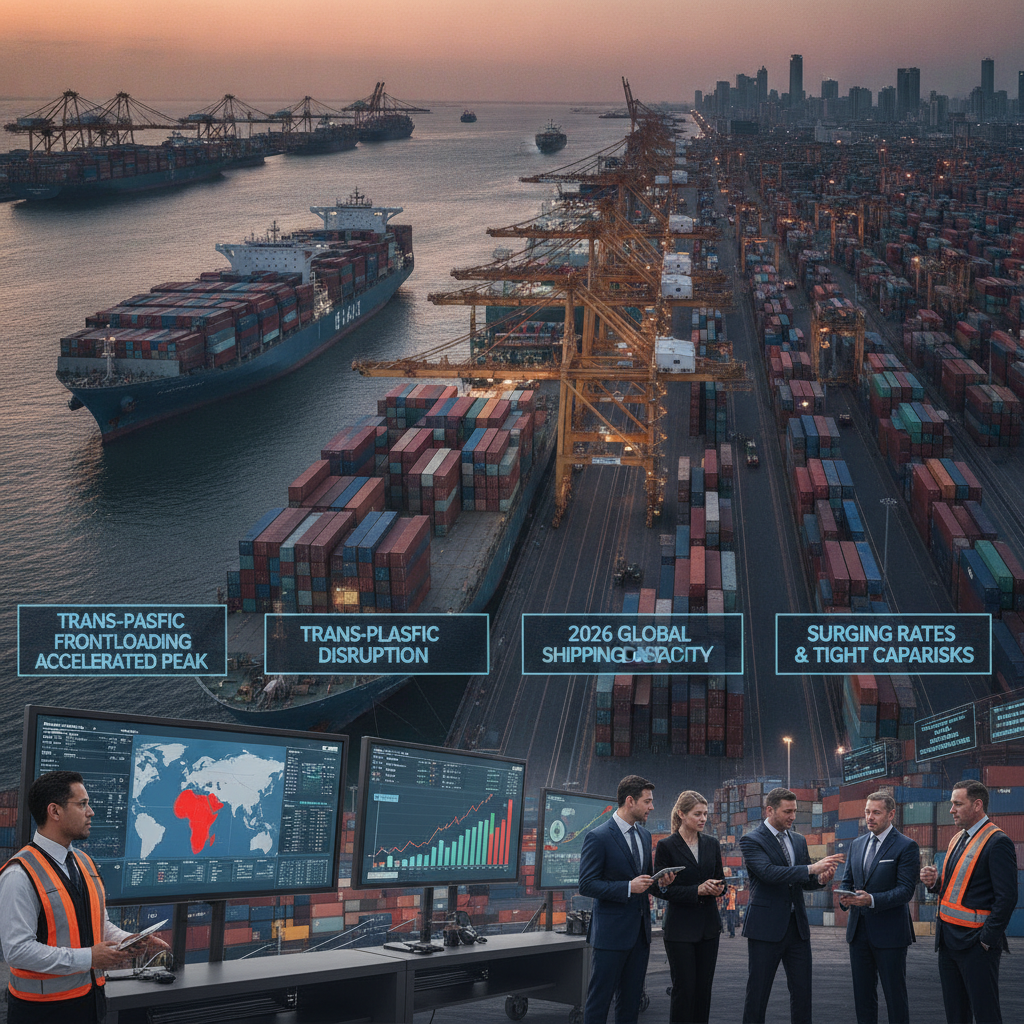
Understanding the 2026 Trans-Pacific Frontloading Surge
In mid-2026, the logistics sector witnessed a severe capacity crunch driven by unprecedented Trans-Pacific frontloading. U.S. importers accelerated their peak shipping schedules to early summer, aiming to outpace impending tariff deadlines and rising supplier costs. This unexpected demand surge has drastically altered seasonal norms, forcing logistics professionals to rethink their capacity strategies for the rest of the year.
The Drivers Behind Trans-Pacific Frontloading
Several compounding macroeconomic factors triggered this massive pull-forward of inventory. Geopolitical tensions, particularly the Strait of Hormuz closure and ongoing Red Sea diversions, introduced extreme fuel volatility and operational uncertainty. Consequently, forward-thinking shippers prioritized Trans-Pacific frontloading to secure vessel space before disruptions could severely impact end-of-year merchandise deliveries.
- Looming trade policy shifts and potential tariffs on foreign goods.
- Spot rate surges, with Asia-U.S. West Coast rates jumping to $4,836 per FEU in early June.
- Ocean carriers implementing peak season surcharges between $500 and $1,000 per FEU.
Navigating the Trans-Pacific Frontloading Aftermath
While the initial frenzy created an artificial demand peak, recent market intelligence indicates the trade environment is entering a technical correction. Key gateways like the Port of Long Beach reported a massive 31.7% jump in container volumes earlier this year, but industry analysts anticipate a return to traditional seasonality by the fourth quarter. Supply chain directors must now focus on optimizing bloated domestic inventories while managing the cascading effects of this summer’s capacity constraints.