

The Dawn of Autonomous Logistics
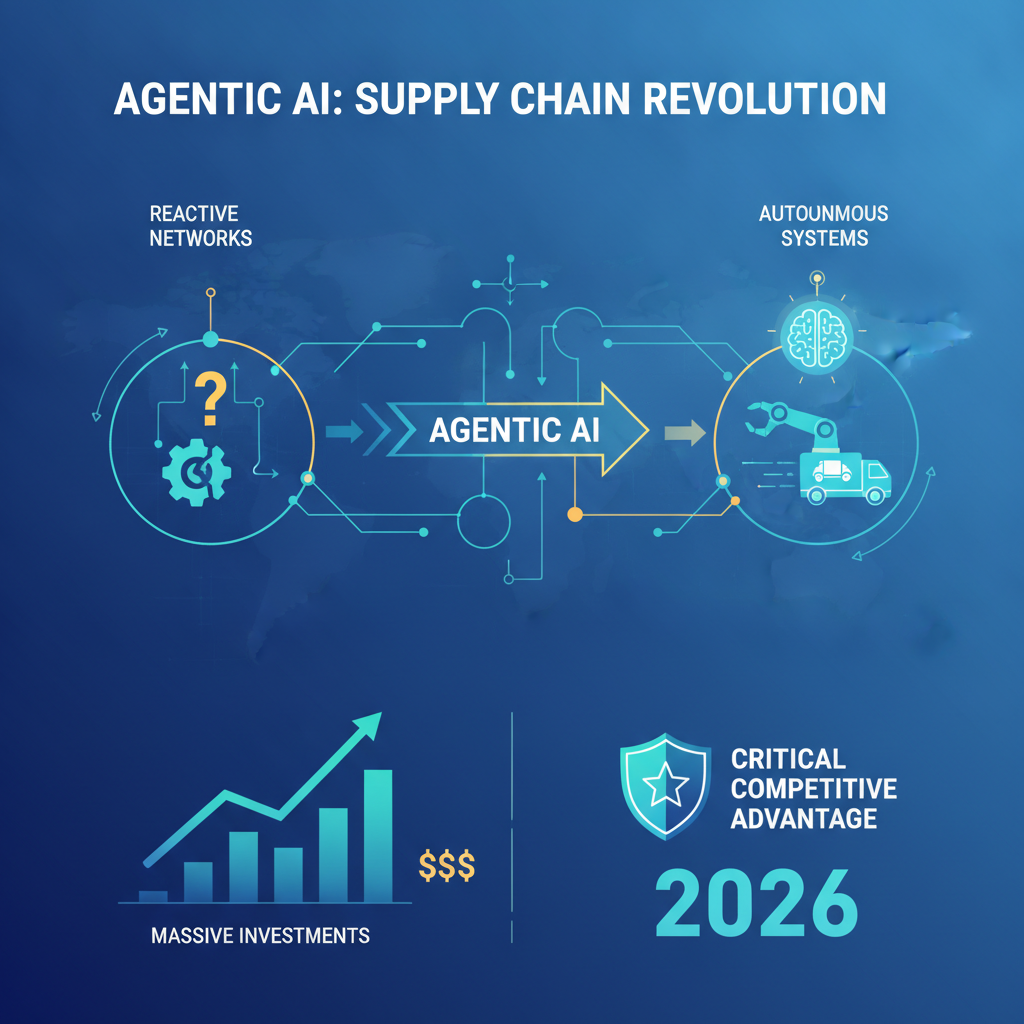
In 2026, the logistics sector is transitioning from reactive tracking to proactive decision-making. The adoption of Agentic AI in Supply Chain has emerged as the defining technological leap, moving beyond basic automation to intelligent systems that plan, act, and adapt independently.
Market Explosion and Adoption Trends
The financial commitment to autonomous operations is accelerating at an unprecedented pace. According to a 2026 Gartner report, supply chain management software featuring agentic AI is projected to explode from under $2 billion in 2025 to $53 billion by 2030. This massive influx of capital reflects a fundamental shift where autonomous capabilities are increasingly mandatory. The impact on service providers is equally profound. Recent industry data reveals that 74% of shippers are willing to switch third-party logistics (3PL) providers based solely on their AI capabilities. Intelligent orchestration is now a competitive necessity rather than a futuristic luxury.
Key Benefits Driving Implementation
Logistics executives are deploying agentic frameworks to resolve the persistent gap between event speed and human coordination speed. The primary advantages include:
- Dynamic Route Optimization: AI agents autonomously reroute shipments in real-time to avoid disruptions without waiting for manual approvals.
- Automated Procurement: Intelligent agents handle dynamic sourcing, with 70% of executives noting that agentic AI automation significantly improves operational speed.
- Error Mitigation: Multi-agent validation frameworks catch data discrepancies at entry points, preventing costly downstream billing and clearance errors.
The Future of Strategic Operations
As 2026 unfolds, logistics providers must evolve from basic utilities to strategic partners. Early adopters of Agentic AI in Supply Chain are already unlocking superior agility and structural cost advantages. Companies failing to redesign their workflows around these autonomous agents risk falling behind in an industry that now competes on AI-driven execution.