
The Evolution of Asia-Origin Section 301 Tariff Planning
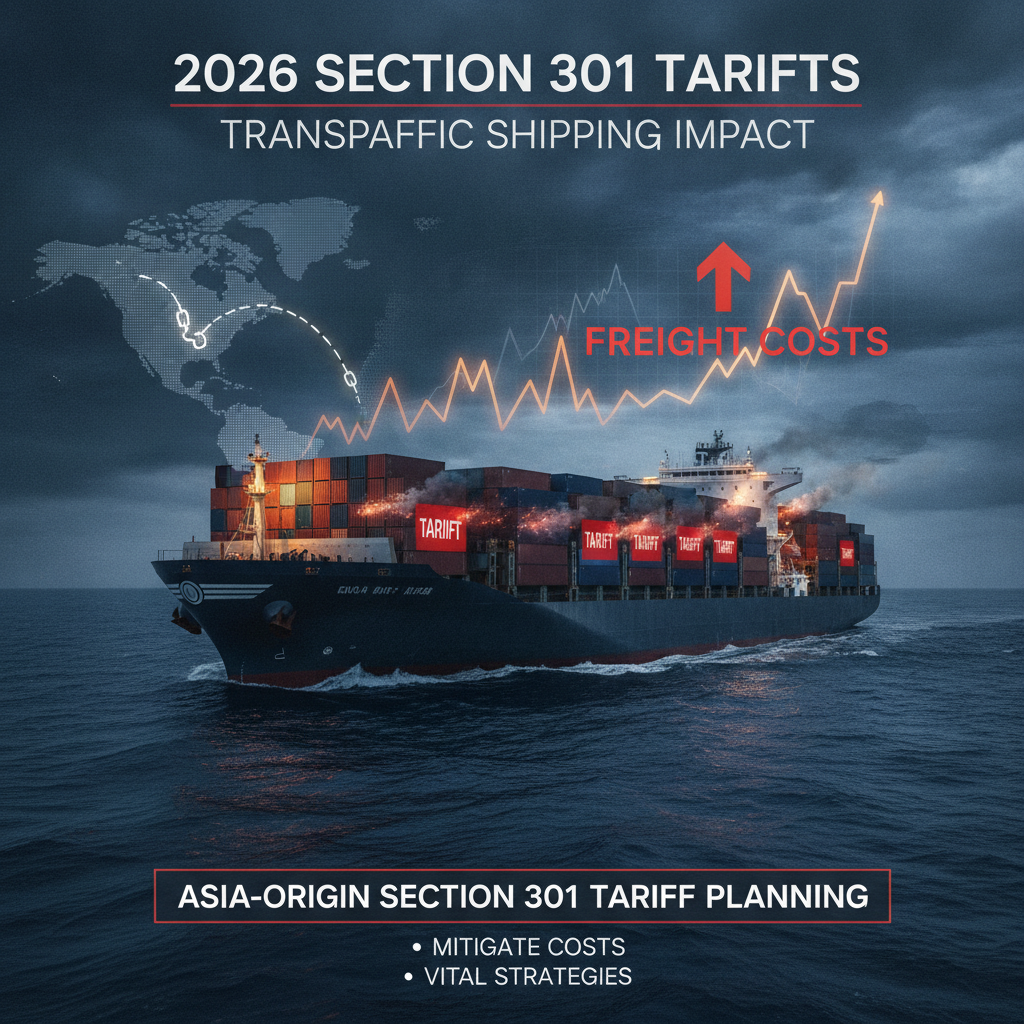
The global logistics landscape is undergoing a massive transformation, making Asia-Origin Section 301 Tariff Planning critical. In July 2026, the expiration of Section 122 tariffs was replaced by sweeping Section 301 duties. The U.S. Trade Representative (USTR) finalized new tariffs ranging from 10% to 12.5% against 60 economies, tied to forced labor import prohibitions. Consequently, supply chain managers must rethink their sourcing strategies.
Why Asia-Origin Section 301 Tariff Planning is Urgent
These regulatory shifts have severely impacted shipping costs. By August 2026, spot rates from Asia to the U.S. East Coast surged to $9,144 per FEU, while West Coast rates hit $6,826. This volatility stems from shippers frontloading cargo to bypass implementations. Effective Asia-Origin Section 301 Tariff Planning is now a vital cost-containment strategy for logistics professionals.
Key Steps in Asia-Origin Section 301 Tariff Planning
While the China Plus One strategy remains popular, recent USTR rulings mean ASEAN nations like Vietnam face a 12.5% additional duty, while Cambodia faces 10%. To mitigate costs, experts recommend several proactive steps:
- Conduct origin documentation reviews to ensure compliance and identify potential USTR product exemptions.
- Diversify routing strategies to leverage regions with lower effective tariff rates.
- Reevaluate landed costs dynamically as Asian unit prices fluctuate.
Future-Proofing Logistics
Mastering these compliance workflows requires vigilance. By integrating real-time freight data and transparent sourcing, shippers can navigate this challenging tariff wall. This highly targeted regulatory environment demands precision from global supply chain leaders.