

Can Eurasian Rail Freight Operations Sustain Their 2026 Surge?
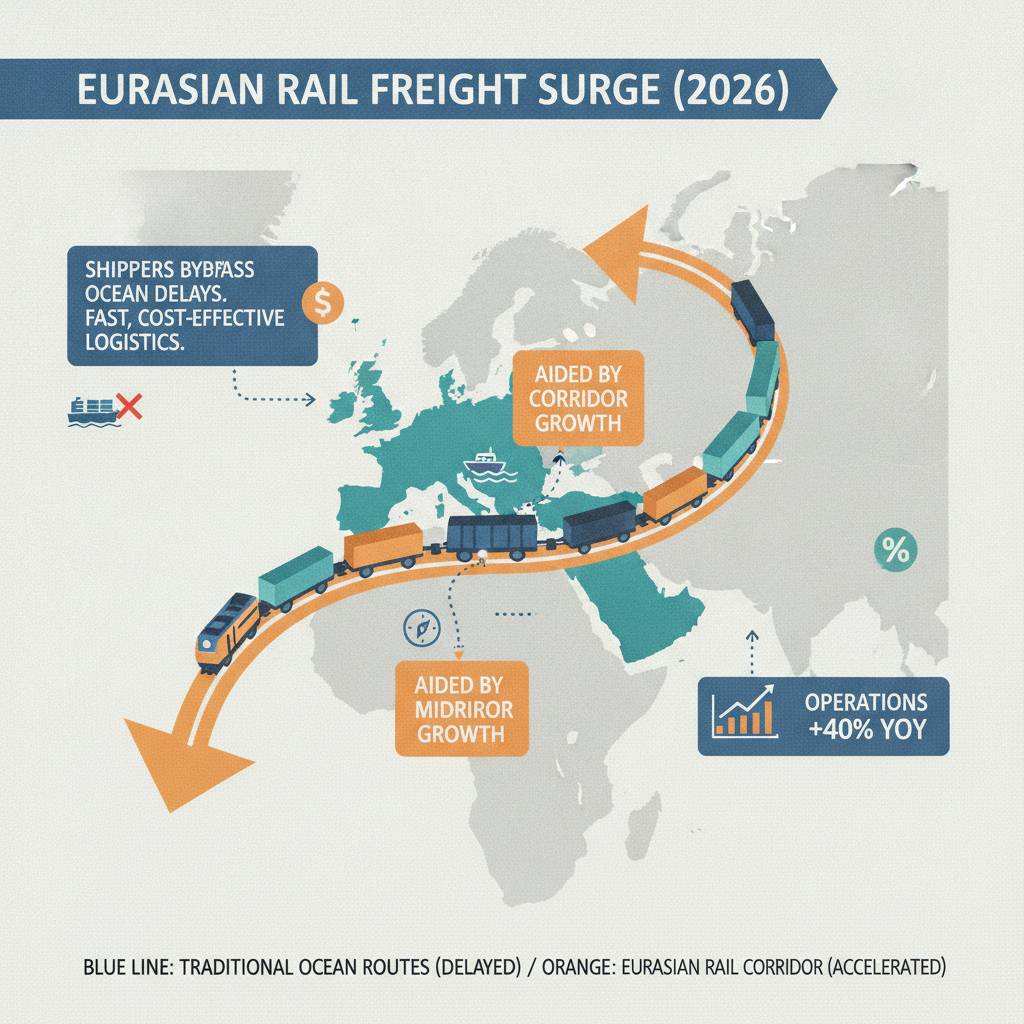
Eurasian Rail Freight Operations are experiencing a dramatic renaissance in 2026, driven by volatile ocean logistics and shifting geopolitical landscapes. Following a relatively flat 2025, the sector is rebounding rapidly as shippers seek reliable alternatives to disrupted maritime routes. During the first two months of 2026, the China-Europe Railway Express handled 3,501 freight trips carrying 352,000 TEUs, representing a massive 25% year-on-year volume increase. This surge underscores the growing reliance on transcontinental railways for high-value cargo like electric vehicles, electronics, and machinery.
Drivers Reshaping Eurasian Rail Freight Operations
While the Northern Corridor historically dominated the market, recent geopolitical friction has accelerated the development of alternative pathways. In 2025, total Eurasian rail movements reached a record 20,022 train journeys, transporting over 2.05 million TEUs valued at $67.7 billion. However, strategic focus is increasingly pivoting toward the Middle Corridor (Trans-Caspian International Transport Route). Crucial factors transforming Eurasian Rail Freight Operations include:
- Ocean Freight Volatility: Extended Cape of Good Hope transit times have pushed time-sensitive, high-value goods back to railways.
- Middle Corridor Expansion: Cross-Caspian cargo volumes have grown substantially, with stakeholders aiming for another 10% capacity increase throughout 2026.
- Favorable Economics: Rail freight remains approximately 80% cheaper than air freight while cutting ocean transit times by half.
Future Limits for Eurasian Rail Freight Operations
Despite impressive growth rates, physical infrastructure limits remain a pressing concern. The Middle Corridor currently handles only a fraction of the Northern Corridor’s capacity. To cement the long-term viability of these networks, sustained multi-national investment in transshipment terminals and rolling stock is absolutely essential.