
Asia Export Gateway Constraints: Navigating 2026 Supply Chain Bottlenecks
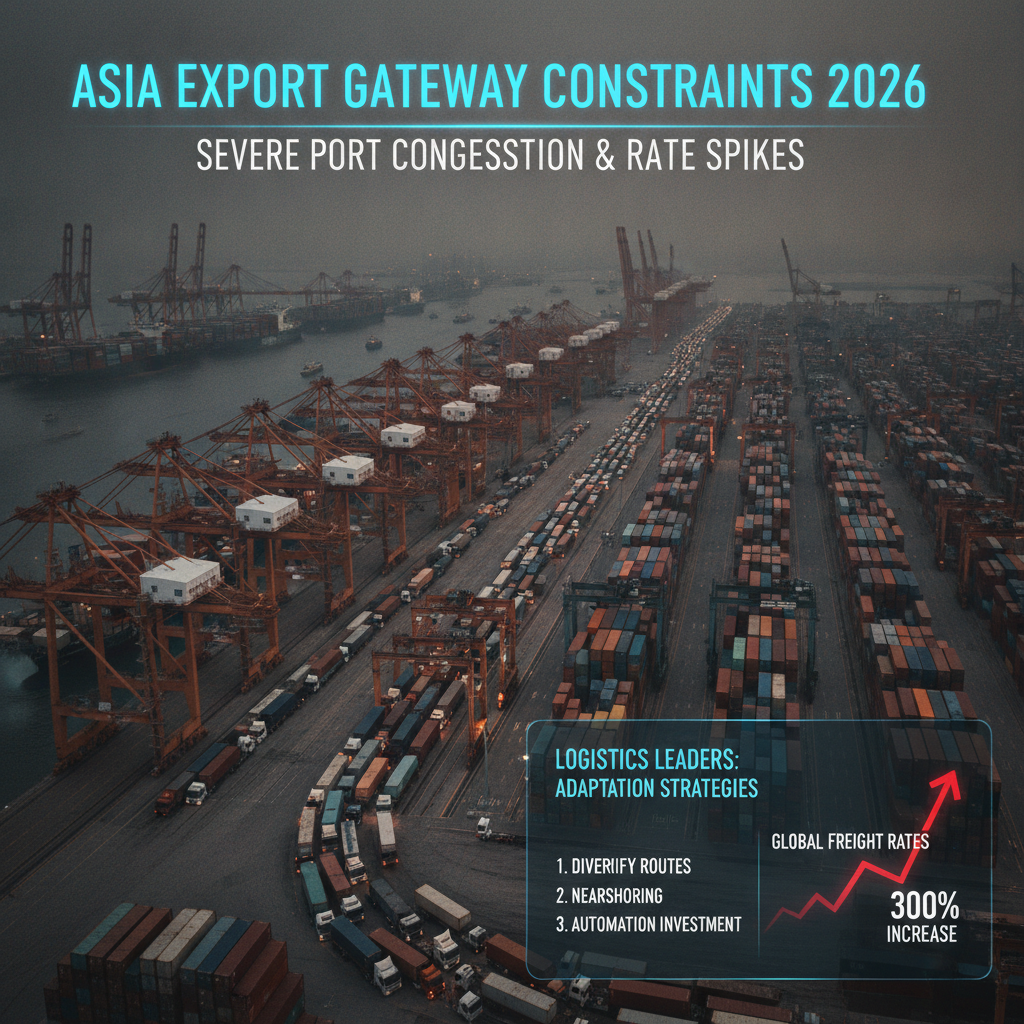
The global logistics landscape is experiencing severe strain as Asia Export Gateway Constraints reach critical levels in mid-2026. A compounding mix of geopolitical rerouting, extreme weather events, and equipment shortages has transformed operational realities for shipping experts. Notably, the ongoing diversion of vessels from the Red Sea has extended global transit times by 10 to 20 days per voyage, significantly reducing available sailings and bunching arrivals at major transshipment hubs.
Unprecedented Congestion in Key Hubs
Recent data highlights the severity of these constraints across major regional ports. In Southeast Asia, transshipment hubs like Singapore and Malaysia’s Port Klang face unprecedented vessel backlogs. By early 2026, waiting times in Singapore had stretched to four to six days, with approximately 260 vessels utilizing slow-steaming strategies just to manage berth availability. This gridlock triggered a massive 37% spike in spot freight rates from Asia to the U.S. West Coast. Concurrently, North Asian gateways suffered severe setbacks due to extreme weather, notably Typhoon Dolphin in August 2026. The storm tied up more than 2.4 million TEUs of containership capacity, forcing operations in Ningbo and Shanghai into extensive cargo backlogs.
Cascading Effects on Equipment and Costs
The constraints extend beyond port limits, manifesting as severe equipment shortages and skyrocketing logistics costs. The Indian container market faces immense pressure across export supply chains. Spot rates for India to the U.S. East Coast surged to between $10,000 and $12,000 per 40-foot container, compounded by Peak Season Surcharges reaching up to $7,500. To mitigate these Asia Export Gateway Constraints, forward-thinking logistics professionals must allocate 14 to 21 days of buffer time for critical shipments and proactively diversify their routing strategies.