
Can the Silk Road Maritime Redefine Global Shipping in 2026?
As global trade navigates uncertainties, the Silk Road Maritime initiative is rapidly transforming international logistics. The 8th Silk Road Maritime International Cooperation Forum, held in Xiamen in September 2026, highlighted a strategic shift toward deeper supply chain integration. Logistics experts are closely monitoring its transition into a comprehensive global logistics platform.
Unprecedented Route Expansion
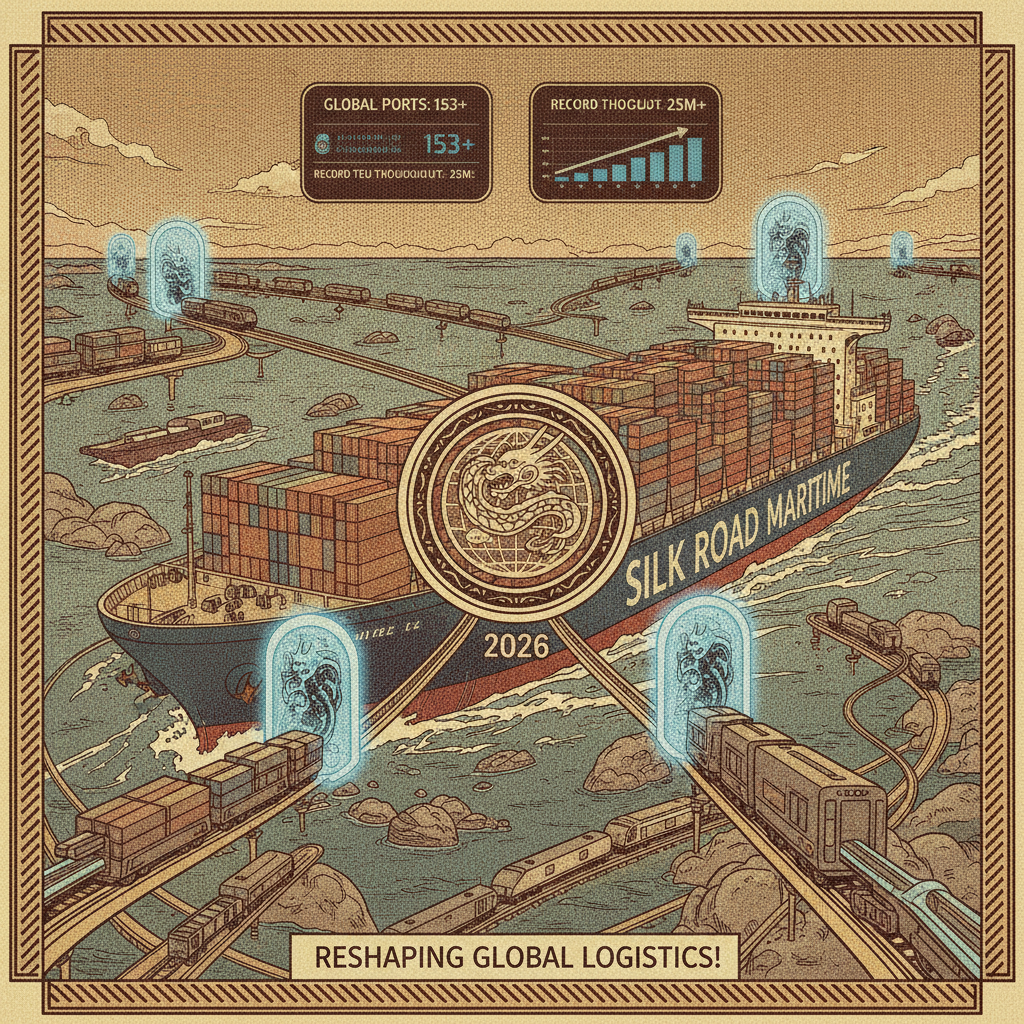
Recent statistics reveal robust operational expansion. Container throughput on Silk Road Maritime routes exceeded 5.4 million TEUs in 2025, marking a 9.11 percent year-over-year increase. Total shipments have now surpassed 26 million TEUs. The network has exponentially grown to encompass over 150 ports across 48 countries, bridging Asia, the Middle East, and Europe.
Silk Road Maritime: Sea and Rail Integration
A major 2026 milestone was the inclusion of Poland’s Gdansk Port as the first European port to receive a named Silk Road Maritime route. This establishes a seamless two-way logistics channel connecting deep-water maritime trade with the China-Europe Railway Express. Furthermore, the launch of the Hunan-Fujian sea-rail intermodal corridor promises significant efficiency gains:
- Logistics costs reduced by 20 to 30 percent.
- Transit times shortened by five to seven days.
- Enhanced priority berthing for alliance members.
Future Outlook
To sustain momentum, the platform now utilizes big data and IoT for real-time container monitoring. As the Silk Road Maritime Association surpasses 375 members, industry professionals must leverage these intelligent-driven technologies to remain competitive.
References
Global Times: Silk Road Maritime shipping routes. Global Times: Silk Road Maritime Forum. CGTN: Silk Road Maritime network statistics.