

The New Default Logistics Strategy
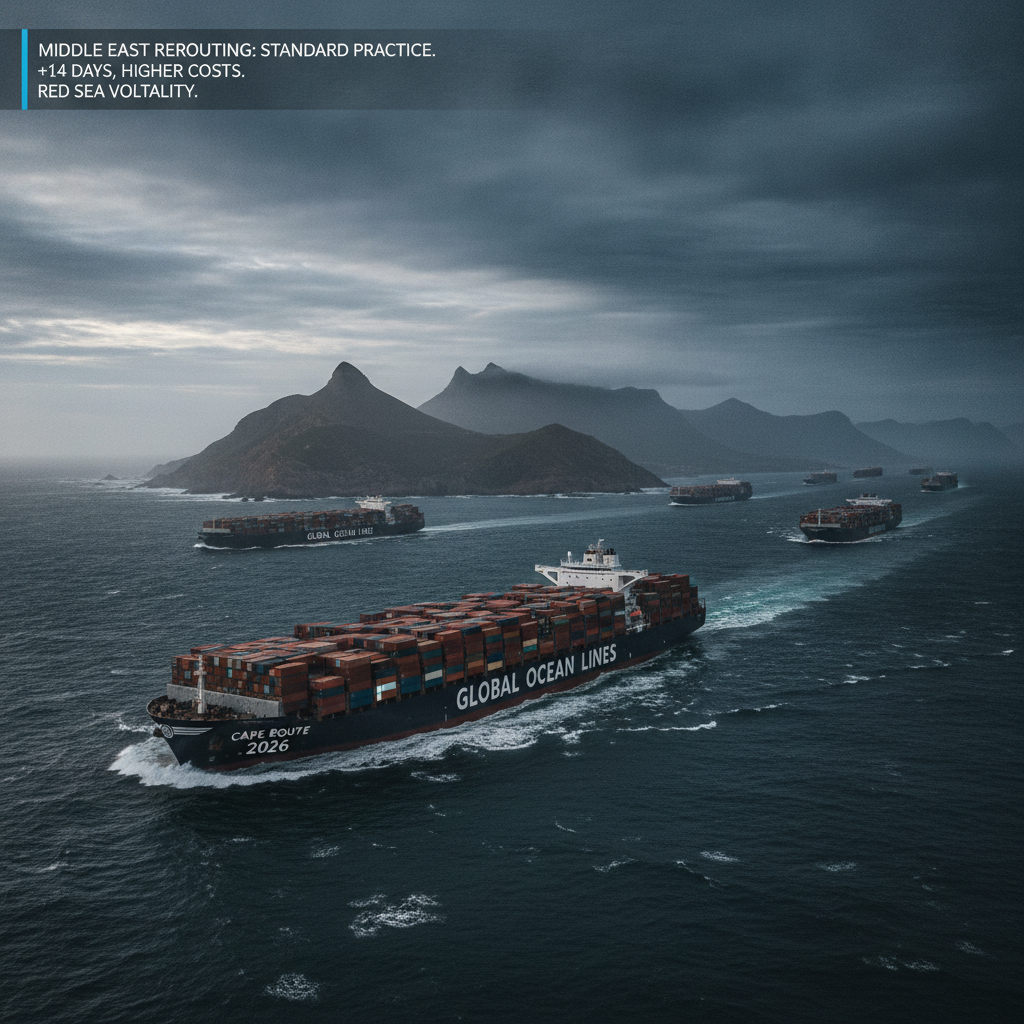
As the logistics sector moves deeper into 2026, Middle East Shipping Rerouting has shifted from a temporary emergency to an operational baseline. Avoiding the volatile Red Sea corridor in favor of the Cape of Good Hope is now standard practice, despite adding roughly 3,500 nautical miles and 10 to 14 transit days on Asia-to-Europe lanes. Consequently, Suez Canal transit volumes have remained deeply depressed, with total throughput down 50 to 60 percent against pre-crisis baselines.
Soaring Operational Costs
The financial ramifications of sustained Cape routing are substantial. Extended voyages mean increased fuel consumption and artificially constrained global vessel capacity. FAK rates on Asia-to-North Europe routes have jumped 25 to 30 percent compared to pre-2023 levels. Estimates highlight that rerouting can generate up to $1 million in extra expenses per one-way trip between Asia and Europe.
Strategic Shifts for 2026 and Beyond
While late 2026 has seen major alliances cautiously testing partial returns to the Suez Canal on specific loops, volatile security dynamics dictate that broader East-West trade still leans heavily on the Cape route. Forwarders must continue building Middle East Shipping Rerouting into their supply chain and service contracts, recognizing that maritime transit is now evaluated on a highly dynamic, per-sailing basis.
References
GKToday, Red Sea Crisis. GoFreight, Maritime Disruption 2026. Splash247, Middle East shipping routes pull in opposite directions.