
Maritime Geopolitical Disruption: The 2026 Structural Reality
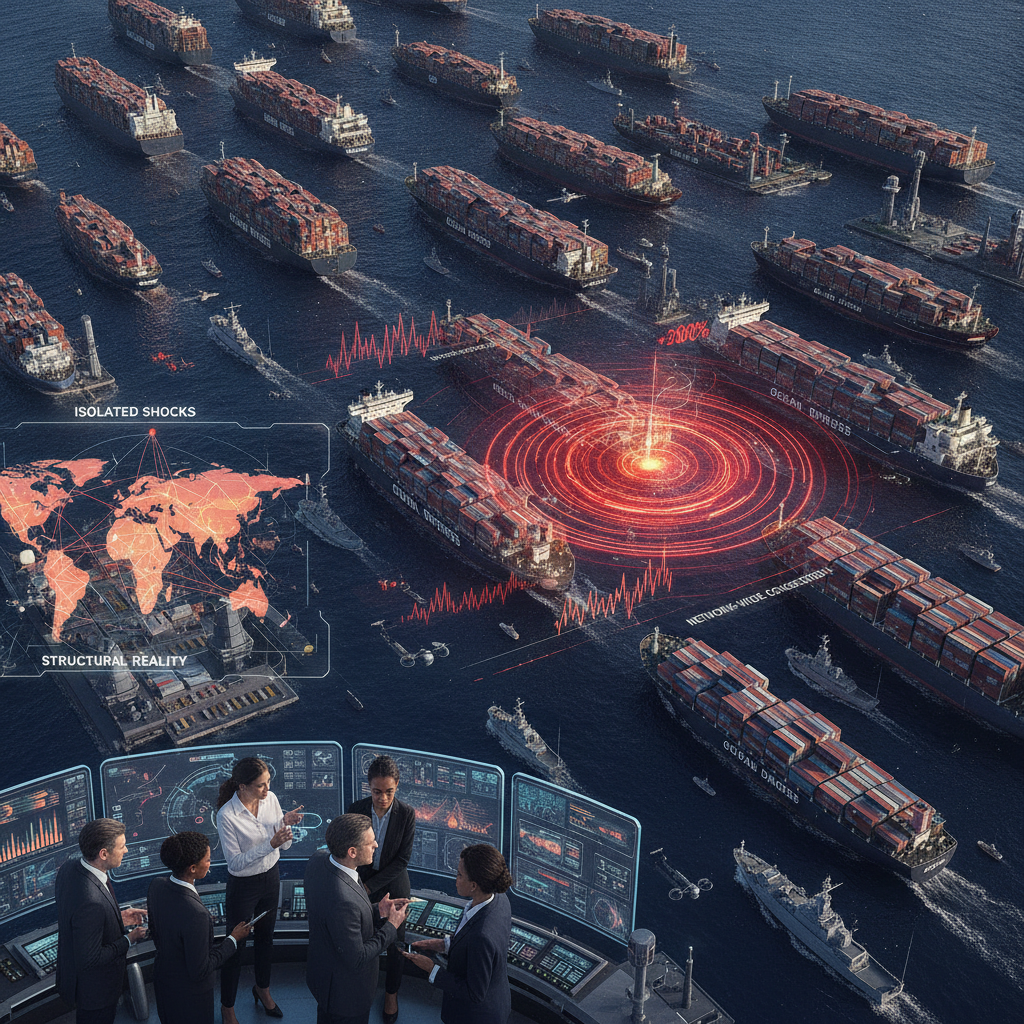
In 2026, Maritime Geopolitical Disruption is no longer a temporary black swan event; it is the baseline operating condition for global logistics. Overlapping crises in the Red Sea and the Strait of Hormuz have fundamentally rewritten ocean freight routing. With major carriers continuing to divert Asia-to-Europe vessels around the Cape of Good Hope, transit times have systematically increased by 10 to 14 days. As a result, the logistics sector is grappling with structural capacity tightness and elevated operational costs rather than transitional delays.
Key Indicators Tracking Maritime Geopolitical Disruption
Recent data underscores the severity of this sustained pressure on global procurement and shipping operations:
- The World Bank’s Global Supply Chain Stress Index hit a record 2.87 million TEUs in August 2026, 33% above its 2022 peak.
- The Shanghai Containerised Freight Index more than doubled between Q1 and Q3 of 2026.
- Suez Canal throughput remains 50% to 60% below pre-2023 levels as carriers avoid the Bab el-Mandeb chokepoint.
Managing Maritime Geopolitical Disruption Across Global Networks
The secondary effect of this sustained Maritime Geopolitical Disruption is geographically diffuse network congestion. Rerouting away from the Strait of Hormuz and the Red Sea has intensified traffic at alternative maritime chokepoints, particularly the Panama Canal and the Malacca Strait. For logistics experts, the strategic mandate has shifted from simple route diversion to anticipating interconnected network constraints. Procurement teams must now plan for an era where localized conflicts instantly trigger global freight inflation and extended working capital cycles. Building supply chain resilience in 2026 requires agile routing, diversified port strategies, and a deep understanding of volatile flashpoints.
References
GoFreight: Maritime Disruption 2026 Impact on Ocean Freight. Wakeo: Geopolitical Time Bombs Shaping Supply Chains. Maritime Chokepoints Tighten, Global Supply Chain Risk Rises. Indian Institute of Logistics: Strait of Hormuz 2026 Crisis. Global Supply Chain Stress Surging in 2026.