

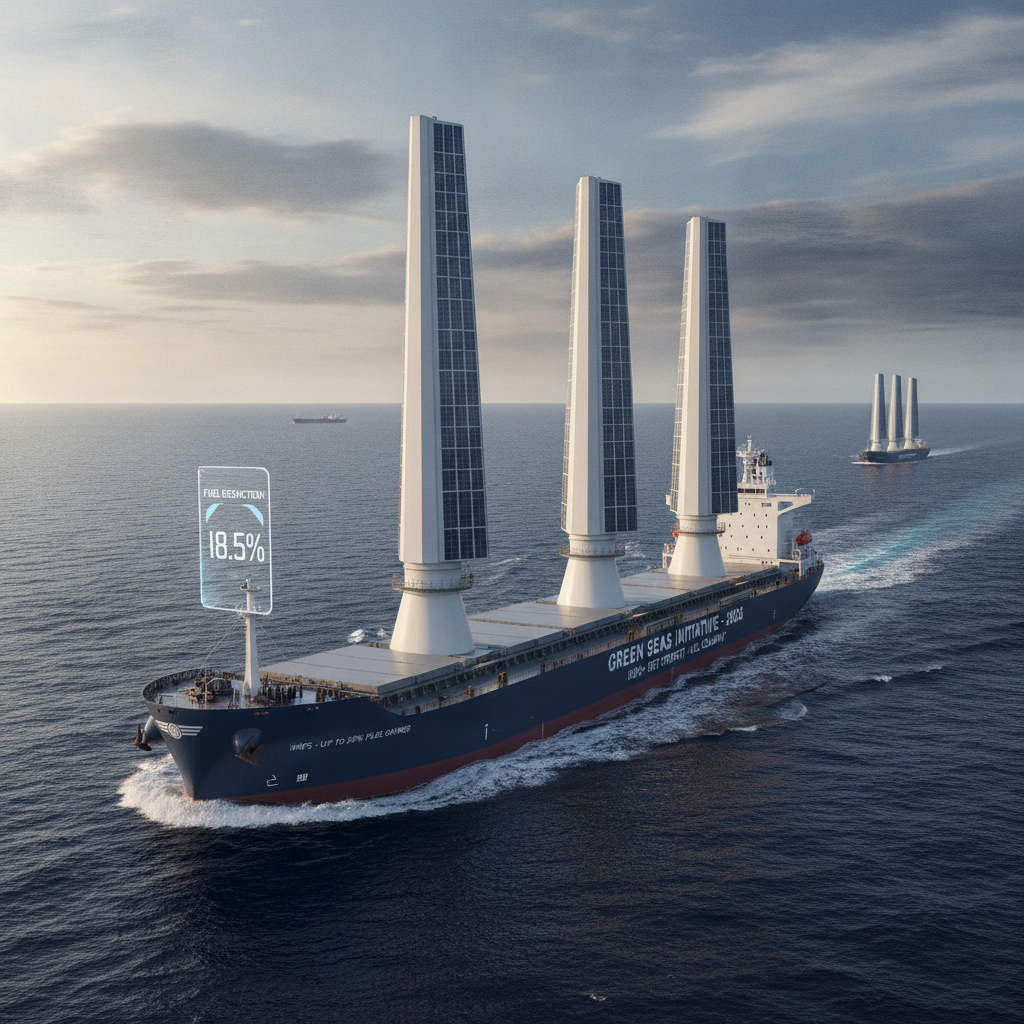
Wind-Assisted Propulsion: The Maritime Megatrend of 2026
As the global shipping industry races to comply with the IMO’s greenhouse gas reduction targets, the Carbon Intensity Indicator (CII), and the EU ETS, Wind-Assisted Propulsion (WAPS) has transitioned from an experimental concept to a critical retrofit decision. By the second half of 2026, the global commercial fleet equipped with WAPS surpassed 100 ships, with more than 230 individual systems now actively installed and operational. This momentum highlights a definitive shift towards sustainable, wind-harvesting technologies like Flettner rotors, rigid wings, and suction sails.
Real-World Wind-Assisted Propulsion Efficiency Gains
Logistics operators and fleet managers are no longer relying on theoretical models. Hardware deployed in 2025 and 2026 has proven its efficacy, with retrofitted WAPS consistently reducing fuel consumption by 5% to 20% during real-world operations. Furthermore, the introduction of the ISO 15016:2025 sea trial specifications has provided a standardized framework for utilizing accurate wind lidar data to validate the performance impact of these systems under dynamic environmental conditions. The ability to measurably cut reliance on expensive low-emission alternative fuels is a primary driver for rapid commercial adoption.
Optimizing Voyages with Wind-Assisted Propulsion
The integration of WAPS is fundamentally changing voyage planning and digitalization. Instead of treating weather and wind as resistance to be routed around, advanced weather routing tools and digital twins now calculate wind as a direct source of thrust. Key technological innovations scaling in 2026 include:
- Automated Sail Control: Real-time adjustments based on changing wind angles and speeds to maximize forward thrust.
- Advanced Digital Twins: Decision-making tools that simulate hydrodynamic profiles and GHG emissions before capital is committed.
- Integrated Weather APIs: Synergizing propulsion data with maritime weather forecasts to discover optimal transit corridors.
For maritime experts, WAPS represents a scalable, zero-carbon energy resource that bridges the gap between stringent compliance requirements and immediate operational cost savings.
References
- International Windship Association / Napa.fi (2026)
- Vaisala – Wind assisted vessels: The future of cleaner shipping (2026)
- Insightace Analytic – Wind Assisted Propulsion Market Deep Analysis Report (2025)