

The State of Transpacific Ocean Freight Capacity in 2026
As the logistics sector moves into the final quarter of 2026, Transpacific Ocean Freight Capacity remains heavily constrained despite a slight cooling of peak season rates. Effective capacity is visibly tighter than nominal fleet growth would suggest, driven by longer voyage routing, Red Sea diversions, and active capacity management by ocean carriers.
Key Transpacific Ocean Freight Capacity Disruptions
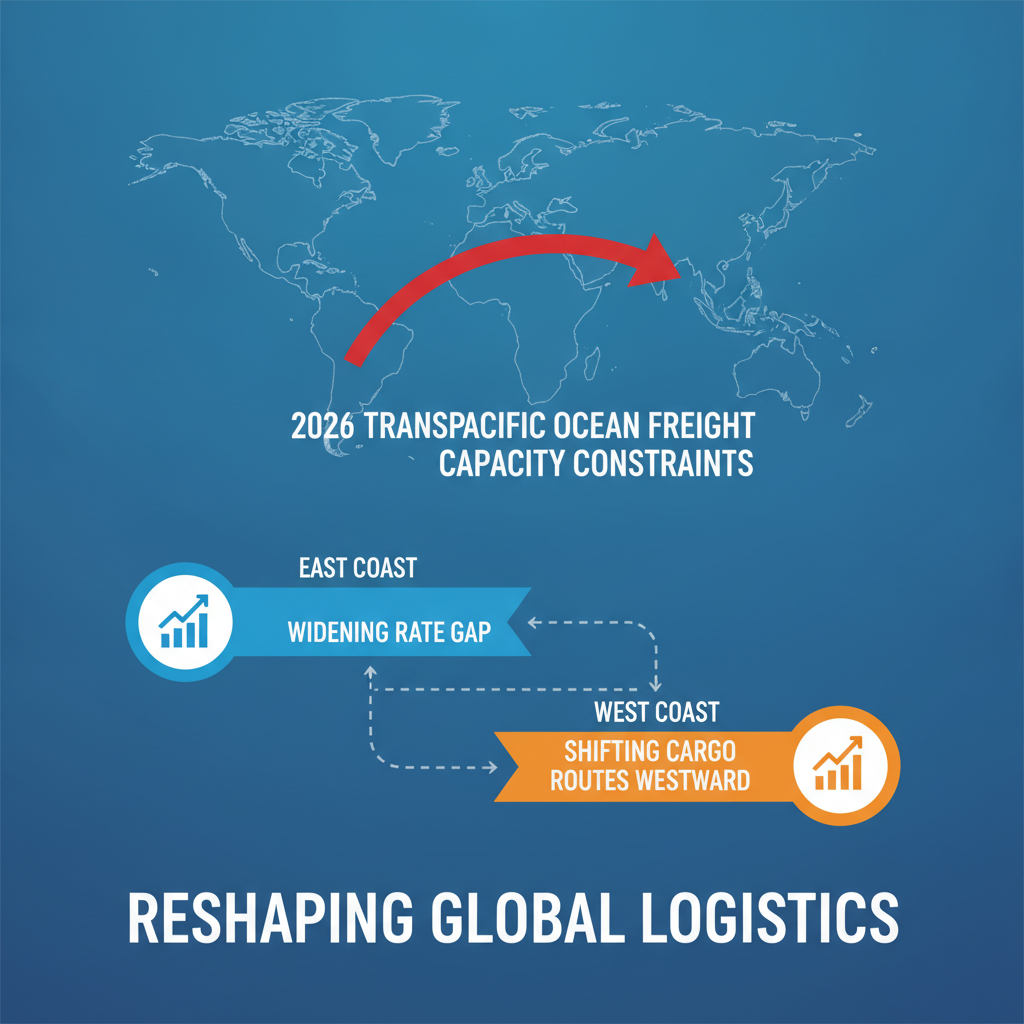
According to September 2026 benchmarking data, spot rates remain historically elevated. Rates from Asia to the U.S. West Coast sat around $7,569 per FEU, while U.S. East Coast rates hovered at $9,505 per FEU. This massive rate differential has forced shippers to rapidly pivot their routing strategies.
- Significant Rate Gaps: A massive pricing spread of over $2,300 to $3,300 per FEU between the East and West coasts is actively driving cargo shifts westward.
- Blank Sailings: Carriers are actively managing Transpacific Ocean Freight Capacity, with reports of over 14 blank sailings deployed recently to maintain elevated market floors.
- Environmental Delays: Major Asian hubs like Ningbo and Shanghai faced multi-day closures due to late-summer typhoons, compounding port congestion and backlogs.
Strategic Outlook for Logistics Experts
Logistics professionals must prepare for sustained market pressure. Shippers are increasingly factoring in inland transport costs via rail and truck from the West Coast to bypass East Coast premiums. With ongoing supply chain volatility, securing reliable capacity requires balancing space availability and schedule reliability over chasing the lowest base rate.
References
Global Logistical Connections News, September 2026 Ocean Freight Update.
CZ App Insights, Freight Rate Gap Drives Cargo Shift to US West Coast, September 2026.
Supply Chain Dive, Ocean freight rates cool despite continued price elevation, September 2026.