

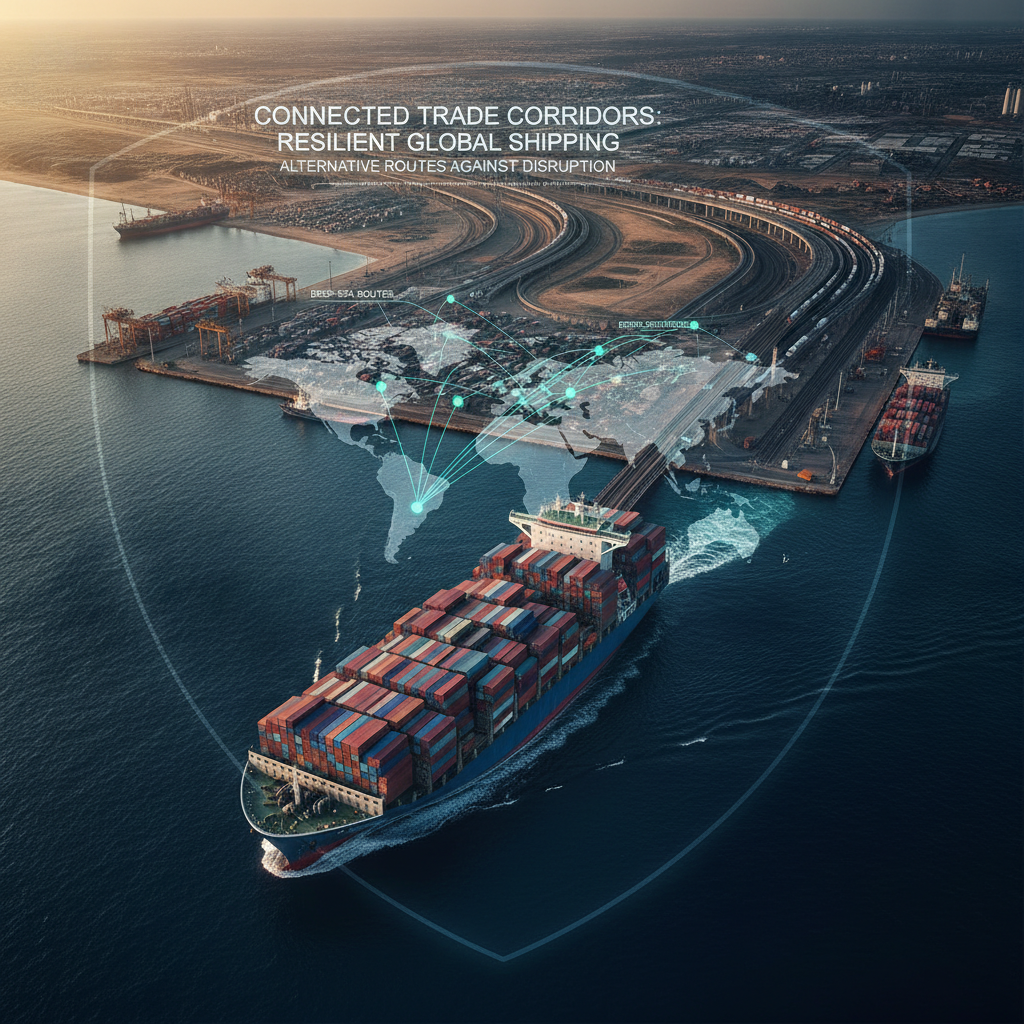
How Are Connected Trade Corridors Reshaping Global Shipping in 2026?
The maritime environment, handling over 80% of global merchandise trade, is undergoing a structural reset. Amid geopolitical tensions and climate disruptions, logistics experts are shifting toward Connected Trade Corridors. These ecosystems integrate deep-sea shipping, feeder networks, ports, and inland transport to provide resilient alternative pathways when traditional routes fail.
Supply Chain Resilience Data
Despite mounting disruptions, businesses remain highly optimistic. DP World’s 2026 Global Trade Observatory reveals that 94% of supply chain executives expect global trade growth this year to match or exceed 2025 levels. To sustain this, networks managing $14 trillion in containerized goods must prioritize adaptability.
- South-South Trade: Developing economy exports surged to $8.8 trillion in 2025.
- Geographic Diversification: Manufacturing shifts to India, Southeast Asia, and Africa demand new regional shipping links.
- Multimodal Integration: Connected Trade Corridors merge maritime operations with inland networks for uninterrupted flow.
Future of Maritime Logistics
Optimizing Connected Trade Corridors means embedding operational redundancy directly into supply chains. By leveraging digital intelligence, providers can change a cargo’s path without fragmenting the customer journey. Resilience is now an operational necessity.
References
Logistics Update Africa: Middle East trade resilience via connected corridors
Logistics Update Africa: Middle East trade resilience via connected corridors
DP World: The future of maritime trade will be built on connected corridors
DP World: How Resilience Will Define the Next Era of Maritime Trade
DP World: Regional Shipping Routes Gain Importance Amid Trade Shifts
Bulk Distributor: Global trade being reconfigured rather than reversed
Port Technology International: DP World warns trade corridors need greater flexibility