

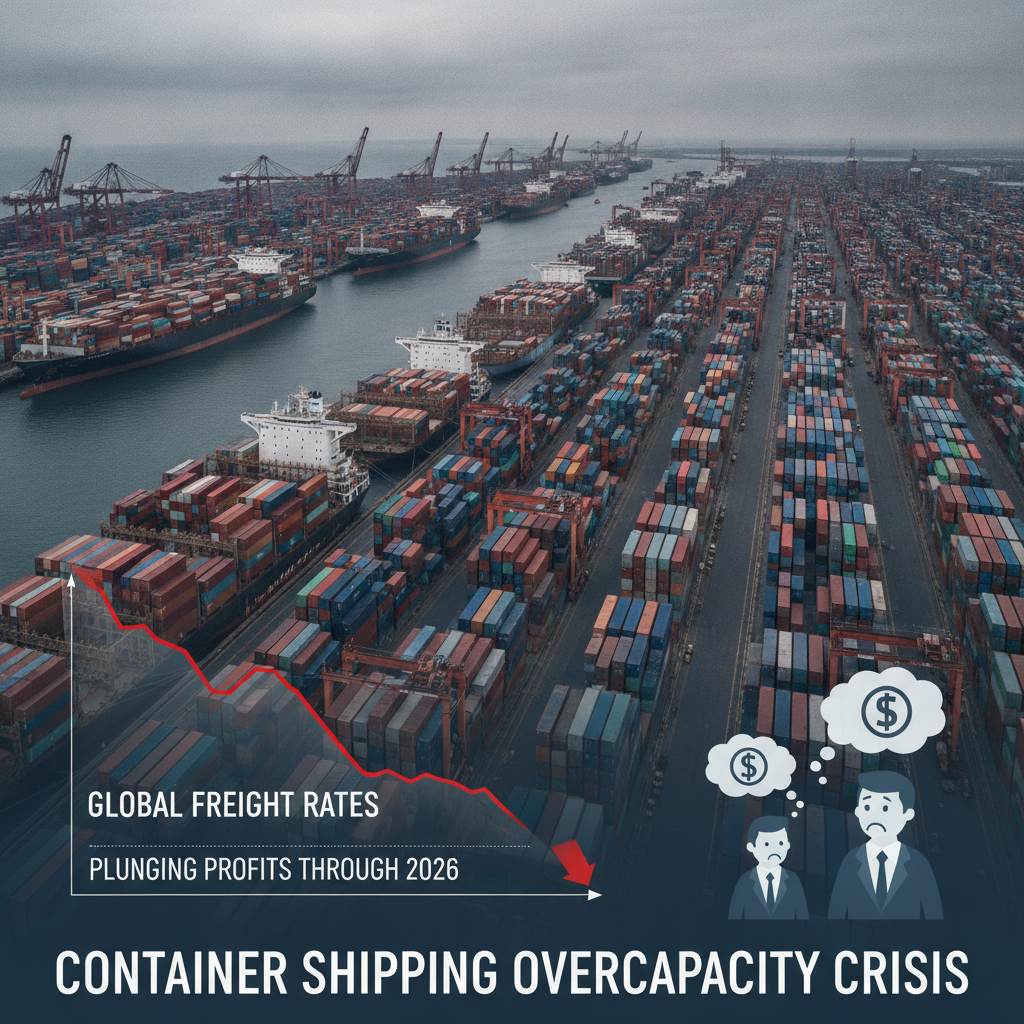
Navigating the Container Shipping Overcapacity Storm in 2026
The global maritime logistics sector is facing a severe reality check as container shipping overcapacity reaches levels not seen since the 2016 industry downturn. After pandemic-era windfalls prompted carriers to heavily invest in new fleets, the bill has finally come due. Between 2024 and 2026, a staggering 7 million TEUs of additional vessel capacity entered the market, fundamentally disrupting the supply-demand balance. By the end of 2025, the global container fleet had already surpassed 33 million TEU, reflecting a 7% year-on-year expansion despite softening global demand.
How Container Shipping Overcapacity Impacts Carrier Margins
The immediate consequence of this container shipping overcapacity is significant downward pressure on ocean freight rates. Industry analysts report that the supply-demand ratio on primary East-West routes currently reveals a capacity surplus exceeding 10%. With newbuilds continuing to launch, major ocean carriers are bracing for aggressive rate volatility and shrinking profit margins. Financial forecasts for 2026 suggest that leading carriers could see their ocean segment EBITDA plunge by nearly 60% as the gap between available capacity and cargo demand widens.
Strategic Adjustments to Container Shipping Overcapacity
To mitigate the financial fallout from structural overcapacity, shipping lines and logistics operators are adopting defensive mechanisms. These operational strategies include:
- Increasing blank sailings to artificially tighten regional vessel supply.
- Holding onto older vessels as strategic insurance against unpredictable geopolitical supply chain disruptions.
- Redirecting excess capacity to emerging markets in South Asia and Latin America, which demonstrated steady demand growth in early 2026.
While the temporary absorption of capacity caused by Red Sea diversions offered a brief buffer, the overarching market trend points to a protracted downcycle that is projected to peak around 2027. Logistics professionals must proactively manage procurement, leverage localized shortages, and prepare for heightened pricing volatility as the industry digests this unprecedented capacity glut.
References
Portnews: Sea-Intelligence warns of container shipping overcapacity peaking in 2027. Freightos: Container Shipping Overcapacity & Rate Outlook 2026. Maritime Gateway: Container Shipping Forecast 2026. S&P Global: Maersk faces a tougher 2026. STU Supply Chain: 2025 Review & 2026 Outlook.