

Can Cross-Border E-commerce Air Freight Survive 2026 Tariffs?
The landscape of Cross-Border E-commerce Air Freight is undergoing a dramatic transformation in 2026. Following a robust 2025 where global air cargo demand saw international cargo tonne-kilometers increase by 4.2%, the industry is now navigating complex regulatory headwinds. Major catalysts for this shift include U.S. tariff reinstitutions and the abolition of de minimis duty exemptions across Western markets.
How Cross-Border E-commerce Air Freight Models Are Shifting
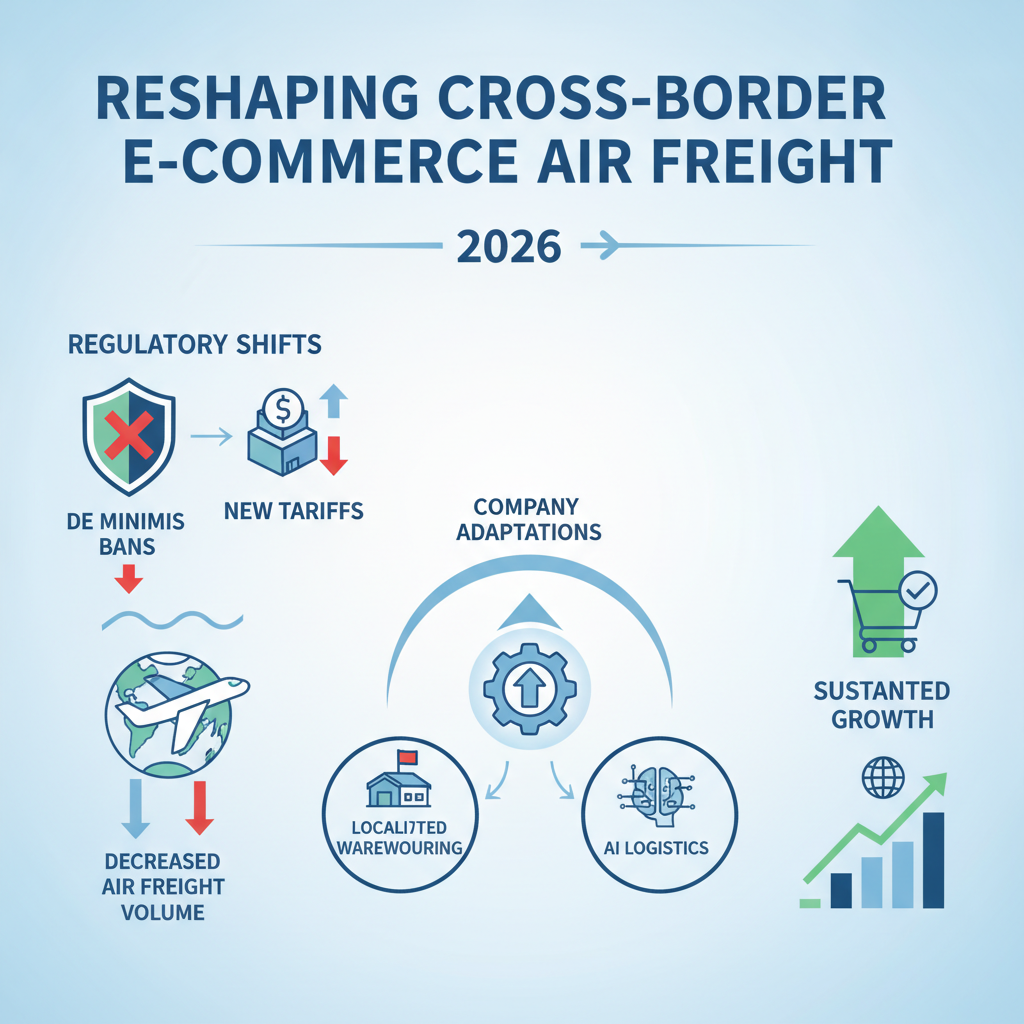
Industry analysts project a cautious 2% to 3% growth in global air freight volumes for 2026, a sharp deceleration from the previous year’s resilience. The removal of the de minimis exemption has effectively disrupted the traditional pure Cross-Border E-commerce Air Freight model. Consequently, supply chains are rapidly evolving:
- Localized Warehousing: With U.S. customs codification in June 2026 and the EU’s removal of the 150-euro threshold, companies are aggressively pivoting to localized fulfillment operations.
- Trade Route Shifts: Tariff escalations have prompted exporters to redirect goods toward ASEAN countries rather than the U.S. or EU.
- Tech Optimization: Freight forwarders are investing heavily in AI-driven Unit Load Device (ULD) management to improve space utilization.
The Future of Cross-Border E-commerce Air Freight Operations
Despite regulatory hurdles, Cross-Border E-commerce Air Freight remains a critical global trade pillar. The international segment’s share of total air cargo expanded in 2025, driven by robust Asia-Pacific manufacturing. To survive, logistics experts must prioritize agile scheduling and advanced customs compliance.
References:
- Smartkarma (2026). China Daily Briefs.
- Xeneta (2026). Air cargo ends 2025 with volume growth.
- IATA (2026). Air Cargo Market Analysis.
- Knowledge (2026). ULD Management Optimization Strategy.
- Cargo Facts (2025). Cargo Facts EMEA.