

Red Sea Shipping Diversions: A 2026 Logistics Outlook
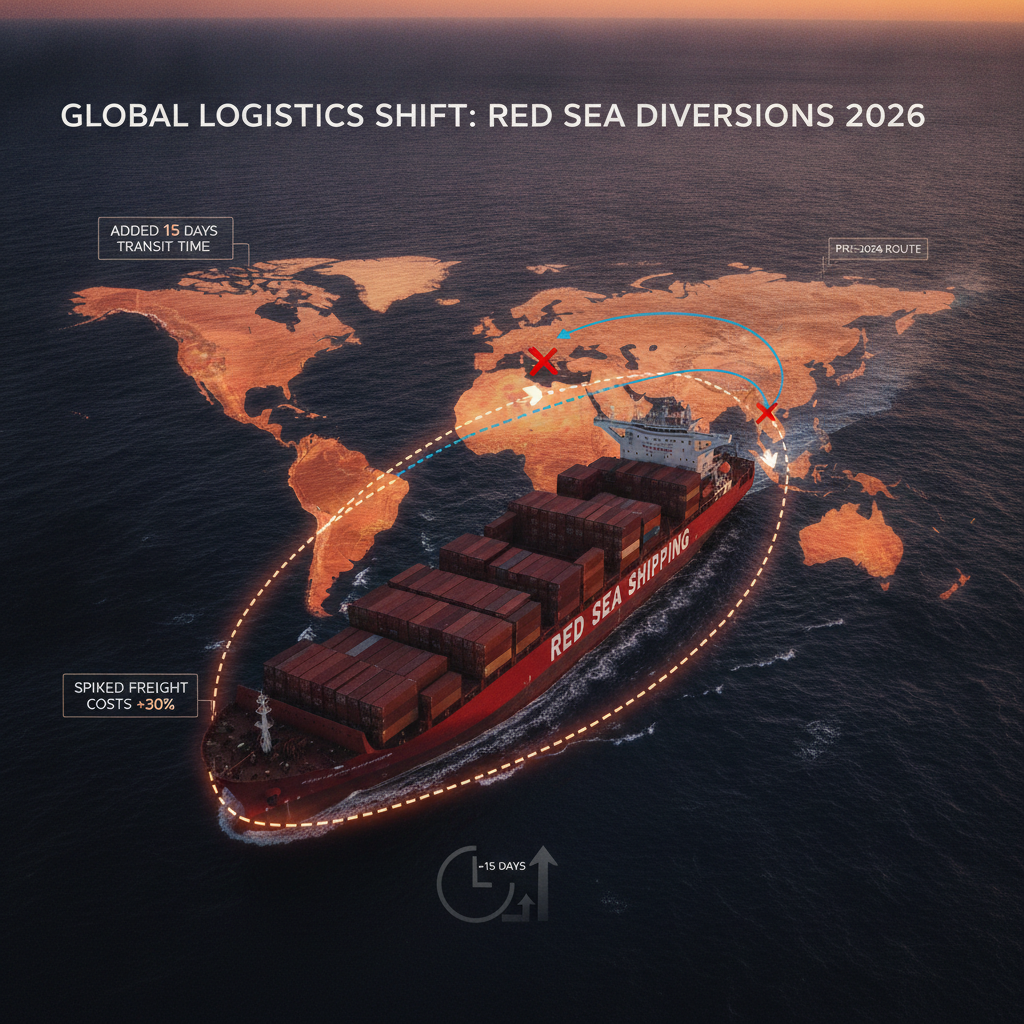
The prolonged Red Sea Shipping Diversions continue to reshape global logistics networks well into 2026. Initially viewed as a temporary disruption, the routing of vessels around the Cape of Good Hope has evolved into a structural challenge for the industry. Supply chain executives are now forced to re-evaluate their long-term capacity planning and working capital management.
Financial and Operational Toll of Red Sea Shipping Diversions
The financial impact of these ongoing route changes is staggering for global trade lanes. Industry reports indicate that extended voyages are squeezing the liquidity of logistics operators worldwide. Key impacts from recent 2025 and 2026 data include:
- Transit Time Increases: Bypassing the Suez Canal adds an average of 10 to 15 days to global transit times.
- Freight Rate Spikes: Rates on the critical Asia-Europe trade lanes have seen surges of 200% to 300% compared to pre-diversion baselines.
- Cash Flow Drain: Small and medium-sized logistics enterprises have experienced a 15% to 30% depletion in cash reserves due to delayed payments and upfront carrier fees.
Future-Proofing Against Red Sea Shipping Diversions
Terminal operators and freight forwarders are adopting new strategies to mitigate these ongoing bottlenecks. With major Asian and European hubs facing renewed port congestion and vessel bunching in 2026, companies are heavily investing in supply chain digitalization. Leveraging supply chain finance and alternative vessel fuels is becoming mandatory to offset the elevated bunker consumption required for longer African routes. Until geopolitical stability returns to the Bab el-Mandeb Strait, the logistics sector must accept this rerouting as the new operational baseline.
References
IMARC Group Germany Logistics Market Report (2026). BRF Logistics Global Port Congestion Report (2026). The GCC Edge: DP World Logistics Outlook (2026).