

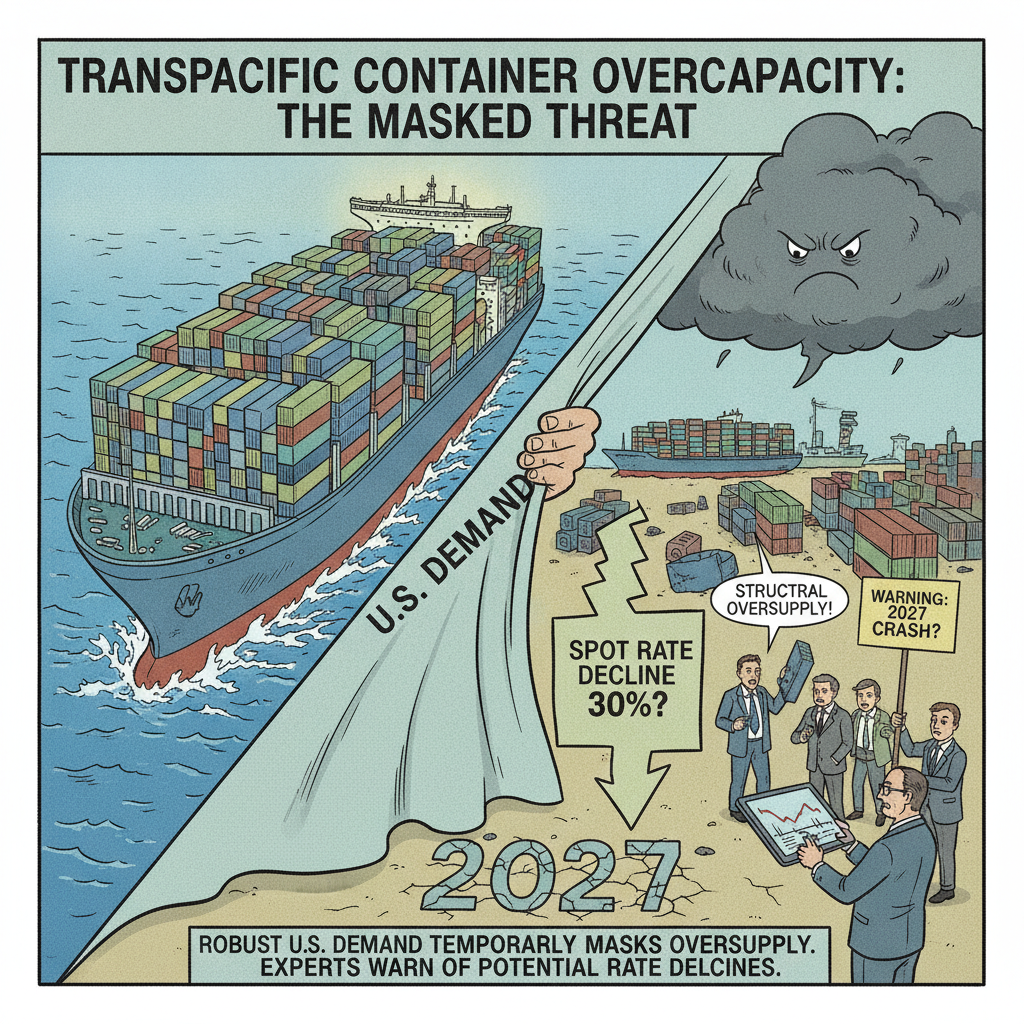
The State of Transpacific Container Overcapacity
The shipping industry is grappling with a looming structural imbalance, bringing Transpacific Container Overcapacity to the forefront of logistics planning. Shipping lines placed record orders during the pandemic, resulting in an orderbook of 10 million TEUs—roughly one-third of the active fleet. Despite this massive influx of tonnage throughout 2026, transpacific freight rates have defied expectations, supported by robust U.S. import demand and systemic disruptions.
Supply Strategies vs. Real Demand
While global supply growth is projected to outpace demand, ocean carriers have deployed aggressive management strategies to prevent a rate collapse:
- Blank Sailings: Carriers continue to pull vessels from circulation, heavily restricting nominal ship capacity to keep utilization high.
- Geopolitical Rerouting: Red Sea diversions have absorbed significant excess capacity, artificially tightening the global market.
- Record US Imports: The transpacific trade lane sustains high rates due to strong consumer demand and historically low retail inventories.
2027 Outlook and Structural Risks
Analysts warn this rate resilience is highly vulnerable. Xeneta forecasts global capacity will increase by 6.8% in 2027 against only a 4% growth in demand. As services gradually resume shorter transits through major canals, effective capacity will rapidly return. Experts predict this growing transpacific container overcapacity could trigger a spot rate collapse of up to 30% next year unless new supply chain shocks emerge.
References
Seatrade Maritime News (Nov 2026). Freightos Outlook 2026. Xinde Marine News. Maritime Gateway. The Loadstar (Oct 2026). US Import Demand Defies Expectations (Aug 2026). Carra Globe (May 2026).