

Navigating Peak Season Supply Chain Volatility
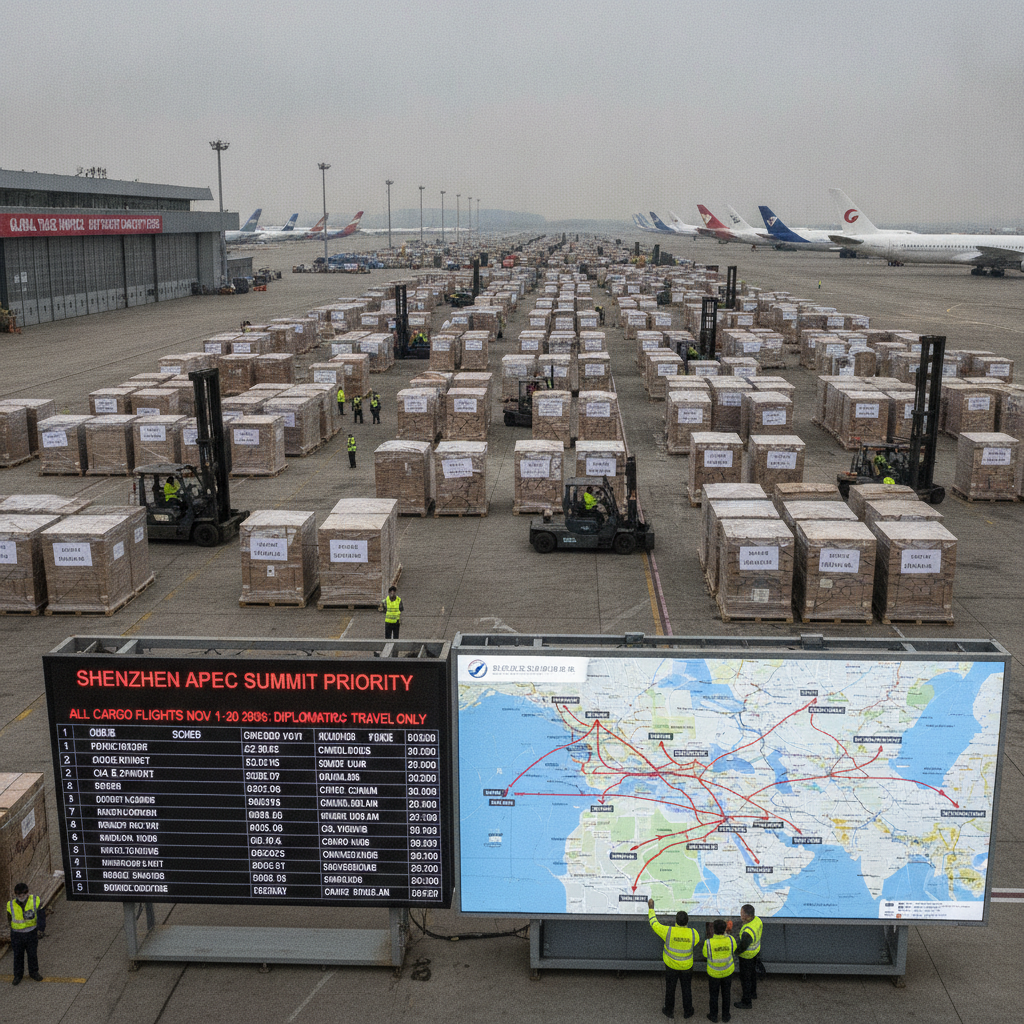
The 2026 Asia-Pacific Economic Cooperation (APEC) summit has brought unprecedented logistical challenges to southern China. As global leaders gather, Shenzhen APEC air freight disruptions have created significant bottlenecks across regional supply chains. From November 16 to 20, 2026, severe cargo embargoes are impacting both international and domestic capacities at Shenzhen Bao’an International Airport (SZX).
Impact of Shenzhen APEC Air Freight Disruptions
Logistics professionals must account for severe capacity reductions. Forwarders report that international passenger flights are entirely prohibited from carrying belly cargo during this operational window. Furthermore, domestic flight capacity has been slashed by 80% to accommodate diplomatic movements. Key operational hurdles include:
- Suspension of international belly cargo and dedicated freighter rerouting.
- City-wide bans on dangerous goods vehicles and road transport delays.
- Strict acceptance limits for perishables and time-sensitive cargo.
Mitigating Shenzhen APEC Air Freight Disruptions
To bypass these temporary bottlenecks, shippers are heavily diverting volumes to nearby hubs like Guangzhou (CAN) and Hong Kong (HKG). However, this sudden volume shift is tightening available capacity and escalating freight rates across the Greater Bay Area. Forwarders are advising businesses to leverage cross-border trucking alternatives carefully, ensuring they avoid core summit control areas. Proactive communication with carriers regarding revised departure times is critical for maintaining supply chain integrity. Logistics teams must aggressively plan around these constraints to protect Q4 deliverables.
References
Beckchoice, Shenzhen air freight restrictions during APEC -16-20 November 2026, beckchoice.com
Aviation Express, Shenzhen air cargo curbed ahead of APEC summit, aviationexpress.news