

Navigating the 2026 China Automotive Shipping Capacity Crunch
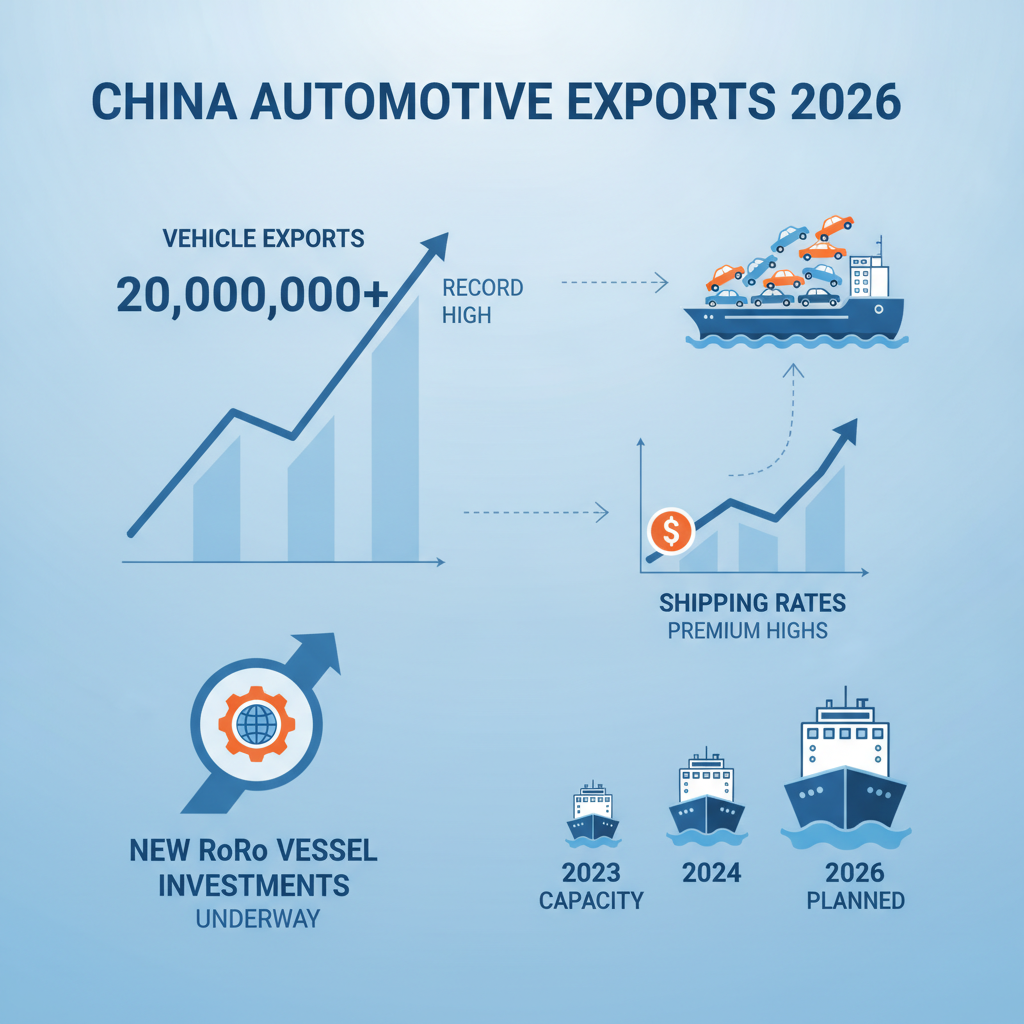
The global logistics landscape is undergoing a massive transformation as the China automotive shipping capacity faces unprecedented structural pressure. In 2026, Chinese vehicle exports are projected to hit a staggering 10 million units, severely outpacing available roll-on/roll-off (RoRo) tonnage. This supply-demand mismatch has pushed daily charter rates for 6,500-CEU vessels to premium highs of $67,000 to $90,000. For shipping professionals, navigating this bottleneck requires a deep understanding of current fleet deficits and strategic procurement.
Current Bottlenecks in China Automotive Shipping Capacity
The core of the capacity deficit became glaringly apparent in June 2026, when Chinese monthly automobile exports surpassed 1.03 million units. Consequently, the industry is grappling with a severe 2 million to 4 million CEU capacity shortage. To maintain export momentum, logistics providers are aggressively diversifying their modalities. Key workarounds include:
- Diverting up to 3 million vehicles into standard shipping containers and flat racks.
- Securing longer charter commitments with European operators to lock in favorable rates.
- Accelerating investments in pure car and truck carriers (PCTCs) equipped with dual-fuel LNG capabilities.
Strategic Expansion of China Automotive Shipping Capacity
To combat these constraints, major maritime and automotive conglomerates are executing historic fleet expansions. Cosco Shipping, BYD, and SAIC Anji Logistics are collaboratively injecting approximately $2.5 billion to procure 21 massive 11,000-CEU car carriers from domestic shipyards. Furthermore, BYD recently commissioned 10 additional 9,200-CEU vessels, expected to elevate its proprietary fleet to 18 ships and a total capacity exceeding 130,000 CEU by 2029. Despite this aggressive order-book, which now represents 27% of the active global fleet, experts project that the China automotive shipping capacity will remain tight through late 2027. Logistics operators must remain agile and continue utilizing containerized alternatives until these next-generation mega-ships enter service.
References
Logistics Great: Analyzing the 2026 Chinese Vehicle Export Shipping Capacity Crunch
Xinde Marine News: MSC Expands Its Car Carrier Fleet
Battery-Tech Network: BYD orders 10 more vessels
Fastport: Chinese Car-Carrier Fleet Expansion Continues
Metro Global: Car carrier expansion opens opportunities for European exporters