

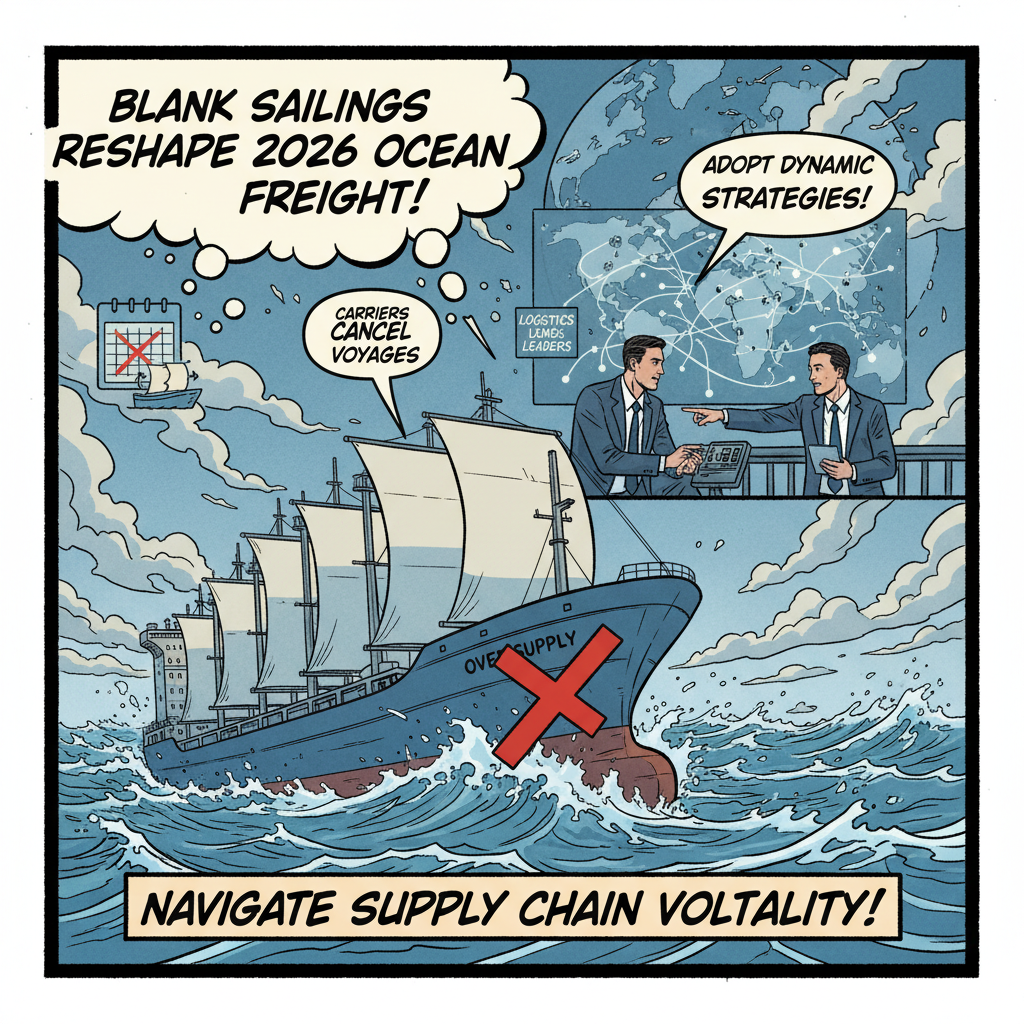
The global shipping industry is facing severe volatility, making blank sailings a critical tool for capacity management. A blank sailing occurs when a carrier cancels a scheduled voyage to stabilize freight rates amidst market fluctuations. In 2026, as global fleet capacity increases by an estimated 3.6% due to record vessel orders, carriers are utilizing these intentional service gaps to combat overcapacity.
For supply chain professionals, these operational adjustments pose significant challenges to schedule predictability. Global schedule reliability recently hovered between 42% and 48%. To counteract falling container rates, early 2026 saw deep-sea departure cancellation rates hit 9%. Recent Drewry data confirms 47 blank sailings over a five-week period across major East-West trades, yielding a 7% cancellation rate.
Several converging factors force carrier alliances to adjust capacity through strategic cancellations. Logistics experts must now balance competitive pricing with absolute vessel reliability.
- Regulatory Pressures: Compliance with the expanded EU ETS and new IMO 2026 rules increases structural operational constraints.
- Geopolitical Volatility: Ongoing Red Sea routing disruptions and regional port congestion skew typical capacity forecasting.
- Market Overcapacity: The massive influx of new ultra-large container vessels has created a structural supply-demand imbalance.
Industry leaders must pivot from static booking cycles to dynamic, data-driven freight management. Maintaining flexible, multi-modal contingency plans is vital to surviving erratic blank sailings. Proactive ocean freight management will undoubtedly define successful procurement strategies moving forward.
References
The Cooperative blog, Ocean Freight Procurement. The Return of Blank Sailings. Drewry Cancelled Sailings Tracker. 2026 Freight Rate Forecast.