
As global demand for biologics and specialized vaccines surges, Pharmaceutical Cool Chain Logistics is undergoing a massive transformation. Industry estimates project the broader global cold chain market to grow from $436 billion in 2025 to $1.3 trillion by 2034. Concurrently, the pharmaceutical cold chain packaging sector is forecast to expand from $6.58 billion in 2026 to $14.95 billion by 2035. This exponential growth forces logistics experts to rethink traditional temperature-controlled distribution networks.
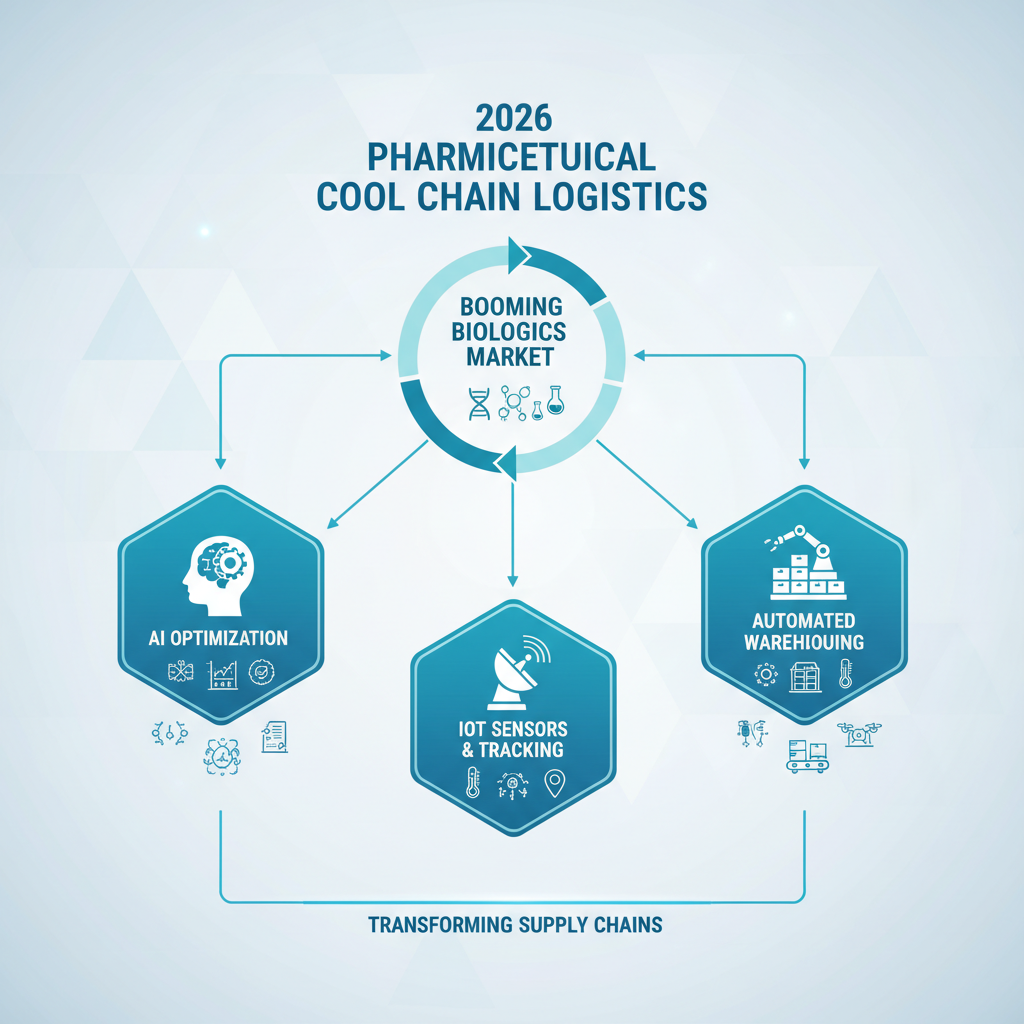
To combat persistent upstream delays and cross-border bottlenecks, logistics leaders are adopting cutting-edge technologies. In 2026, integrating Artificial Intelligence (AI) and the Internet of Things (IoT) is a regulatory imperative. Key innovations include:
- Blockchain-IoT Frameworks: Advanced sensors capture real-time temperature data, while blockchain ensures traceability from manufacturing to last-mile delivery.
- Automated Warehousing: Robotic Goods-to-Person technologies optimize automated storage systems for ultra-low temperature environments.
- Advanced Insulation: Next-generation vacuum insulated panels significantly reduce heat transfer, protecting temperature-sensitive medications during extended transit.
For professionals managing complex shipping networks, minimizing spoilage requires proactive, tech-forward strategies. Embracing predictive AI models prevents resource inefficiencies and safeguards high-value biologics across increasingly complex global distribution routes.
References
- Comprehensive Cold Chain Logistics Guide (2025)
- Cold Chain Packaging Market Trends 2026-2035
- Delay Management Systematic Review (EASTS)
- Temperature Controlled Containers Market (2026)
- Advancements in Cold Chain Logistics (OPEX)
- Blockchain-IoT Vaccine Management (MDPI)