

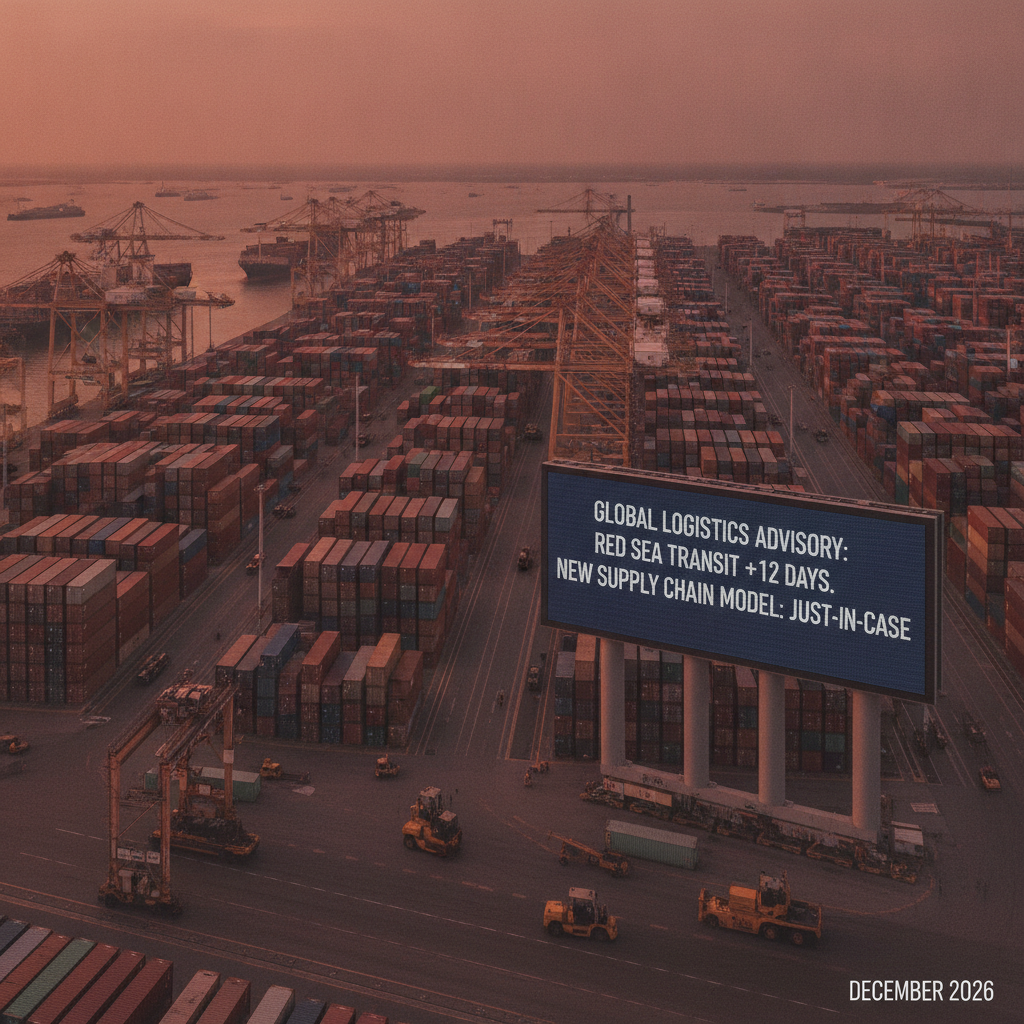
As we navigate through 2026, the Red Sea shipping crisis continues to fundamentally reshape global supply chains. What began as a regional security concern in late 2023 has evolved into a persistent maritime disruption, forcing the international logistics industry to rapidly adapt. With vessels continuously rerouting away from the Suez Canal, experts warn that the era of highly predictable
The economic toll of navigating away from this critical chokepoint is profound. Historically handling up to 15% of international maritime trade, the waterway saw container ship transits plummet by nearly 90% at the height of the disruptions. For businesses managing global imports, these operational realities translate into measurable financial strain. Key logistics impacts include:
- Extended transit times of 10 to 12 additional days due to Cape of Good Hope detours.
- A massive 30% increase in fuel consumption for rerouted cargo ships.
- Escalating daily demurrage and detention charges reaching $75 to $300 per container.
The sheer unpredictability of this bottleneck has forced a strategic pivot among logistics professionals. Supply chain experts are aggressively abandoning traditional just-in-time delivery models in favor of resilient just-in-case inventory strategies. Organizations are now building local safety stocks and investing in real-time vessel tracking tools to mitigate ongoing route risks. Multimodal flexibility and advanced buffer inventory planning are no longer premium features, but operational baselines for modern businesses.
Reference Materials
1. Atlas Institute: https://atlasinstitute.org/the-red-sea-shipping-crisis-2024-2025-houthi-attacks-and-global-trade-disruption/
2. Suaid Global 2026 Update: https://suaidglobal.com/insights/red-sea-shipping-crisis-2026
3. Penanshin 2026 Supply Chain Update: https://penanshin.com/red-sea-shipping-disruption-singapore-2026