

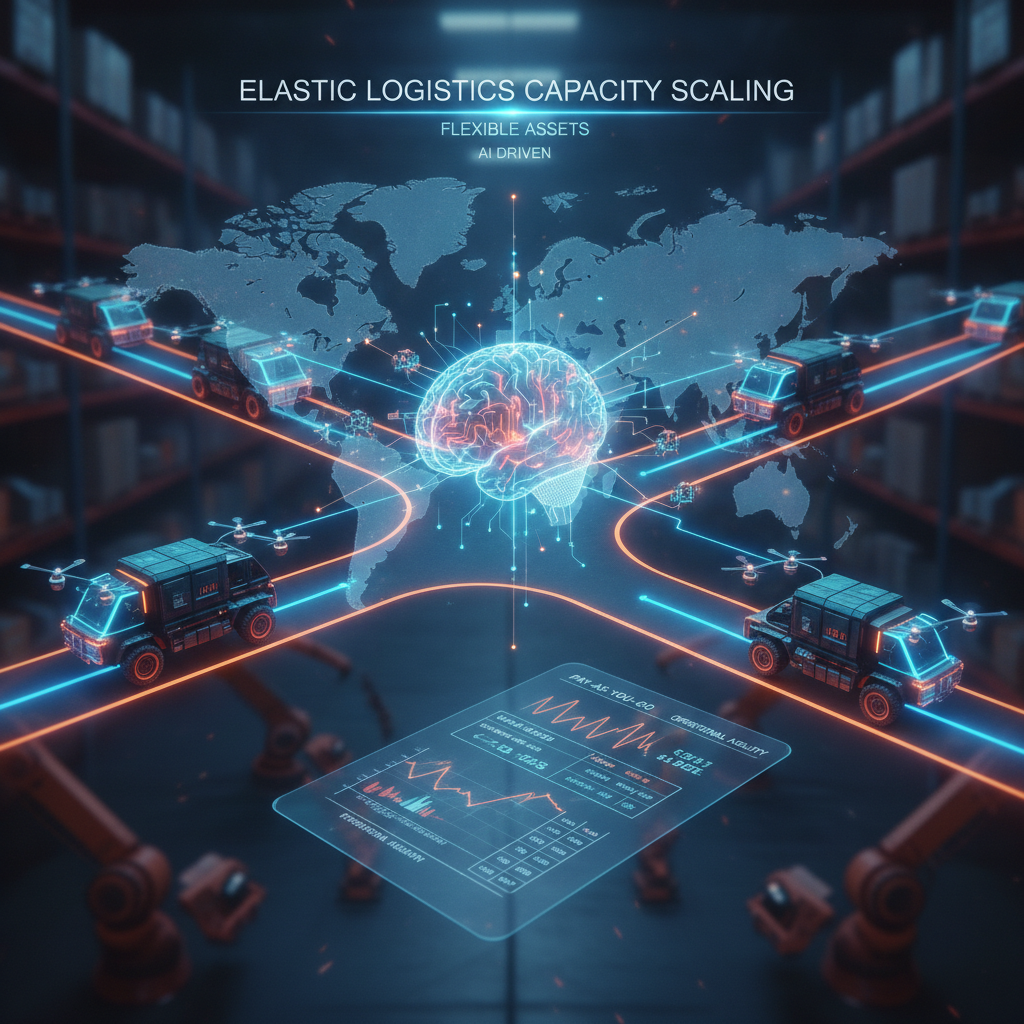
In an era of unprecedented supply chain volatility, fixed physical infrastructure is becoming a profound liability. The solution rapidly gaining traction among industry leaders is elastic logistics capacity scaling, a model that transforms static, capital-heavy operations into dynamic, pay-as-you-go networks. By allowing businesses to expand or contract operations in real-time based on demand fluctuations, this approach completely eliminates the overhead of idle fleets and underutilized warehousing spaces.
Recent data highlights a massive structural transformation across the global supply chain sector. The elastic logistics market segment is projected to grow at a compound annual growth rate (CAGR) of 9.4% through 2032, nested within a broader global logistics market expected to reach $16.8 trillion. Furthermore, after U.S. delivery costs surged by 12% between 2024 and 2025, companies realized that rigid fulfillment models could not absorb e-commerce demand shocks efficiently. In the Asia-Pacific region, which commanded a 44.6% global market share in 2024, elastic logistics capacity scaling is already becoming an operational necessity for 2026 to navigate border complexities and geopolitical trade volatility.
This transformative operational model relies heavily on integrating advanced technologies with flexible assets. Key enablers include:
- AI-Driven Orchestration: Artificial intelligence co-pilots and predictive analytics automatically reroute shipments and adjust inventory based on weather, port congestion, and real-time sales signals.
- On-Demand Physical Assets: The utilization of shared carrier networks and micro-fulfillment centers allows operations to scale up during holiday peaks and shrink during slow seasons.
- Robotic Process Automation: Advanced sorting robotics optimize facility throughput, giving distribution centers the operational elasticity needed to process wildly fluctuating package volumes.
References
MBE Franchise (2026). What is Elastic Logistics and how it is redefining business scaling in 2026.
FedEx Japan (2025). 3 Logistics Technology Trends To Watch In 2026.
DHL ID (2026). 5 Logistics Trends Reshaping Asia in 2026.