

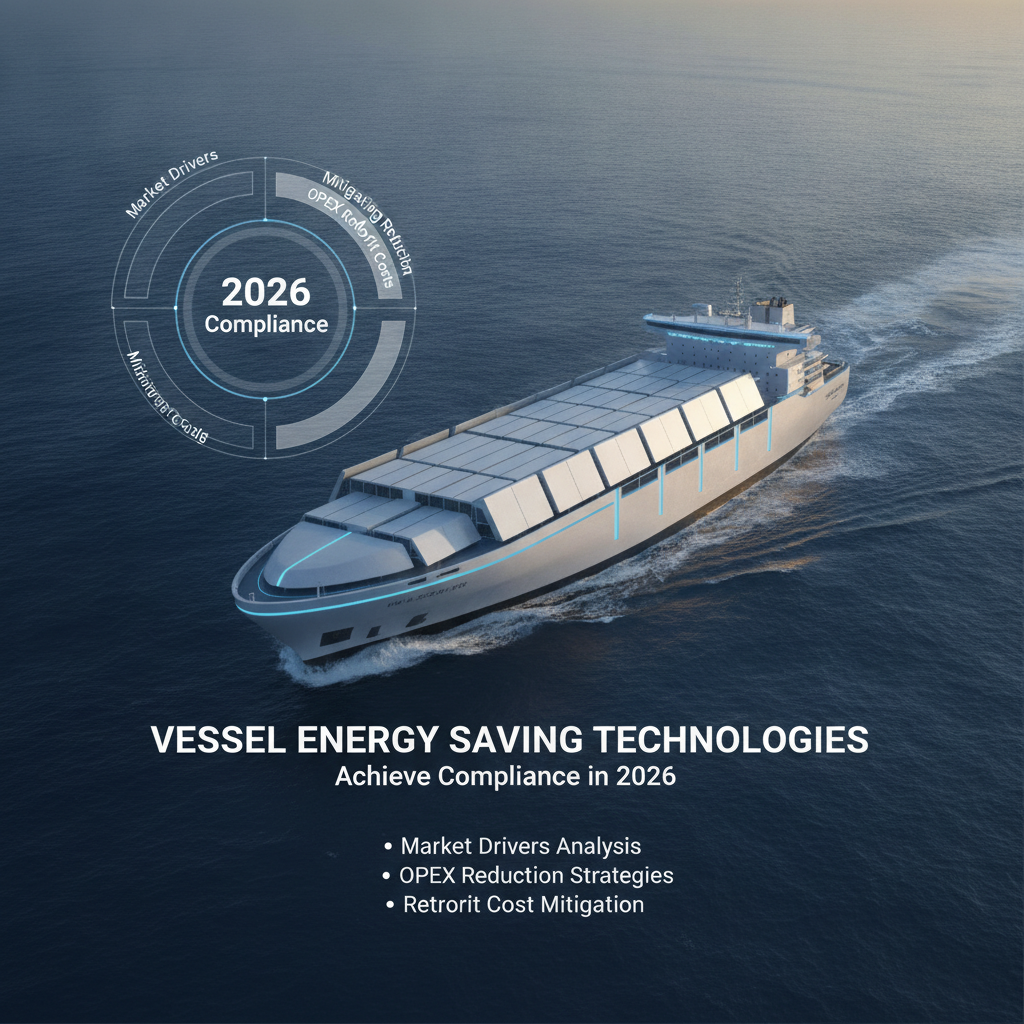
As the maritime industry navigates the stringent FuelEU Maritime regulations implemented in 2025 and incoming IMO frameworks, shipping leaders are rapidly prioritizing Vessel Energy Saving Technologies. With alternative net-zero fuels remaining costly and limited in supply, fleet operators are turning to mechanical and hydrodynamic innovations to reduce fuel consumption. A recent Boston Consulting Group benchmark reveals that fleets integrating these technologies achieve 10% greater vessel efficiency and an 8% reduction in operational expenditures (OPEX).
The push for decarbonization has shifted from optional green initiatives to mandatory operational survival. Current 2026 market data indicates that over 85% of global fleets are now required to meet strict emission standards, directly spurring a 43% increase in the adoption of Vessel Energy Saving Technologies. Leading investments driving this sector growth include:
- Wind-assisted propulsion systems (WAPS) utilizing automated rotor sails.
- Advanced propeller retrofits and hydrodynamic hull optimizations.
- Air lubrication systems that minimize water friction and resistance.
These energy-saving devices offer an immediate reduction in Carbon Intensity Indicator (CII) ratings, shielding operators from non-compliance penalties.
Despite the clear advantages, the upfront capital expenditure for hardware installation remains a significant hurdle. Industry reports from early 2026 highlight that the high cost of retrofitting currently impacts 34% of vessel operators. To mitigate financial risks, experts are utilizing Computational Fluid Dynamics (CFD) modeling prior to drydocking. This approach ensures that selected Vessel Energy Saving Technologies match specific hull forms, guaranteeing optimal ROI.
References
BCG Carbon Emissions Benchmark: https://www.bcg.com/publications/2024/energy-efficient-route-to-maritime-decarbonization Marine Vessel Energy Efficiency Solutions Market Size Forecast 2026 To 2035.