

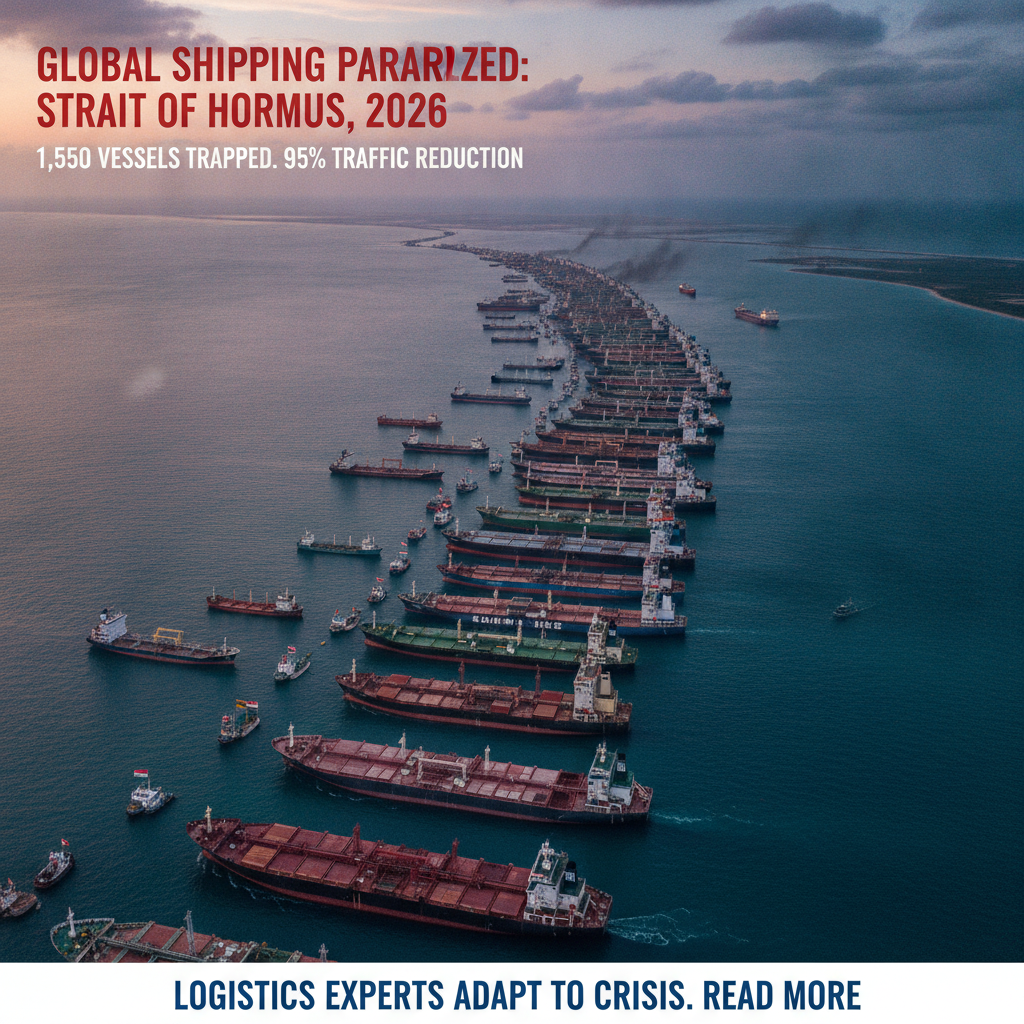
Early 2026 military actions triggered one of the most severe maritime crises in modern history. The waterway effectively closed, sparking a massive Strait of Hormuz Disruption. Vessel traffic plummeted to 5% of its pre-crisis average by April, trapping over 1,550 commercial ships and 22,500 mariners.
This blockade has sent shockwaves through global supply chains. Logistics providers are scrambling as 20 million barrels of crude oil per day and 20% of the world’s LNG are blocked from transit. Maritime insurance premiums for the Persian Gulf skyrocketed by 50%, prompting underwriters to cancel war risk coverage.
Top carriers like Maersk and MSC suspended transits, forcing the industry to rethink route planning. To mitigate this Strait of Hormuz Disruption, logistics professionals must adapt to several realities:
- Extended Lead Times: Asian and European cargo must rely on complex multimodal networks.
- Contractual Risks: Rising disputes require businesses to review clauses on delays.
- Supply Chain Redundancy: With simultaneous Red Sea blockages, establishing contingency buffers is critical.
As 2026 progresses, shipping experts must prioritize supply chain agility to survive this bottleneck.
References
- Strait of Hormuz Closure 2026 Guide
- Supply Routes Snapshot, ReliefWeb
- Shipping disputes on the rise, Clyde & Co
- 2026 Strait of Hormuz crisis, Wikipedia
- Maritime Blockade Economic Impact, SpecialEurasia