
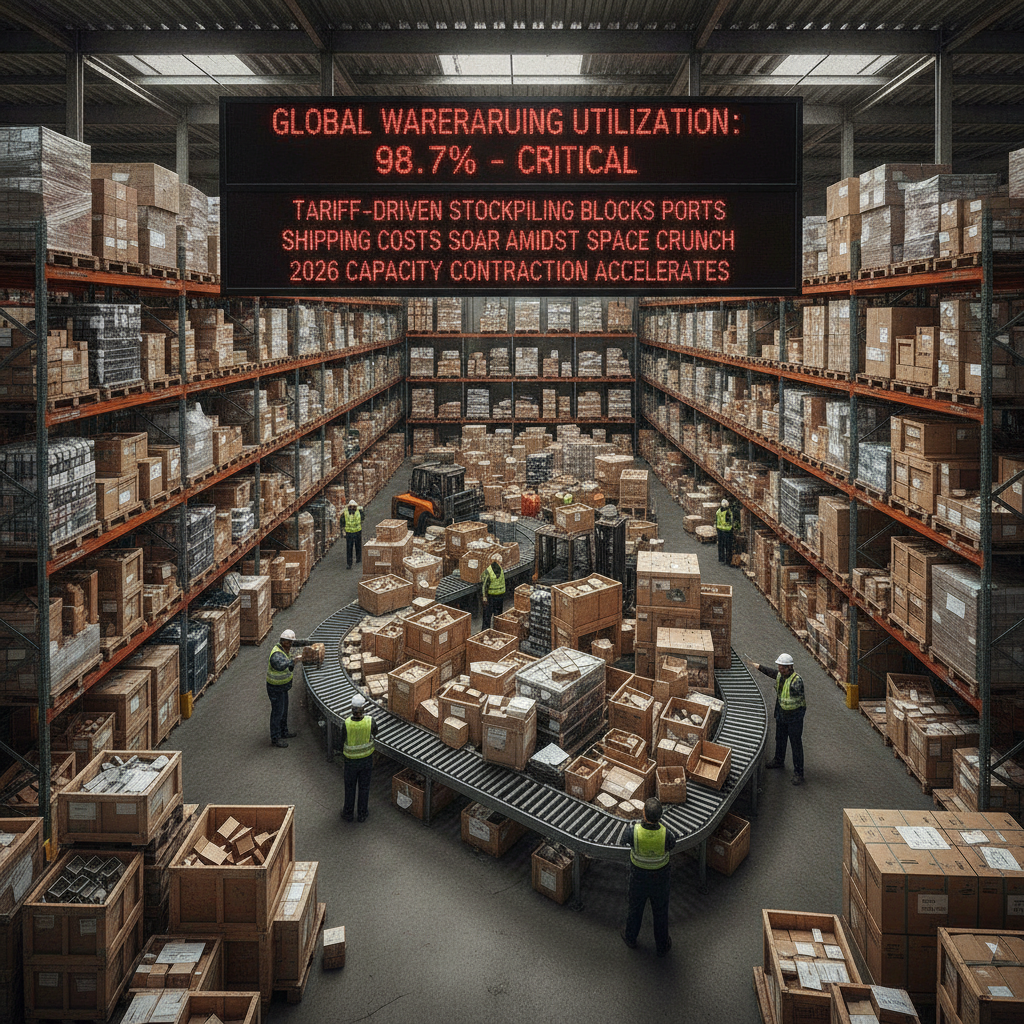
The logistics sector is currently witnessing a pronounced Global Warehousing Capacity Contraction, a trend fueled by geopolitical shifts and shifting trade policies. According to the June 2026 Logistics Manager’s Index (LMI), supply chain activity surged past the 70-point threshold for the first time since March 2022. This rapid expansion is directly correlated with shippers front-loading inventory to outpace looming U.S. tariffs, creating immediate bottlenecks across the warehousing network.
While transportation utilization reached an eight-year high, available storage space has significantly tightened. The recent LMI report indicates that warehouse capacity slipped 3.0 points to a reading of 47.5, officially sliding back into contraction territory. This tightening is accelerating due to the following industry factors:
- Tariff-Driven Stockpiling: Retailers are rushing Q4 holiday goods forward to avoid new duties, consuming premium space.
- Record Port Volumes: Major U.S. ports projected a record-breaking 2.47 million TEUs in July 2026, overwhelming inland distribution centers.
- Rising Storage Costs: Warehousing prices surged 5.5 points year-over-year as landlords regain pricing power amid tightening vacancies.
This Global Warehousing Capacity Contraction signifies a critical inflection point for logistics experts. The prolonged era of loose supply and soft pricing has concluded, forcing companies to re-evaluate their supply chain strategies. Shippers must now prioritize advanced forecasting and secure multi-year leases to avoid paying premium rates in 2027. Effective execution within the four walls of the warehouse will determine which networks can absorb these disruptions without incurring retail penalties or missed delivery windows.
References
Inbound Logistics: Retailers Are Racing to Beat Tariffs. Is Your Warehouse Network Ready? (July 2026) https://www.inboundlogistics.com
PLS Logistics Services: The Quiet Return of Warehouse Scarcity (July 2026) https://www.plslogistics.com