

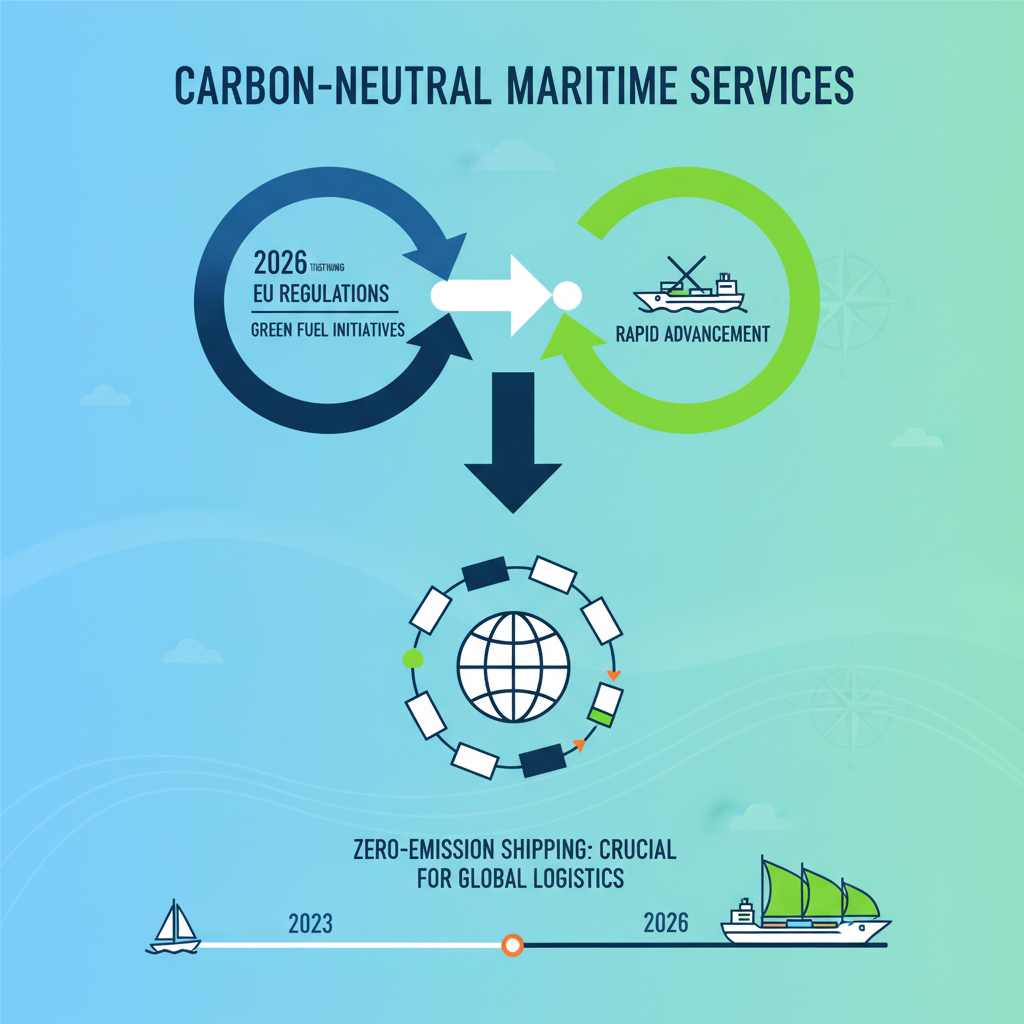
The transition toward Carbon-Neutral Maritime Services is facing a pivotal moment in 2026. With international supply chains under immense pressure to decarbonize, global shipping—responsible for approximately 3% of global greenhouse gas emissions—is experiencing structural transformations driven by emerging climate regulations and alternative fuel adoption.
While the International Maritime Organization (IMO) delayed the formal adoption of its comprehensive Net-Zero Framework to October 2026, regional regulations are actively enforcing compliance. The European Union has taken a firm lead. Under the EU Emissions Trading System (ETS) phase-in, shipping companies operating in EU waters are required to surrender allowances for 70% of their reported emissions in 2026, scaling to 100% by 2027. Furthermore, the FuelEU Maritime Regulation, which came into effect in 2025, strictly mandates a gradual reduction in the carbon intensity of marine fuels.
Due to the current supply shortage of scalable green fuels, operators providing Carbon-Neutral Maritime Services are prioritizing transitional strategies and operational efficiency. Key industry trends include:
- Green Shipping Corridors: Development of zero-emission routes, such as the planned e-fuels export corridor between South America and Europe for 2025-2026.
- Alternative Fuel Procurement: Initiatives like the Zero-Emission Maritime Buyers Alliance (ZEMBA) collectively procuring exclusively waste-based biomethane to drastically abate CO2e emissions.
- Energy Efficiency Upgrades: Implementing optimized vessel designs and advanced monitoring systems to immediately reduce fuel consumption.
For logistics experts, securing Carbon-Neutral Maritime Services is no longer just a sustainability goal; it is a critical commercial requirement. As the industry awaits the IMO’s finalized global fuel intensity standards and market-based pricing mechanisms, early adopters of decarbonization frameworks will likely gain a significant competitive edge in global trade.
References
1. Global Maritime Forum: A guide to the IMO’s Net-Zero Framework (globalmaritimeforum.org). 2. EU Climate Action: Reducing emissions from the shipping sector (climate.ec.europa.eu). 3. RNG Strategy Consulting: Strategic Roadmap for Maritime Decarbonization in 2026 and Beyond.