

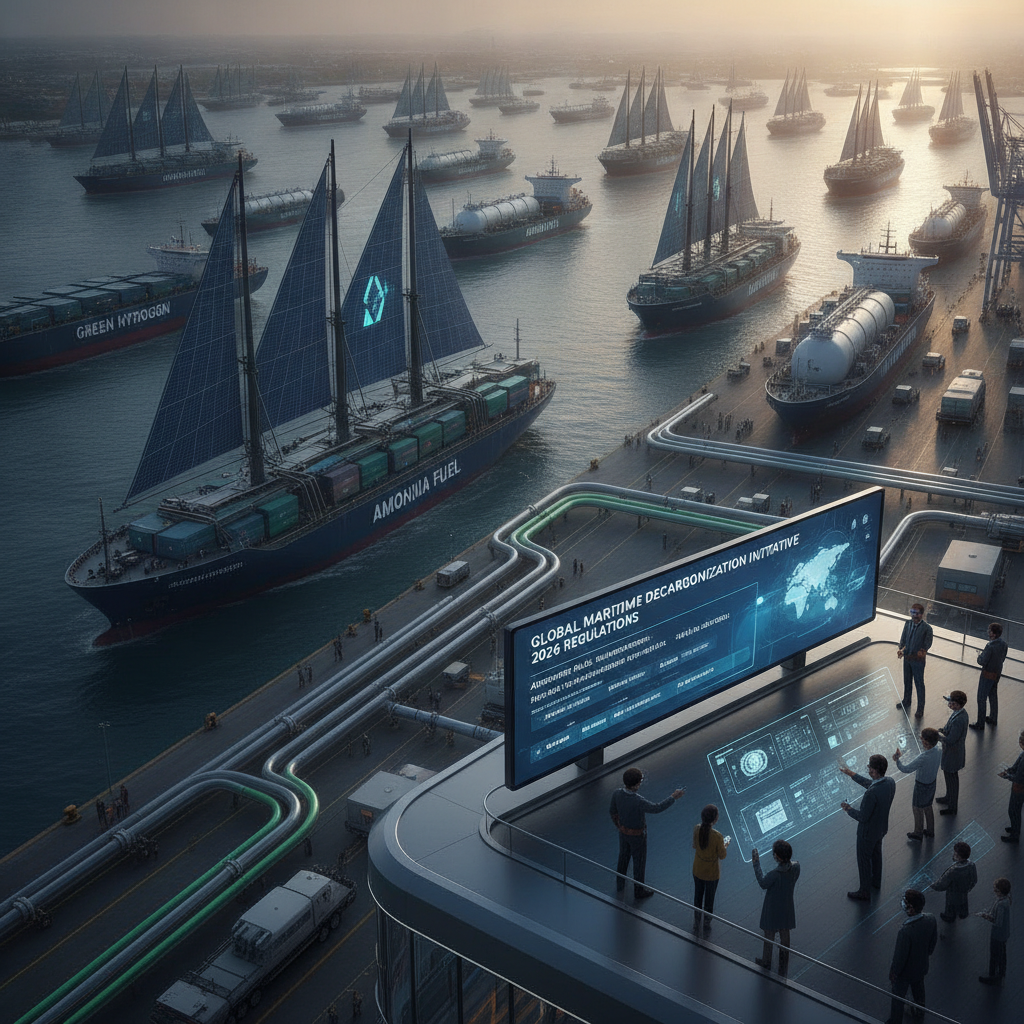
The maritime transport sector, responsible for approximately 3% of global anthropogenic greenhouse gas emissions, is facing a critical transformation. As regulatory pressures from the International Maritime Organization (IMO) and the newly enforced 2025 FuelEU Maritime frameworks mount, Green Shipping Decarbonization has evolved from a sustainability buzzword into an urgent operational mandate. For logistics and shipping experts, understanding the commercial and technological pathways for Green Shipping Decarbonization is now essential for long-term viability and compliance.
Recent market data highlights the massive capital reallocation driving the maritime sector. The global methanol market, fueled heavily by marine applications and Green Shipping Decarbonization programs, is projected to surge from $39.5 billion in 2026 to over $65 billion by 2033. E-methanol and hydrogen investments are aligning closely with the EU Green Deal. However, fleet owners must balance these long-term fuel transition strategies with immediate efficiency gains through physical vessel modifications.
While alternative zero-emission fuels remain the ultimate goal, bridging technologies are demonstrating profound immediate impacts on carbon reduction. Key 2026 developments include:
- Wind-Assisted Propulsion Systems (WAPS), such as rotor sails and boundary-layer control wings, which are providing direct thrust and significantly reducing fuel consumption.
- Advanced hull designs and air lubrication systems, which have shown up to an 8% reduction in emissions by minimizing hydrodynamic drag.
- Deep-tech robotics for autonomous hull inspection and cleaning, unlocking vital operational savings and ensuring regulatory compliance.
Achieving absolute compliance requires a multi-tiered approach. Industry leaders must balance immediate retrofits, such as WAPS integrations and biocides-free coatings, with long-term fuel procurement strategies. Active collaboration across the supply chain, port authorities, and regulatory bodies will be the defining factor in successful decarbonization.
References
- SciOpen, Wind-assisted propulsion systems for green shipping. URL: https://doi.org/10.26599/OCEAN.2026.9470019
- GAJRC, Sustainable Ship Design for the Red Sea and Arabian Gulf.
- Startup Intros, CRABI Robotics: Funding, Team & Investors.
- Persistence Market Research, Methanol Market Size, Share & Trends Analysis.
- Ocean SciOpen, Wind-assisted propulsion systems for green shipping: A techno-economic review.
- Wind-assisted propulsion systems for green shipping (Mar 2026).
- UPCommons, LNG VERSUS CONVENTIONAL FUEL POWERED VESSELS.