

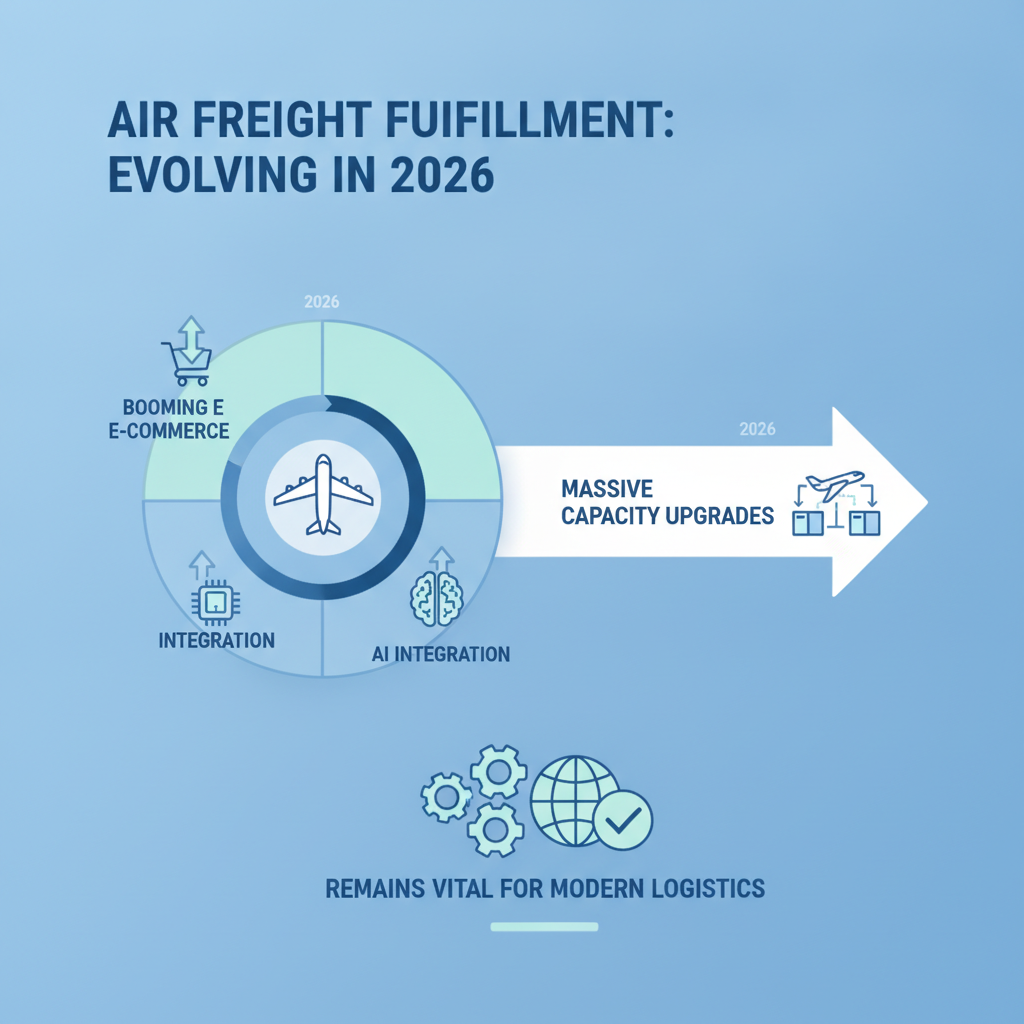
The State of Air Freight Fulfillment in 2026
As global supply chains undergo rapid modernization, Air Freight Fulfillment is experiencing an unprecedented surge fueled by cross-border e-commerce and technological advancements. According to 2026 market projections, the global air cargo and freight logistics sector is expected to reach $262 billion, up from $245 billion in 2025. This aggressive expansion demonstrates how Air Freight Fulfillment is no longer just a premium alternative, but a structural necessity for time-sensitive logistics.
Key Drivers Reshaping Air Freight Fulfillment
Industry experts emphasize that changing consumer expectations are fundamentally altering capacity allocations. E-commerce parcels now account for over 55% of total air cargo tonnage, pushing carriers toward faster, temperature-controlled solutions. To meet these robust demands, the sector is adapting rapidly through several strategic avenues:
- Digital Transformation: Legacy paper-based systems are being replaced by AI-driven dynamic pricing and load optimization, which has lifted average load factors by up to 4 percentage points.
- Sustainable Fleet Upgrades: Airlines are investing heavily in sustainable aviation fuel (SAF) to meet strict 2030 blending mandates while maintaining fulfillment efficiency.
- Infrastructure Expansion: Over 180 major cargo terminals are currently under development worldwide to support integrated express network density.
Future Projections for Air Freight Fulfillment
Moving deeper into 2026, Air Freight Fulfillment will continue to rely heavily on digital data-sharing frameworks like ONE Record to mitigate supply constraints. With the Asia-Pacific region delivering approximately 40% of global freight volume, localized logistics hubs will dictate the next frontier of transit efficiency. Ultimately, the integration of predictive analytics and automated warehousing will be the key differentiator for forwarders aiming to capture a share of the forecasted $452 billion market by 2034.