

How the €3 Customs Duty is Reshaping EU Low-Value Parcel Logistics
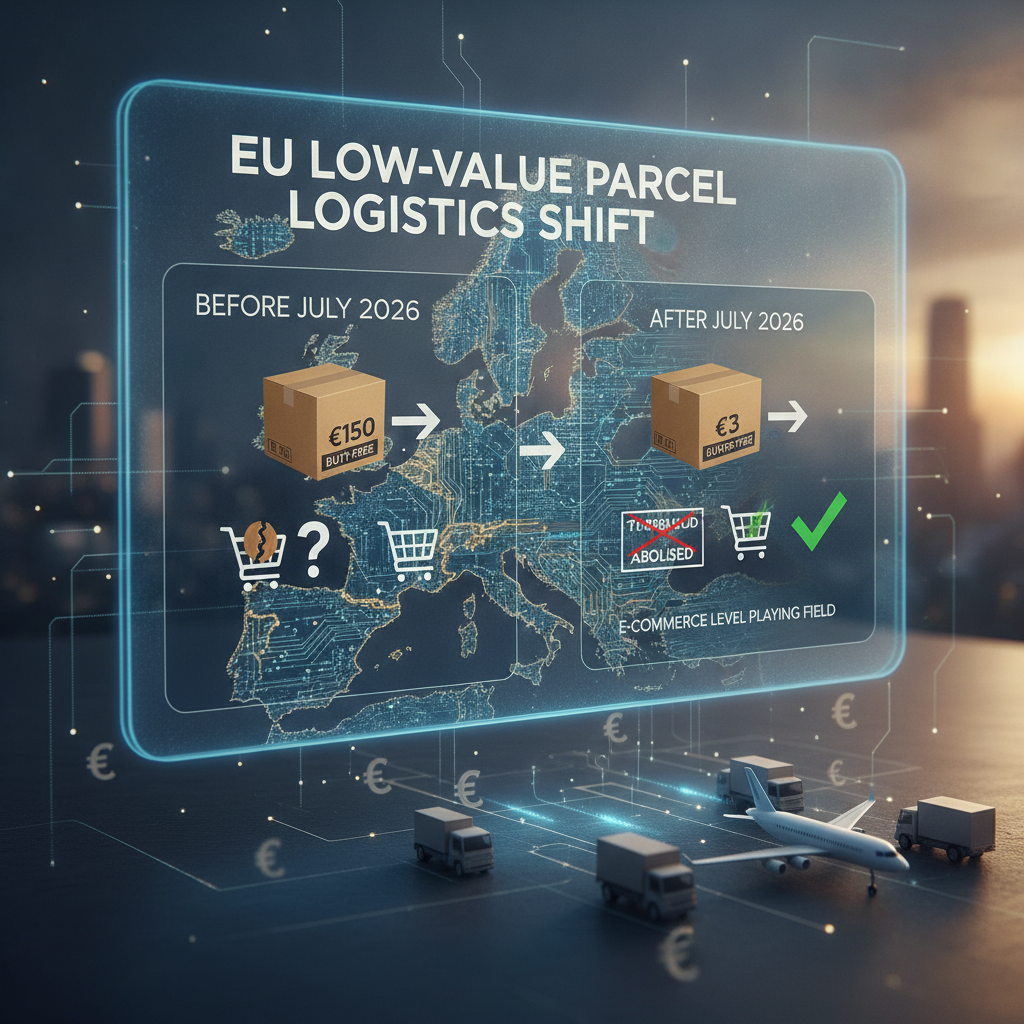
The landscape of cross-border e-commerce is undergoing a massive structural shift. Effective July 1, 2026, the European Union is officially abolishing its €150 customs duty exemption for low-value consignments. In its place, a temporary €3 customs duty per item, based on tariff classification, will apply to business-to-consumer parcels entering the bloc. This regulatory pivot promises to fundamentally restructure EU Low-Value Parcel Logistics.
Surging Volumes in EU Low-Value Parcel Logistics
The driving force behind this legislation is the exponential surge in international parcel volumes. In 2024, a staggering 4.6 billion low-value items were imported into the EU, doubling the 2.3 billion recorded in 2023. An estimated 91% of these shipments originated from China, driven predominantly by ultra-fast-fashion giants. This unprecedented volume has severely strained authorities, complicating the oversight of EU Low-Value Parcel Logistics and making it difficult to monitor product safety.
Strategic Shifts in EU Low-Value Parcel Logistics
For supply chain operators, managing EU Low-Value Parcel Logistics now requires urgent strategic adaptations. The new flat-rate duty is charged per item type rather than per parcel, meaning a package with three different product categories incurs a €9 charge. To mitigate these costs, major non-EU platforms are aggressively shifting inventory into European warehousing hubs to bypass import hurdles. Furthermore, carriers must urgently upgrade their IT systems to capture standardized identifiers and manage flat-duty calculations before the EU Customs Data Hub fully launches in 2028.