
What Is the De Minimis Regulatory Impact on 2026 Supply Chains?
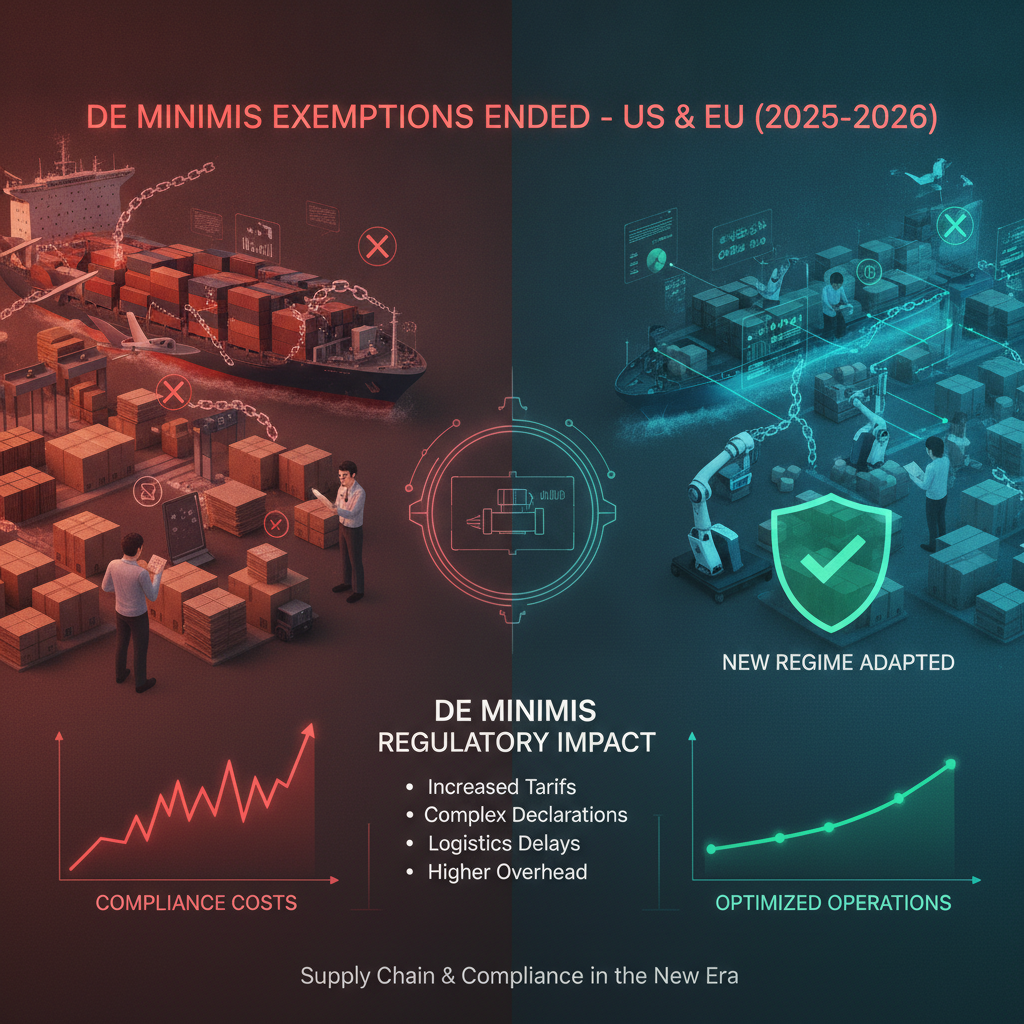
The global logistics landscape is undergoing a massive transformation as major economies eliminate historical tax exemptions for low-value imports. Understanding the De Minimis Regulatory Impact is now a top priority for shipping experts, freight forwarders, and e-commerce retailers worldwide. In the past, these thresholds allowed millions of daily parcels to bypass customs scrutiny, but recent 2025 and 2026 legislation has drastically shifted the compliance burden.
Quantifying the De Minimis Regulatory Impact in the U.S.
The United States fundamentally altered global shipping when it officially suspended the $800 duty-free exemption on August 29, 2025. This aggressive policy was later codified into permanent U.S. Customs and Border Protection regulation on June 24, 2026. Previously, roughly 1.4 billion packages entered the U.S. annually under this rule, representing over $64 billion in declared value. Today, every commercial shipment, regardless of value, requires formal or informal entry and full duty payment, severely impacting direct-to-consumer platforms.
Global De Minimis Regulatory Impact: The EU Response
The European Union has also tightened its borders to combat unfair competition and enforce product standards. Effective July 1, 2026, the EU fully removed its €150 duty exemption threshold. To replace it, regulators introduced an interim €3 flat customs duty per HS6 item, which applies to all Import One-Stop Shop (IOSS) shipments. This move targets the estimated 5.9 billion low-value items that entered the EU duty-free in 2025.
Key Operational Changes for Shippers
- Cost Increases: Shippers must account for immediate tariff applications ranging from 10% to 41% on formerly exempt U.S. imports.
- Data Requirements: Carriers now face mandatory 10-digit HTS code classifications for all shipments.
- Fulfillment Shifts: Many companies are transitioning from fragmented air freight to bulk ocean shipping to mitigate per-unit duty costs.
Ultimately, the era of frictionless, duty-free cross-border shipping is over. Logistics professionals must integrate automated customs compliance systems to survive the ongoing De Minimis Regulatory Impact.