

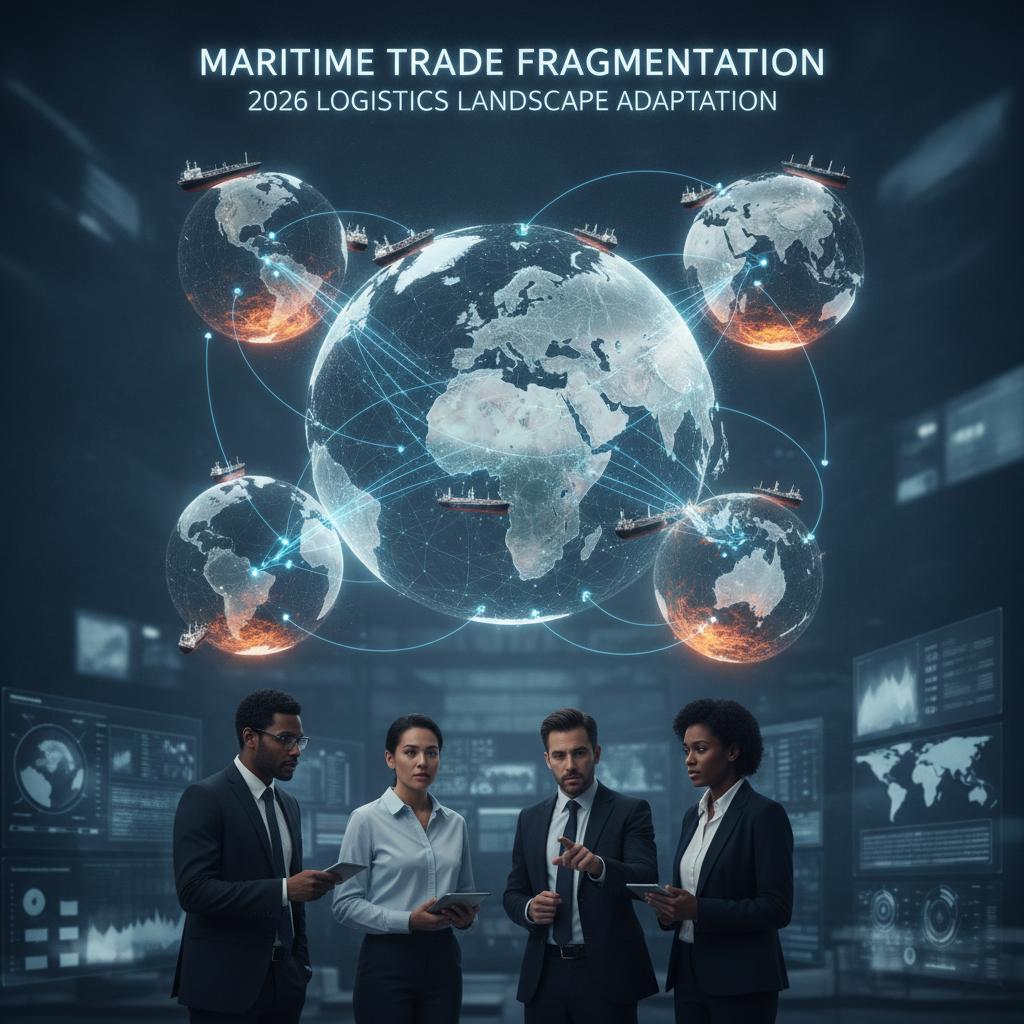
The logistics sector is experiencing a structural shift, with Maritime Trade Fragmentation emerging as the defining challenge of 2026. Driven by geopolitical tensions and tariff escalations, this fragmentation is reshaping global supply chains. According to UNCTAD, global maritime trade volume growth stalled at just 0.5% in 2025. Concurrently, vessel rerouting pushed ton-miles up by a record 6% as ships abandoned the Red Sea for the longer Cape of Good Hope route.
Drivers of Maritime Trade Fragmentation
Recent developments show how political strife fractures efficiency. In September 2026, the Consultative Shipping Group warned that geopolitical fragmentation threatens the international rules-based shipping order. Furthermore, the IMO verified 80 attacks near the Strait of Hormuz since February 2026, forcing a severe recalibration of risk management.
Key Operational Impacts
- Route Diversions: Suez Canal transits plummeted 70% below 2023 levels, chronically elevating freight rates.
- Shadow Fleets: A parallel system of vessels operates outside standard regulations to circumvent sanctions, fragmenting market transparency.
- Regionalization: Corporations are pivoting from efficiency-driven globalization to risk-managed regionalization.
Adapting to Maritime Trade Fragmentation
Logistics leaders must embrace agile strategies to navigate Maritime Trade Fragmentation. Securing alternative routing and investing in resilient supply chains are now essential for surviving an era where frictionless trade has faded.
References
UNCTAD: Review of Maritime Transport 2025. UNCTAD: Maritime trade under pressure. Lloyd’s List: Maritime nations warn geopolitical fragmentation. Taiwan News: Maritime trade faces fragmentation. Medium: Geopolitical Risk and Supply Chains. Marine Insight: IMO Secretary General on Geopolitical Conflicts.