
The Supply Chain Resilience Paradox in 2026
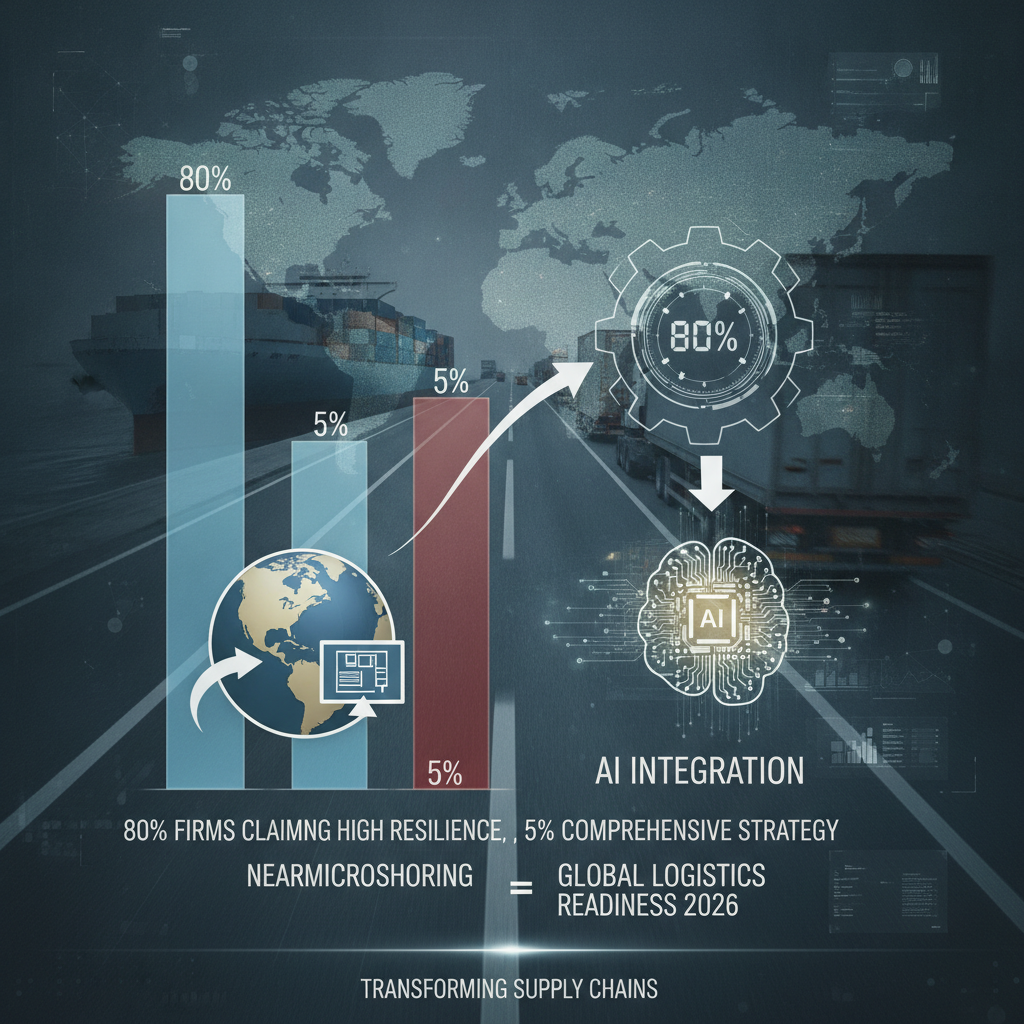
In today’s volatile logistics landscape, achieving true Supply Chain Resilience is a critical mandate. However, recent data exposes a systemic delusion among industry leaders. According to Oliver Wyman’s 2025 research, an astounding 80% of companies describe their operations as highly resilient, yet only 5% possess a comprehensive resilience strategy. Furthermore, fewer than 4% of organizations plan to increase risk mitigation budgets. This paradox highlights a dangerous gap between perceived security and actual operational readiness.
Key Trends Shaping Supply Chain Resilience
To navigate geopolitical disruptions and trade fragmentation, forward-thinking logistics experts are abandoning reactive measures. Recent industry developments illustrate how organizations are structurally reinforcing their networks.
- Strategic Nearshoring: A 2025 McKinsey report indicates that 39% of companies are pursuing dual sourcing strategies. Additionally, 33% are developing nearshoring plans to bypass localized disruptions and tariff volatility.
- Agentic AI Integration: Artificial intelligence is transitioning to autonomous action. IBM reports that 62% of supply chain leaders use embedded AI agents to accelerate operational decision-making, significantly improving agility.
- Regional Clustering: Trade networks are adapting to manufacturing shifts, forcing firms to adopt multi-enterprise digital collaboration platforms to manage fragmented regional complexities.
Future-Proofing Your Supply Chain Resilience Strategy
True Supply Chain Resilience requires aligning digital infrastructure with diverse regulatory environments. Logistics professionals must move beyond the traditional playbook of merely holding excess inventory. By investing in AI-driven control towers and diversifying critical sourcing hubs, enterprises can turn volatility into a competitive advantage. It is time for executives to align risk management budgets with the realities of the 2026 market.
References
- Oliver Wyman (2025). Navigating Supply Chain Resilience. https://www.oliverwyman.com
- McKinsey & Company (2025). Supply chain risk pulse. https://www.mckinsey.com
- IBM (2025). Agentic AI for autonomous operations. https://www.ibm.com