

How AI-Driven Air Cargo Allocation is Transforming 2026 Logistics
The global supply chain landscape is undergoing a massive transformation, with AI-Driven Air Cargo Allocation emerging as a critical competitive differentiator for airlines and freight forwarders. Valued at $3.2 billion in 2025, the global air cargo optimization AI market is projected to reach $12.8 billion by 2034, expanding at a robust 16.7% CAGR [1]. This rapid growth reflects an industry pivoting from static legacy planning to dynamic, real-time logistics.
The Impact of AI-Driven Air Cargo Allocation on Operations
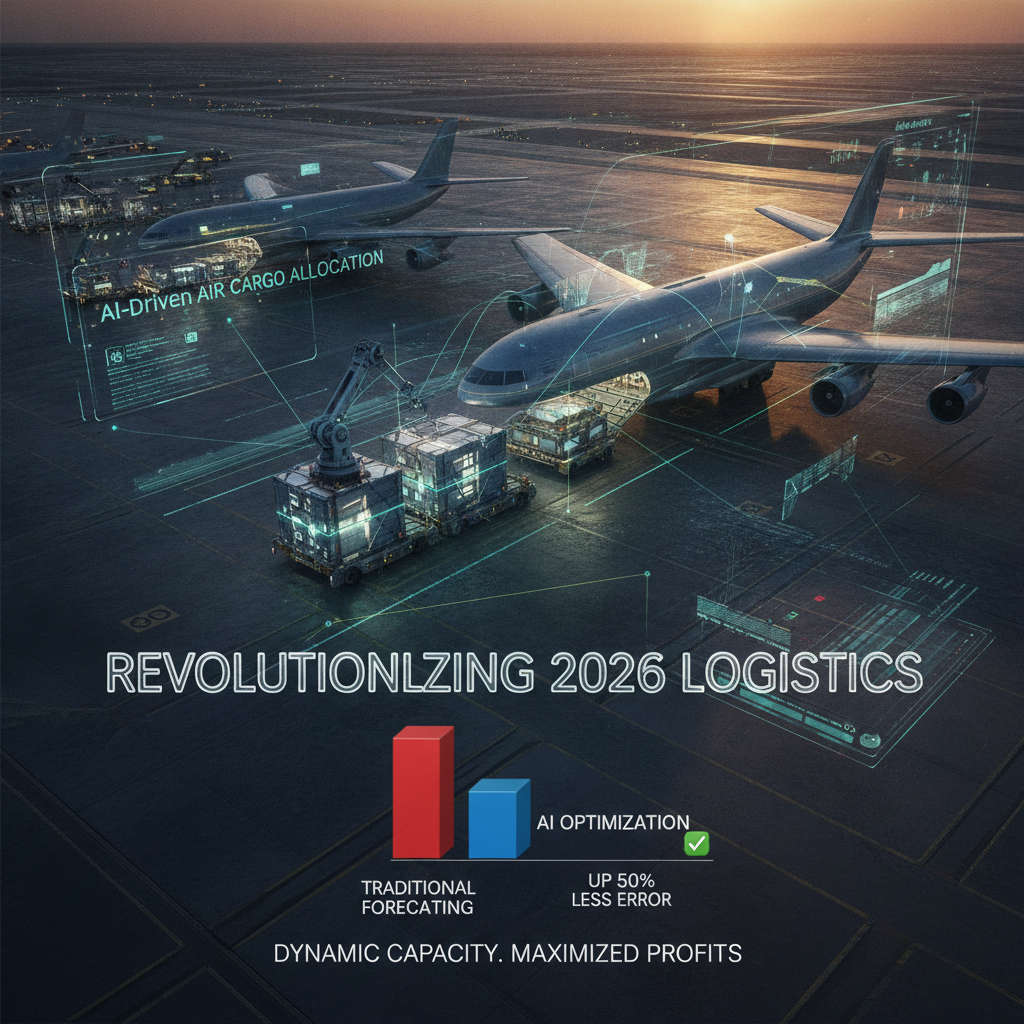
Artificial intelligence and machine learning algorithms are revolutionizing how carriers manage weight, volume, and routing requirements. By leveraging advanced capacity forecasting models, operators can seamlessly match available aircraft space with fluctuating shipment demands. According to industry data, integrating AI into logistics and demand planning is projected to reduce forecasting errors by 30% to 50% [2]. This unprecedented accuracy enables airlines to maximize revenue yields while mitigating costly operational disruptions.
Key Drivers Behind AI-Driven Air Cargo Allocation
Several critical macro-economic and technological factors are accelerating the adoption of intelligent capacity management tools across the aviation sector.
- Supply Chain Volatility: Frequent trade policy shifts and tariff adjustments require the rapid geographic reallocation of freight, making algorithmic agility essential.
- E-Commerce Surges: The continuous expansion of global cross-border e-commerce demands automated cargo allocation to maintain extremely tight delivery schedules.
- Predictive Analytics: The industry-wide shift toward digital twins and Internet of Things (IoT) integration provides the granular visibility needed for proactive operational planning.
Future Outlook for Intelligent Cargo Allocation
As 2026 progresses, the ability to rapidly adapt to market shocks will rely heavily on sophisticated forecasting systems. Logistics companies equipped with machine learning-backed revenue management will possess a distinct advantage in securing optimal load factors. The aviation sector is no longer just moving physical goods; it is processing vast datasets to ensure every cubic inch of cargo space is utilized profitably.
References: [1] Dataintelo (April 2026). Air Cargo Optimization AI Market Research Report 2034. [2] IATA Data via RTS Corp (2025). How Air Cargo is Evolving in 2025: The Biggest Air Cargo Trends.