

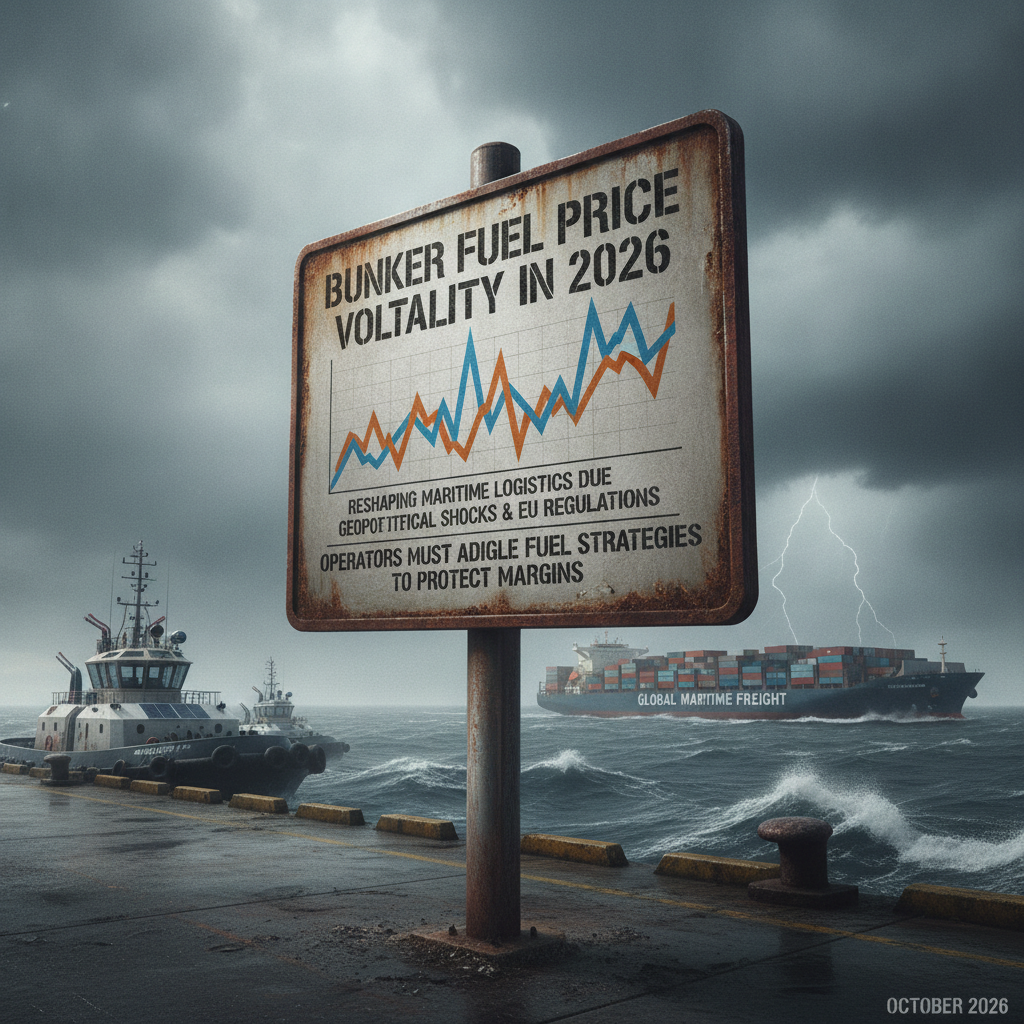
Navigating Bunker Fuel Price Volatility in 2026
For maritime logistics experts, managing Bunker Fuel Price Volatility has become a paramount challenge in 2026. Global shipping supply chains are currently navigating a complex matrix of geopolitical tensions, stringent environmental regulations, and shifting refinery capacities. Consequently, fuel procurement strategies demand unprecedented agility to maintain profitable operations.
Key Drivers of Bunker Fuel Price Volatility
Recent data highlights how external shocks are dramatically impacting fuel markets. In May 2026, Singapore Very Low Sulfur Fuel Oil (VLSFO) prices surged 10.8% in just one week, climbing from $778/mt to $862/mt. Several structural and geopolitical factors are fueling this Bunker Fuel Price Volatility:
- Geopolitical Disruptions: Ongoing conflicts in the Middle East have forced vessel rerouting around the Cape of Good Hope, extending transit times and increasing total fuel consumption.
- Regulatory Pressures: The full phase-in of the EU Emissions Trading System (ETS) and FuelEU Maritime regulations have added significant compliance costs, with 2026 carbon surplus values reaching EUR 170-185/tCO2e.
- Regional Supply Disparities: A record price gap emerged between Asian and European markets in early 2026, with the spread hitting $362 per ton in mid-March due to Asia’s higher exposure to Gulf supply constraints.
Mitigating Bunker Fuel Price Volatility
To combat Bunker Fuel Price Volatility, operators are prioritizing advanced fuel management and strategic routing. The VLSFO market, projected to grow to $96.31 billion in 2026, requires buyers to strictly monitor blend compatibility as frequent supplier switching increases the risk of engine damage. Ultimately, integrating robust risk management and real-time data analytics is essential for protecting margins in today’s unpredictable marine fuel landscape.
References
Fairway ETA. Argus Media. Fairway ETA. Marine Link. Fortune Business Insights.