

Are Southeast Asia Shipping Hubs Redefining Global Trade Routes?
As global supply chains continue to face geopolitical pressures, Southeast Asia Shipping Hubs have emerged as indispensable cornerstones of international maritime trade. For logistics experts seeking supply chain resilience, recent 2025 and 2026 data reveals unprecedented expansion and modernization across regional maritime gateways.
Singapore’s Next-Generation Automated Dominance
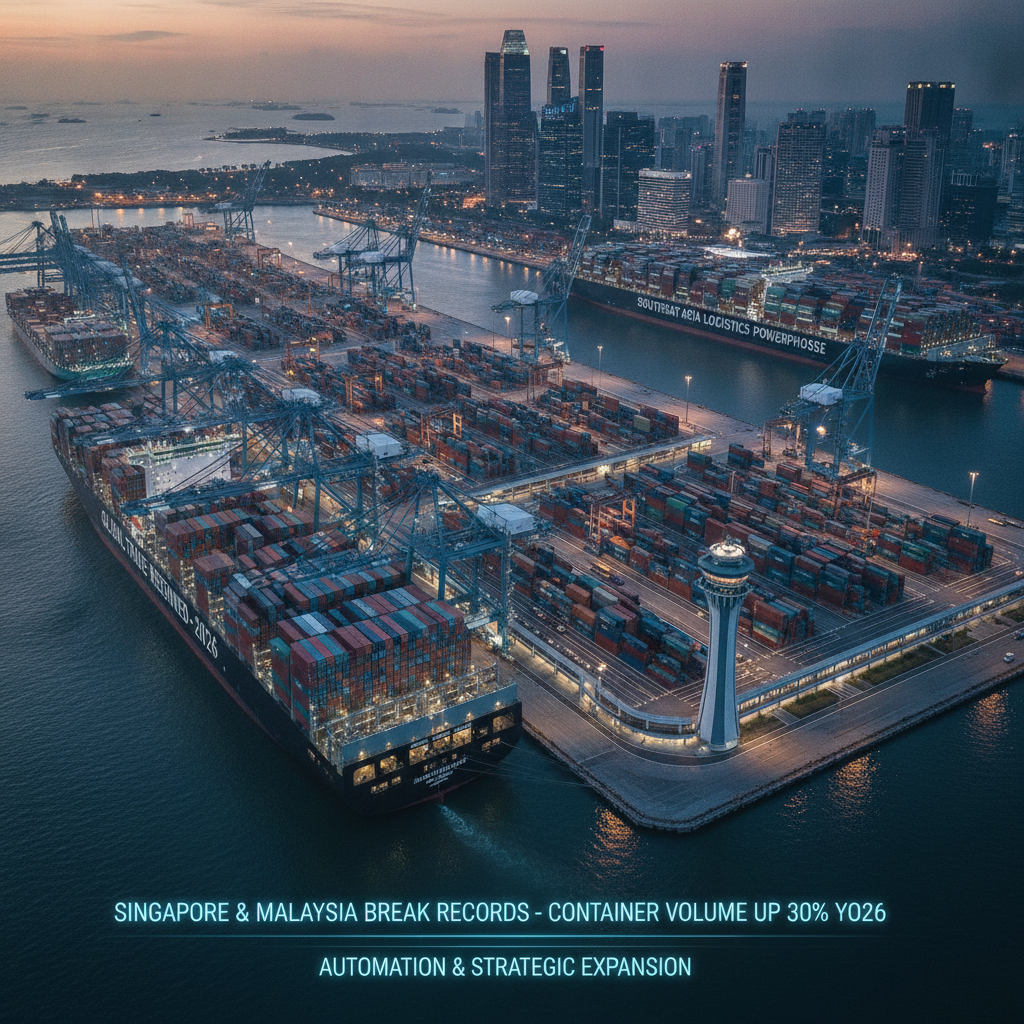
Singapore’s port ecosystem continues to set the global benchmark, processing a staggering 44.5 million TEUs in 2025. The centerpiece of this capacity race is the fully automated Tuas Port, which successfully handled 25 million TEUs by mid-2026 since its opening. Driven by a strategic ‘Node to Network’ approach, this massive infrastructure project integrates autonomous vehicles and artificial intelligence. By the 2040s, Tuas Port aims to consolidate all of Singapore’s container operations with an unparalleled annual capacity of 65 million TEUs.
Historic Growth Across Malaysia’s Southeast Asia Shipping Hubs
Malaysia is simultaneously reaching historic milestones, signaling a broader regional boom. In 2025, Port Klang shattered previous records by handling 15.14 million TEUs, solidifying its new status as the world’s 10th busiest container port. Furthermore, the Port of Tanjung Pelepas (PTP) achieved a phenomenal 14 percent year-over-year growth, moving 14.03 million TEUs. This surge underscores the growing confidence global shipping alliances have in the Malaysian logistics ecosystem as a resilient transshipment destination.
Strategic Implications for Southeast Asia Shipping Hubs
For supply chain operators, the rapid expansion of these maritime gateways signals a definitive shift in transshipment power. Key advantages for logistics professionals leveraging these nodes include:
- Enhanced Capacity: Megaports like Tuas and Port Klang ensure robust handling during peak volume seasons.
- Advanced Digitization: Automated terminals drastically reduce turnaround times and minimize human error.
- Routing Flexibility: Multiple high-capacity hubs provide essential agility to mitigate disruptions.
As shipping lines diversify their networks, leveraging these highly efficient corridors will remain vital for optimizing cargo flows.
References
[1] Splash247 (2026). Tuas Port passes 25m teu as berth expansion gathers pace. [2] Ministry of Transport Malaysia (2026). Port Klang, PTP set new container handling records in 2025. [3] Lloyd’s List (2025). Top 100 Ports 2025 Ranking.