
The Current Regulatory Bottleneck
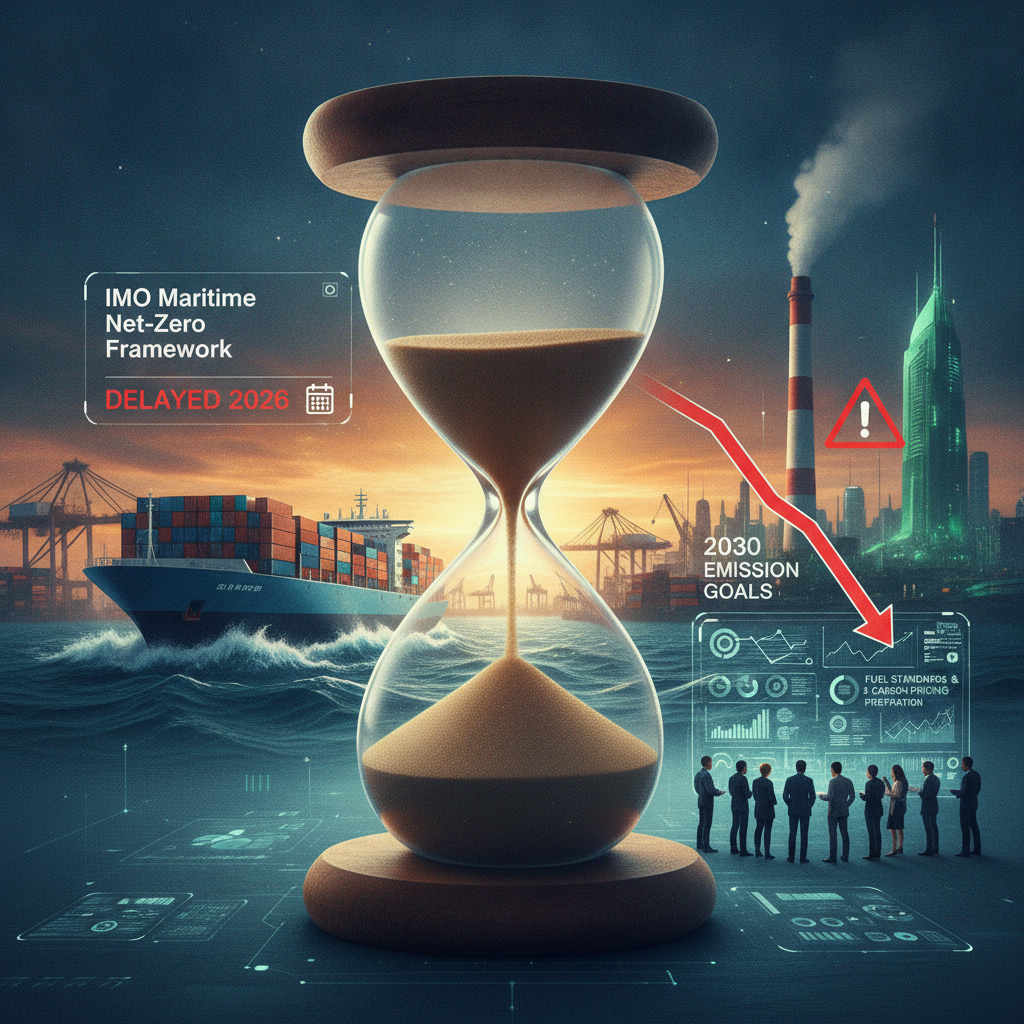
The shipping industry stands at a critical juncture as regulatory uncertainty threatens its decarbonization timeline. Initially approved at the 83rd Marine Environment Protection Committee (MEPC 83) session in April 2025, the highly anticipated Maritime Net-Zero Framework faced a significant setback when the International Maritime Organization (IMO) adjourned its formal adoption from October 2025 to late 2026. This delay has introduced profound complexities for logistics experts and shipowners trying to map out their transition strategies.
Mechanics of the Maritime Net-Zero Framework
Designed to align with the IMO’s 2023 Greenhouse Gas Strategy of achieving net-zero emissions by 2050, the framework introduces a two-pillar mechanism for oceangoing ships of 5,000 gross tonnage and above. These proposed pillars include:
- Global Greenhouse Gas Fuel Intensity (GFI) Limit: A standard mandating a phased reduction in the life-cycle well-to-wake GHG intensity of marine fuels.
- IMO Net-Zero Fund: A carbon pricing mechanism penalizing non-compliance while financially rewarding the adoption of zero and near-zero emission fuels.
Impact on Industry Progress
The postponement of the Maritime Net-Zero Framework has been categorized by industry analysts in September 2026 as one of the most regressive events for the sector’s energy transition. A recent climate action report unveiled at the 2026 New York Climate Week warns that the industry risks missing its critical 2030 target of securing 5-10% of fuel from scalable zero-emission sources if the framework is not urgently adopted. Despite these headwinds, shipping operators must proactively prepare for the impending regulations, as the fundamental mandate to decarbonize global logistics remains inevitable.
References
- International Maritime Organization (IMO) FAQs on the Net-Zero Framework
- Climate action in shipping: Progress towards shipping’s 2030 breakthrough (2026 edition)
- Siglar Carbon 2026 Regulatory Review