

Understanding the 2026 Shanghai Port Congestion Crisis
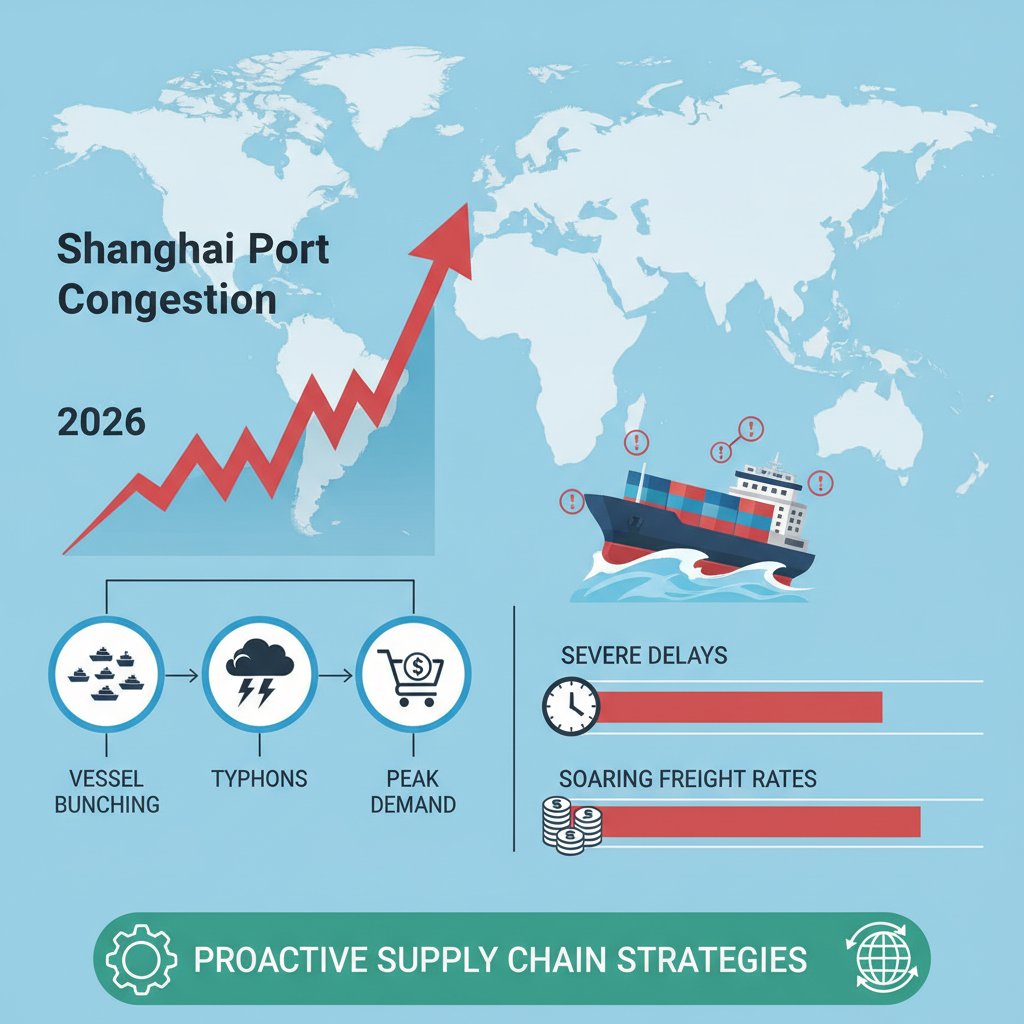
The global container shipping market continues to face immense pressure in 2026, with Shanghai Port Congestion serving as a critical bottleneck for supply chain professionals. A combination of prolonged peak season demand, adverse weather, and geopolitical disruptions has placed the world’s busiest container port under severe strain. Industry reports indicate that global port congestion recently neared 4 million TEU, heavily impacting Asian maritime hubs.
Primary Drivers of Shanghai Port Congestion
Understanding the root causes of these maritime delays is essential for logistics teams. The most significant factors contributing to the current Shanghai Port Congestion include:
- Vessel Bunching: Carrier rerouting due to the Red Sea crisis disrupted schedules, causing ships to arrive simultaneously.
- Weather Disruptions: Severe typhoons during the summer and fall of 2026 triggered intermittent terminal closures and restricted marine traffic.
- High Yard Density: With strong export demand, yard utilization at key terminals frequently exceeded 75 percent, slowing land-side operations.
Impact of Shanghai Port Congestion on Logistics
The operational fallout from Shanghai Port Congestion has been substantial, driving up costs and transit times. At peak disruption points, average vessel waiting times at the Yangshan Terminal climbed to 12.4 days. Land-side logistics also suffered, with rail and truck gate delays frequently exceeding 36 hours. These bottlenecks severely impacted freight costs, pushing spot rates for trans-Pacific container shipments to U.S. East Coast ports past $10,000 per FEU.
Navigating Shanghai Port Congestion Risks
To mitigate the risks associated with Shanghai Port Congestion, forwarders must adopt proactive strategies. Experts recommend building extra buffer time into sailing plans and securing off-dock yard capacity before dispatching cargo. Relying on real-time data monitoring will remain paramount for maintaining operational efficiency in this volatile environment.
References
Shipping Gazette: Maersk Temporarily Adjusts Qilin Service due to Shanghai Port Congestion. Shipping Gazette: Global Port Congestion and Extended Peak Season Challenge Shipping Industry.