
Asia Port Congestion Trends Impacting 2026 Logistics
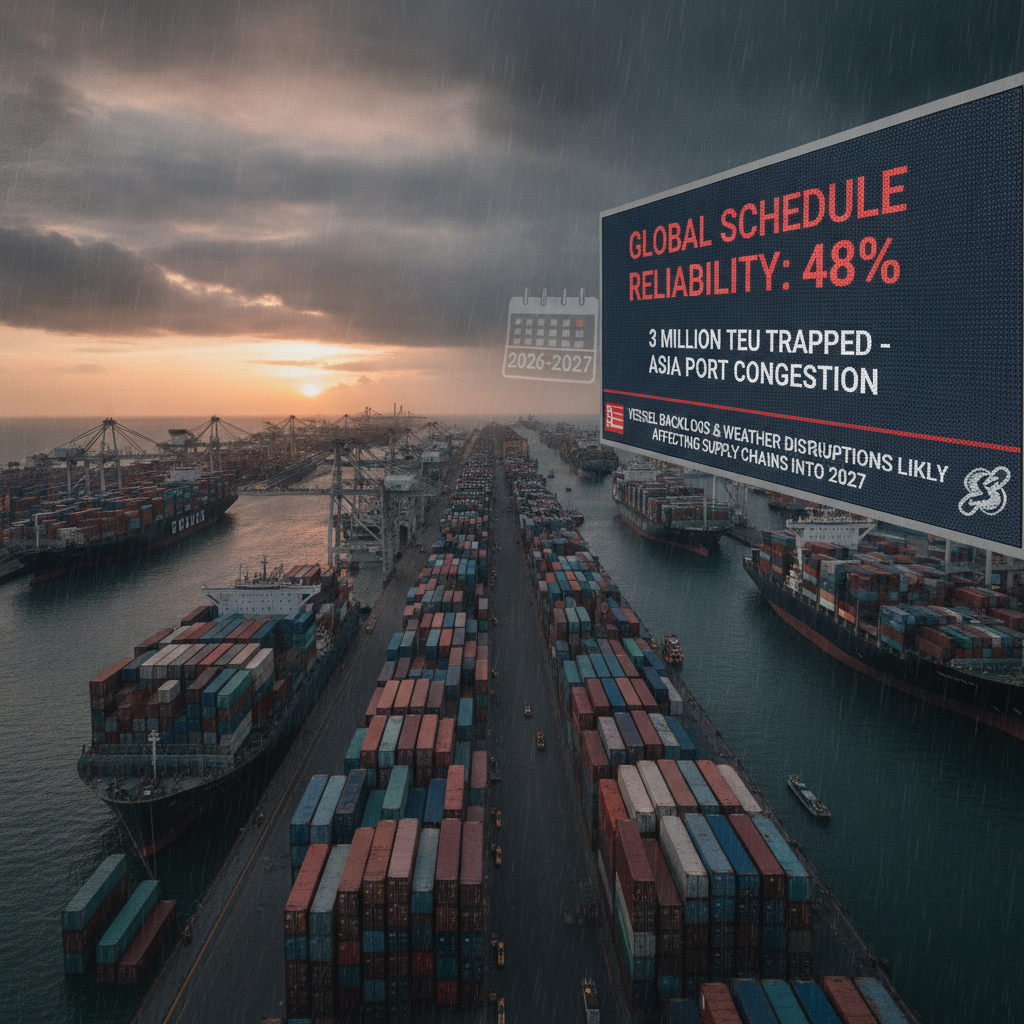
A critical shift has occurred in global container shipping. Ongoing Asia port congestion trends have absorbed approximately 8.5% of the global container fleet. This means roughly 3 million TEUs of shipping capacity are temporarily paralyzed across major hubs.
Cascading Disruptions and Reliability
Successive severe typhoons in late 2026 struck major Chinese gateways, creating massive backlogs. Consequently, global schedule reliability plunged to 49.9% in August 2026, the lowest recorded since September 2022.
Major transshipment centers face unprecedented pressure:
- Shanghai: Typhoon damage pushed schedule reliability down to 21%, with anchorage waiting times reaching 10 days,.
- Singapore: Around 90% of container ships are arriving off-schedule, causing severe vessel bunching and wait times extending to seven days,.
Strategic Outlook for 2027
Analysts confirm these Asia port congestion trends are not a short-term disruption. Clearing the vessel backlog could take seven to ten months. This extends recovery into the pre-Chinese New Year cargo rush in February 2027. Logistics professionals must buffer ETAs, as average delays for late vessels exceed 6.8 days globally.
References
YQN Logistics (Sep 2026)
HighQ Logistics (Oct 2026)
Singapore Port Guide (Oct 2026)
Freight Systems (2026)
Tradlinx Blogs (Sep 2026)
Metro Global (Sep 2026)
Sea-Intelligence (Oct 2026)
Europa Worldwide (2026)