
The logistics sector is navigating a severe Transpacific air freight rate surge, challenging forwarders in late 2026. Driven by surging AI hardware demand and geopolitical shifts, cargo pricing has reached unexpected heights. Understanding the mechanics of this Transpacific air freight rate surge is critical for resilient supply chain budgeting.
Drivers Behind the Transpacific Air Freight Rate Surge
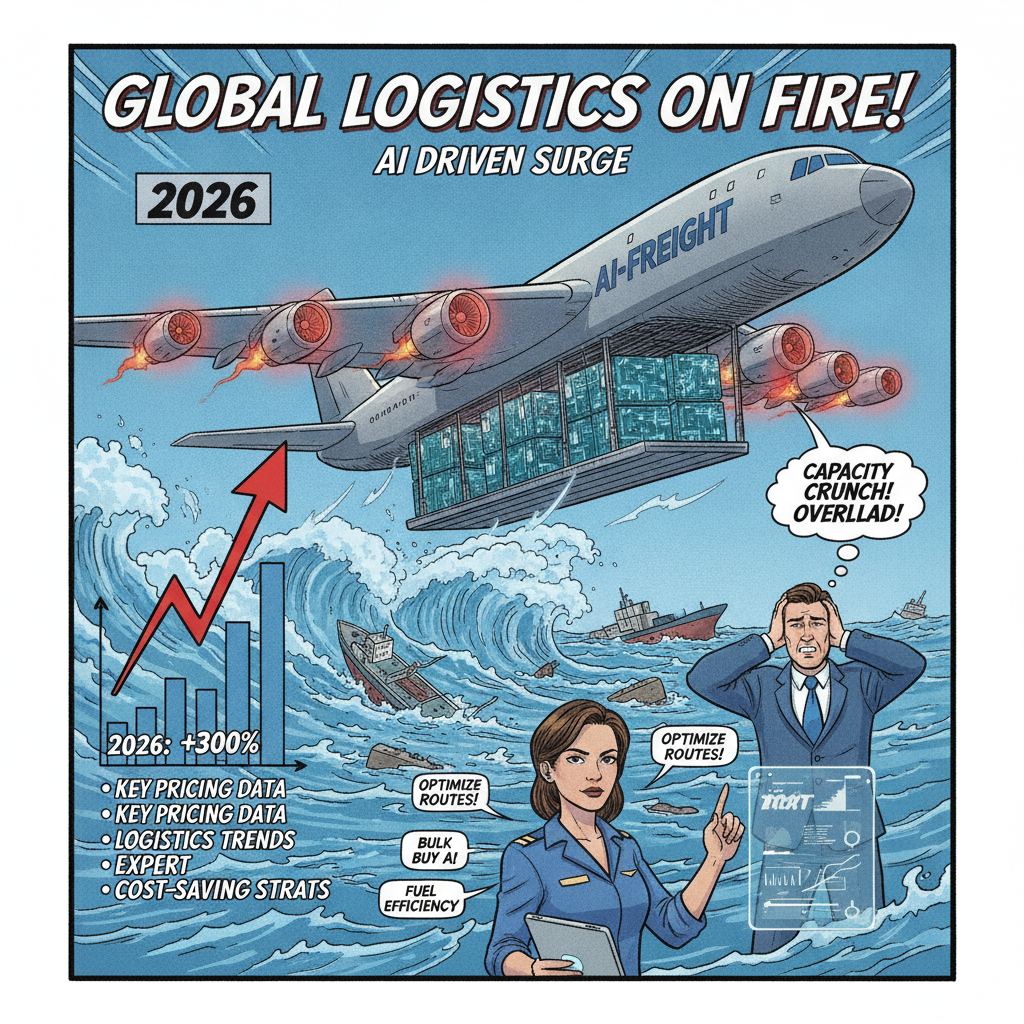
Recent data reveals profound market shifts. By November 2026, average global air freight rates reached $3.45 per kilogram, a 31% year-over-year increase. The Transpacific lane remains exceptionally heated, with Hong Kong to North America rates tracking 36% higher year-over-year by summer. This volume surge is heavily fueled by hyperscaler semiconductor shipments offsetting weaker e-commerce flows. Additionally, late 2026 saw eastbound Transpacific cargo volumes jump 13% annually, led by a 37% export increase from Taiwan to the US.
Capacity Limits and the Transpacific Air Freight Rate Surge
Persistent disruptions, like Red Sea reroutes, continue pushing ocean cargo into the air, compounding the Transpacific air freight rate surge. Aircraft capacity remains constrained as airlines deploy passenger jets on leisure routes, limiting freight networks.
Strategic Responses for Logistics Professionals
To combat volatile pricing, industry experts recommend several agile tactics:
- Secure volume contracts to avoid unpredictable spot rate spikes.
- Deploy multi-modal (air-sea) transport to balance velocity and cost.
- Optimize packaging to minimize chargeable dimensions.
References
- Global air freight rates rise 31% year on year, WorldACD reports
- Air Freight Rates: Costs & Proven Reduction Strategies
- SUPPLY CHAIN MARKET UPDATE – AlixPartners